
The Expectations Ruining Your Photography Career
Marks Of The Maker: Lesson 019

For years, I was convinced the problem was external. I didn’t have the right access. I wasn’t in the right rooms. I didn’t know the right people. Maybe if I moved faster. Maybe if I upgraded the gear. Maybe if one big opportunity finally cracked open, everything would align and I’d become the version of myself I had already drafted in my head.
I was telling myself a comforting story. It keeps the blame out there. It makes you feel like a victim of circumstance instead of the architect of your own pressure.
What I didn’t want to admit is that the thing strangling my work wasn’t a lack of opportunity. It was expectation. My expectation.
I had built an invisible checklist of where I thought I should be by a certain age. By now I should have a defined voice. By now I should have a book. By now I should have a body of work that feels cohesive and culturally relevant and mature in a way that suggests I know exactly what I’m doing. I wasn’t just trying to make good photographs. I was trying to make important ones. The kind that carry weight. The kind that signal arrival. The kind that look like they belong in a retrospective before you’ve even had the humility to fail properly.
But in my time working and growing, I’ve come to realize that nothing suffocates a photograph faster than the need for it to matter.
When you shoot with a scoreboard in your head, you stop responding to the world and start responding to your own imagined legacy. Every frame becomes a test. Every project becomes a referendum on your future, and that, is exhausting. It’s performative, and it has very little to do with truth.
This lesson isn’t about lowering standards, but rather about identifying which standards are rooted in integrity and which are rooted in ego. That self disgnosed perfectionism that gets disguised as professionalism. These arbitrary timelines that I told myself were ambition. The obsession with meaning. The hunger for relevance.
It took me longer than I care to admit to realize that most of my strongest work showed up when I stopped trying to prove something. When I let go of the fantasy of arrival and actually allowed the photograph to simply be a response instead of a declaration.
This article is about the expectations that nearly derailed me, and the lessons I learned by dismantling them. If you’re carrying your own invisible checklist, it might be time to set it down.
Hello and welcome to The Creative Connection! The Creative Connection is a publication dedicated to exploring the art, craft, and business of photography. With thoughtfully curated segments, we dive into the past, present, and future of image-making. In Life Through The Lens, we spotlight influential photographers throughout history, examining their legacy and the ways their work continues to shape visual culture. Crafting A Photograph offers both technical insight and introspective guidance, helping photographers become more self-aware artists through deeper aesthetic and creative choices. Tools Of The Trade, is a series built around the gear, brands, and experiences that elevate the artist’s journey. The Creative Connection segment brings it full circle, focusing on how to market yourself as a modern photographer, build meaningful relationships both online and in person, and cut through the myths of the business side of creativity. Finally, Marks Of The Maker, is where I explore my process, philosophy, and the moments that shape my creative identity in hopes that it helps others see how their own personal work can become a mirror for who they are becoming.
This series isn’t about perfection or performance, it’s about honesty. This is more than a publication, it’s a space where artistry meets strategy.
In this segment of Marks of the Maker, we’ll be discussing The Expectations Ruining Your Photography Career. So, without further delay, let’s jump right in!
Perfectionism Is Fear
Perfectionism was the first standard I ever held myself to, and for a long time I thought it was a virtue. It felt responsible, disciplined, and necessary. It felt like the kind of trait that separated serious artists from amateurs. But if I’m being honest, it didn’t start in photography. It started much earlier, somewhere in childhood, probably at like 8 years old, where achievement was equated with approval and effort was only as good as the result it produced. I learned early on that being “good” meant being exceptional, and being exceptional meant leaving no room for visible flaws. No fuck ups.
So when I carried that ideology into photography, it wasn’t about clean compositions or sharp focus. It was about control. I wanted the perfect image, the perfect sequence, the perfect conceptual framework. I wanted to have the right words when I spoke about my work, the right references, the right clarity of vision. I didn’t just want to improve. I wanted to eliminate the possibility of inadequacy.
But that’s exactly where perfectionism reveals itself for what it actually is.
Believe it or not, it’s actually not high standards as some may think. It’s fear. Fear of not being enough. (Shoutout therapy) The fear of being exposed as unfinished or amateur.
But to be cliché… I promise you… nothing is perfect. You will not make the perfect image. You will not design the perfect creative framework. You will not articulate every idea with flawless precision. And even if you did, it wouldn’t silence the voice that tells you it’s still not enough. Because the problem was never the work. It was the fear underneath it.
I used to review my photographs like a prosecutor. If an image felt slightly unresolved, I cut it. If a project felt a little raw, I shelved it. Not because it lacked integrity, but because it lacked polish. And polish, in my mind, was safety.
What I’ve come to understand is that perfection is often the enemy of growth. The images that feel slightly alive, slightly imperfect, are usually the ones that carry tension. And tension is what gives work depth. Perfection smooths that tension out. It sterilizes it.
Something I wish someone had told me earlier is that, wherever you are in your creative journey, you are exactly enough to be there. You aren’t behind. You aren’t underqualified for your own path. The fact that you’ve arrived at this moment is proof that you’re equipped for it. Nothing is being taken away from you. Nothing is expiring. Growth in art is not a countdown clock. It’s an uphill climb that strengthens you as you move.
If you live your creative life terrified of dropping below some imagined standard of perfection you’ll suffocate your own evolution. You’ll hesitate to publish or hesitate to experiment, or hesitate to be seen. Then that hesitation hardens into self-doubt that quietly constricts your work.
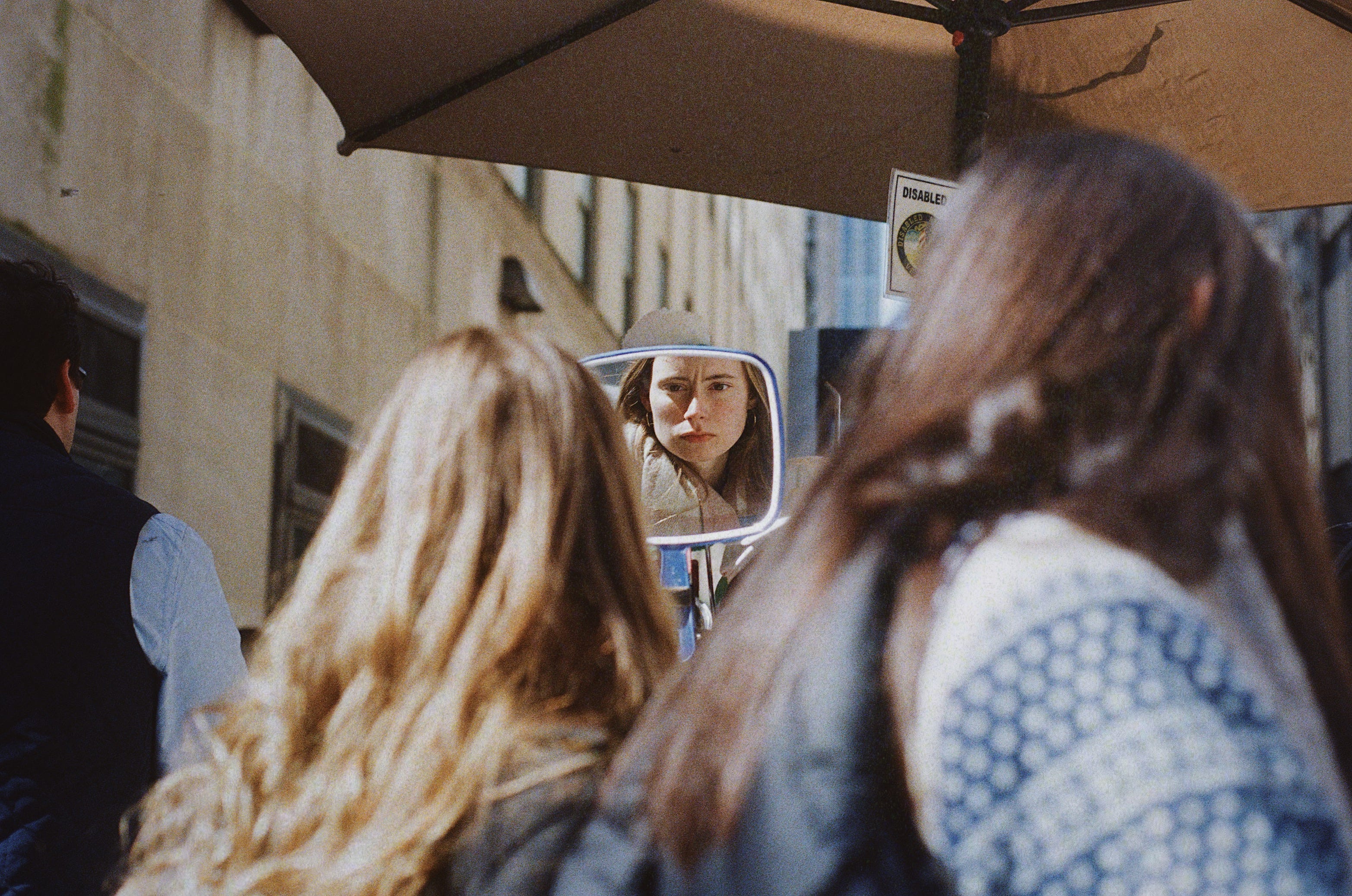
What changed for me was simple in theory and uncomfortable in practice. I started releasing work before I felt fully ready. I kept images that were emotionally honest even if they weren’t technically pristine. I began treating imperfections not as indictments, but as information.
Perfectionism delays output. Output creates evolution. And evolution, the messy and imperfect human kind is what actually moves the work forward.
