
Smoke Over Brooklyn by Sundown
Field Notes: #004

The past two weeks I’d felt myself slipping back into it. That slow, grey, horizontal pull of a depressive episode that I know well enough by now to recognize before it fully sets in, though knowing it’s coming never makes it much easier to fight. My desk had disappeared under a slow accumulation of papers covered in my own handwriting, frantic little reminders to myself of all the things I was supposed to be doing. Email this person, respond to that one, plan the next assignment, get your schedule together. None of it had happened. The papers just kept piling up, curling at the edges under the weight of my own inertia, and I sat in the middle of it watching the week drain away with nothing to show for the loss.
Friday morning came in through the window with a brightness that made the whole apartment feel like a greenhouse. Warm and close and relentless, the kind of spring New York sun that bounces off every glass surface on the block and comes at you from six directions at once, filling the room with a restless golden light that made sitting still feel criminal. I’d burned most of the week already. Whatever the last three days were going to be, they weren’t going to save me by staying indoors. Besides, it’s important for an artist to experience life, not just talk about it.
I pulled my cameras out and started loading film. The Canon F1 first, a dense, matte black, almost aggressively utilitarian body that sits in your hand with a solidity that feels borrowed from some earlier, more serious era of things, its shutter a firm, authoritative clap that means business every time. Then the Nikon F4, bigger, heavier, with the mechanical confidence of a camera built at the moment in time when manufacturers still believed in making things that would outlast everyone involved. And finally the Rolleiflex 3.5f, the twin-lens, waist-level one. Old, almost impossibly quiet in operation, with a ground-glass viewfinder that renders the world backwards yet somehow more beautiful for it. I loaded a different roll into each, snapped them shut, slung all three around my neck and torso, kissed Sophie at the door, and walked out the door and into the afternoon.
Our block in Brooklyn was doing what it does on a warm start to the day in May. The freshly bloomed trees overhead filtering the light into a loose, shifting patchwork of shade and brightness that fell across the sidewalk in long irregular shapes, the air carrying that sweet, faintly vegetal smell that comes with new leaves and warm concrete. I took the longer route to the subway, an extra quarter mile through side streets, partly because I like the walk and partly because there’s a roughly sixty percent chance the attendant booth at the further station sits empty, its scratched plexiglass window dark and lifeless. Bingo. Today was one of those days. I threw a leg over the turnstile with the practiced, slightly desperate look of a dog pissing on a fire hydrant. I hoisted the rest of myself over and made my way down to the platform.
The L train arrived nearly empty and I found a seat without having to negotiate for it, which felt like the first small gift of the day. I pulled out the book I’ve been reading. Well, rereading, for the third time now. Its pages, so thoroughly covered in old and new green highlighter that the margins have become their own layered document. Previous readings arguing with current ones in crooked overlapping lines that spike and wander every time the train hits a rough stretch of track. I read until Union Square. The station today isn’t as packed as usual. I would guess it’s because it’s like nine a.m. and the morning crowds that go to work have already passed through in their usual stampede esc like manner. I transferred down to the uptown 4, 5, 6 platform and waited five minutes in the low rumbling heat of the tunnel before the express came through, pressing myself into the far doors, riding it north.
125th Street opens up around you when you come out of the subway. Wide sidewalks, big intersections, the sky suddenly present and generous after the compressed underground. Midday sun coming in hard and flat off the storefronts and the upper floors of buildings that’ve been standing here long enough to accumulate a dozen different paint colors and a century of architectural decisions. All of them visible at once in the kind of dense, layered facade you only get in a city that’s been rebuilding itself over itself for a hundred and fifty years. It was busy for midday on a weekday, the sidewalks carrying a steady, unhurried flow of people going about business that had nothing to do with me. Women pushing strollers, men in construction gear eating lunch on a low concrete wall, a group of teenagers moving down the block in a loud cluster that parted around slower pedestrians without breaking stride or conversation.
But 125th has been changing for a long time now, and the evidence of that is written all over the block in brand signage and clean facades. Trader Joe’s, Whole Foods, Starbucks, Chipotle, the full complement of chains that follow rising rents the way certain birds follow the plow, arriving one after another once the conditions are right. Each one landing alongside the jerk chicken spots, hair braiding salons, laundromats, or local good-eats joints that’ve been here for decades, serving the neighborhood long before anyone decided the neighborhood had potential. They exist side by side, these two versions of the same street, each one largely ignoring the other. The old establishments behind scratched glass and hand-lettered signs, the new ones behind brushed steel and backlit menus, and yet, the block somehow holds both without resolving them into anything cleaner than what they are.
I walked the length of 125th, past the Apollo’s marquee jutting out over the sidewalk in its golden geometry, past the smell of food coming out of open doorways, past the delivery trucks double-parked with their hazards blinking in slow orange flashes. Somewhere past the midpoint I realized I was already bored. Not with the street itself but with my own relationship to it. The sense of walking terrain I already know too well to see clearly anymore. I needed to get lost, which is harder than it sounds when you’ve spent enough years in this city that the grid has burned itself into your sense of direction and you can find your way home from anywhere by instinct. I needed to walk until the blocks started looking unfamiliar, until I stopped anticipating the next corner before I reached it, until the city got interesting again on its own terms rather than mine.
I turned and walked north, away from the wide commercial strip and into the quieter blocks above it, where the buildings get lower and more residential, where the stoops are occupied, and the fire escapes carry the accumulated evidence of people actually living. Folding chairs, potted plants, a bicycle wheel, a child’s sneaker hung on the rail by its laces for reasons I couldn’t guess. The midday light came in at a long, sharp angle through the cross streets, cutting across the facades in deep, bright bands that turned every texture on every surface into something worth looking at. I pulled the Canon up to my eyes and started shooting.
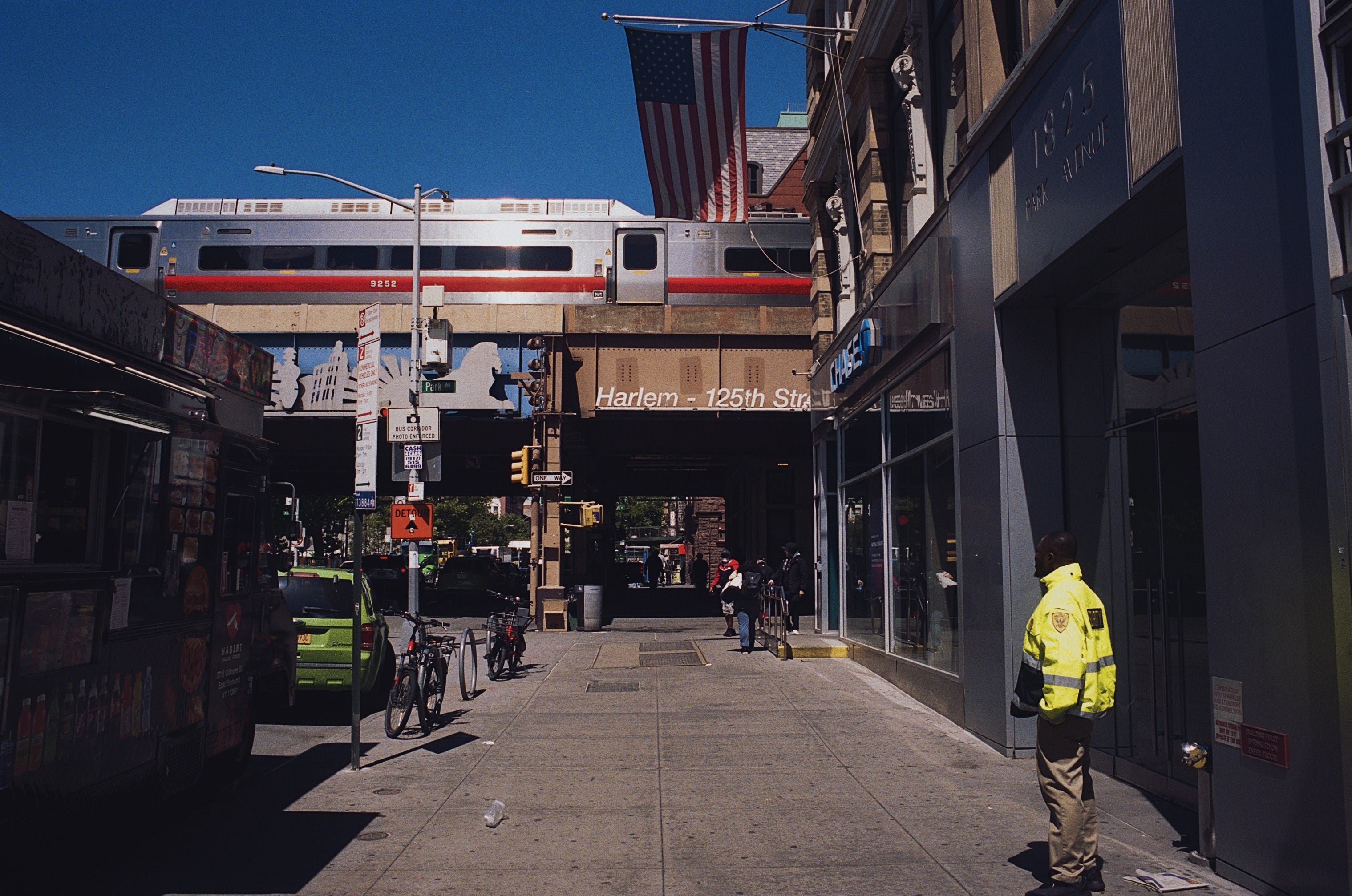
Marcus Garvey Park sits in the middle of East Harlem. A place that’s watched entire generations of the neighborhood grow up around it and isn’t impressed by any of them. A wide open stretch of grass and rock and old trees surrounded by low iron fencing. I was making my way through its entrance when three women coming the other direction clocked the cameras immediately. One of them, without breaking stride, without even fully turning toward me, said to the others, loud enough that I was absolutely meant to hear it, “I just know he takes good pictures.” A small laugh escaped out of me before I could stop it, and before I knew it, I heard myself calling after them, asking if they wanted one. New Yorkers, when asked this, have a reflex that kicks in before anything else. They wanna know how much. Another small laugh escaped as I explained who I am and what I do, and that no, there was no charge, that it would be my pleasure.
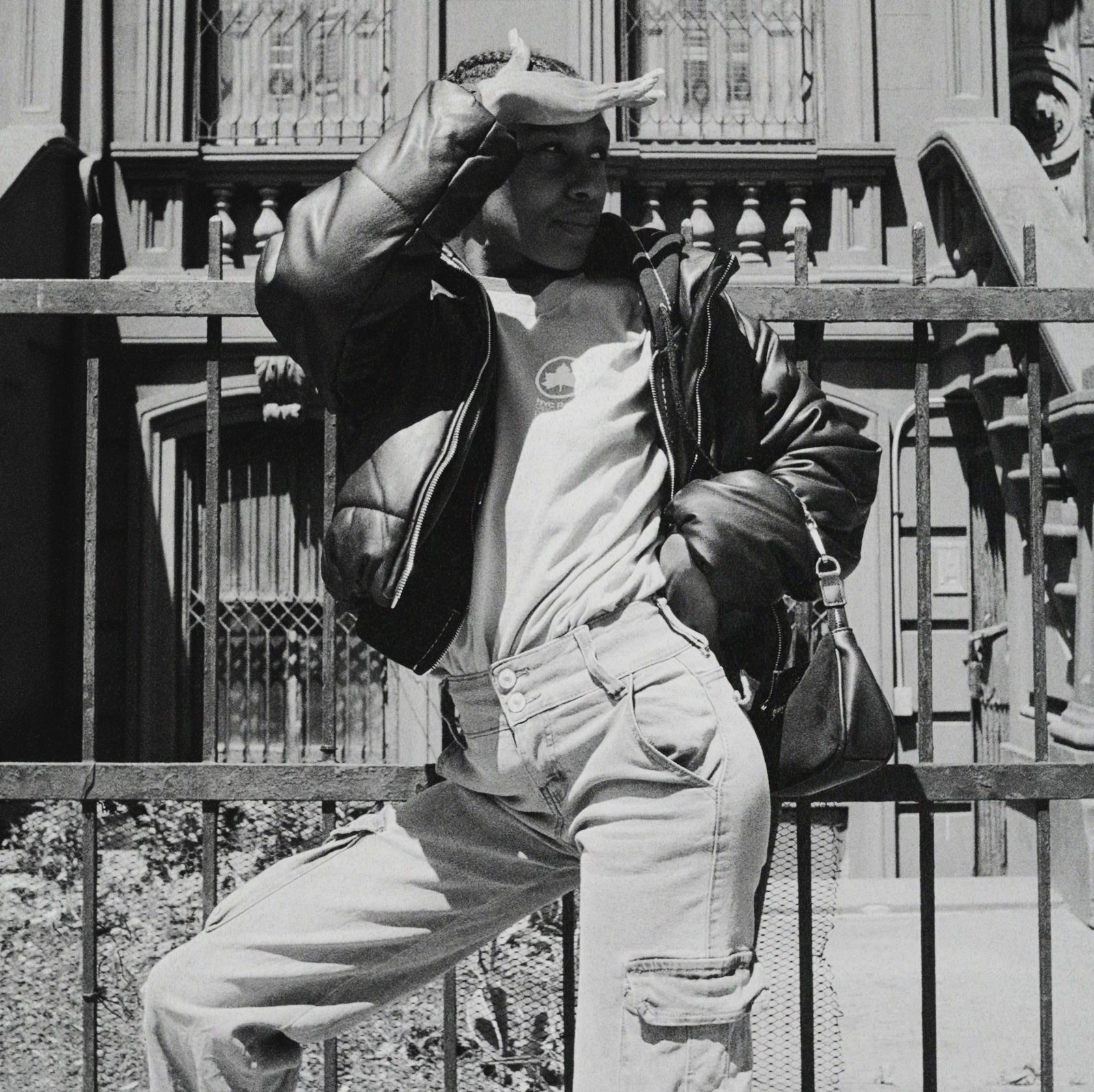
KK was first. She was the youngest of the three. Shorter, with an energy that you felt before she’d fully finished a sentence. The kind of person whose presence arrives slightly ahead of them, filling up the space before their body does. She didn’t hesitate for a second, just swished her hair behind one ear in a single fluid motion and struck a pose with the full conviction of someone who’d been waiting for this exact moment and wasn’t about to waste it. I lined up the shot on the Rolleiflex and pressed the shutter. Then she immediately wanted to know everything about the camera. How old it was? What it was used for? Where it came from? How much it cost? Her questions coming in quick succession while Mrs. Jeanette waited patiently for her turn.
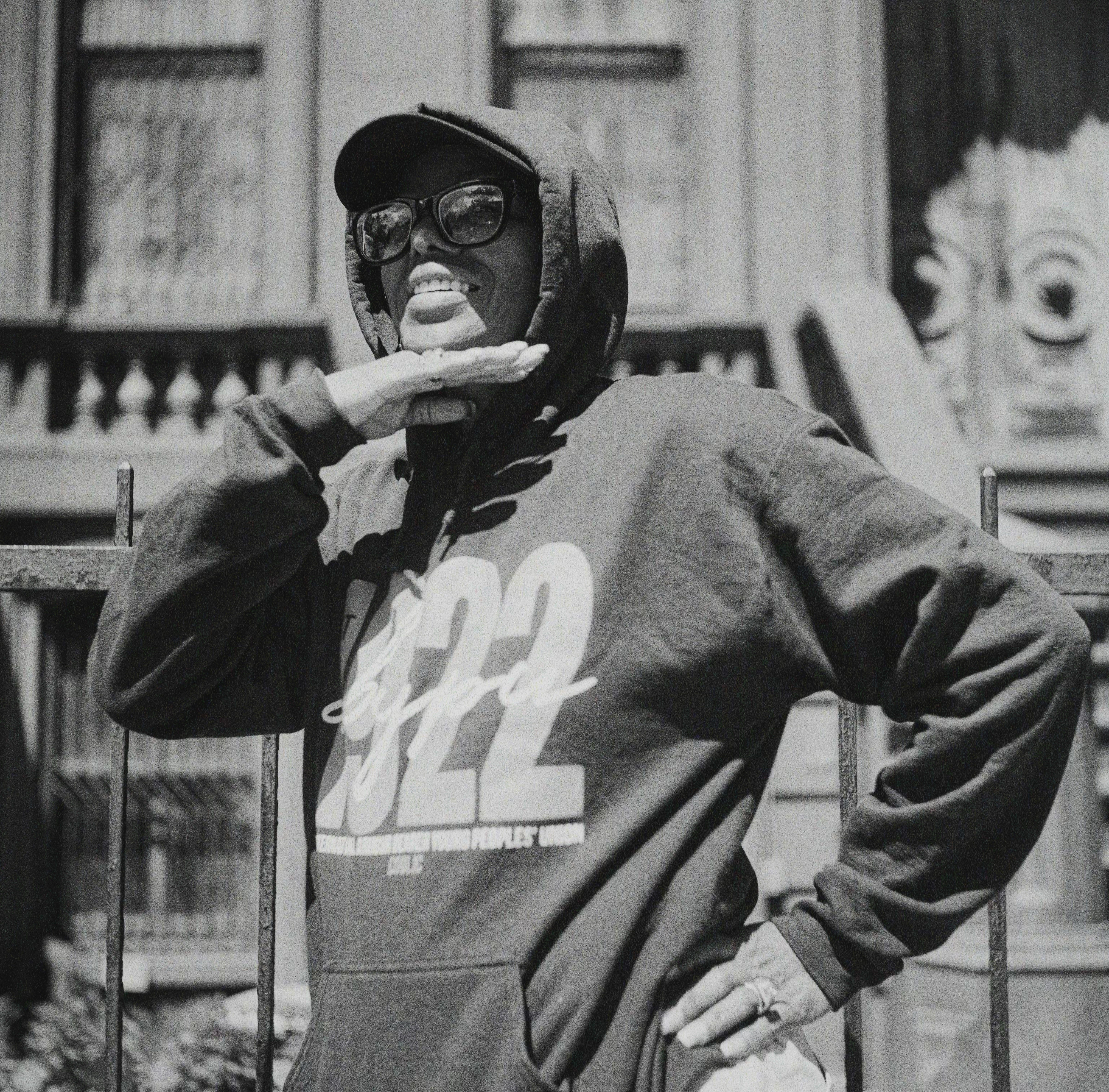
Mrs. Jeanette had one of those presences that makes the temperature of a conversation drop a few degrees in the best possible way. Warm and unhurried, the kind of woman who makes you feel, within about thirty seconds of meeting her, that you’ve been acquainted for considerably longer. Her smile was wide and genuine, the creases around her eyes deepening with it in a way that told you this was a face that had smiled often and meant it every time. She posed herself without any prompting, and the photograph was done in a moment. We were exchanging information while she was telling me about her brother, who shares my name, as it turns out, and before I fully understood what was happening, she was pulling me into a goodbye hug with the easy familiarity of someone who’s decided you’re worth knowing. She told me she’d never forget me. I can’t think of any timeline in which I forget her either.
I drifted through the park after that, which had taken on the quiet, half-empty feeling of a weekday afternoon when the people who use it regularly are still at work and the people who might wander through haven’t thought to yet. Just the sound of wind moving through the upper branches of the trees and the distant noise of traffic pressing in from all sides. Somewhere in the middle of all that quiet, my stomach made itself known for the first time all day. It was approaching eleven and I hadn’t eaten anything, which is more or less my standard operating procedure when I’m out shooting. A full meal sits heavy in the heat and slows the legs. I do enough walking on these days that I can’t afford to feel sluggish in the middle of the afternoon. I wanted something light and sweet, and I didn’t have a plan for where to find it, so I kept walking and let the street decide.
What I followed, eventually, was the sound of cheering coming down an otherwise quiet block. The tail end of a graduation, it turned out, the last few students still in cap and gown filing back through the school doors as I came around the corner, the small dispersing crowd of families still pink-cheeked and proud on the sidewalk. And then, between two small posts driven into a patch of grass, a hand-drawn sign in pink marker on a piece of semi-sturdy paper. The word doughnuts, an arrow, and nothing else. I followed it without a second thought.
The storefront was small and quaint, the kind of place that doesn’t need to announce itself because the smell does it first, and Gigi herself was working alone back there. Gigi was a smaller middle-aged woman with smooth skin, a headscarf tied neatly behind her head, and a flour-dusted apron printed with flowers. She came out from the back when I walked in and greeted me with a genuine, easy smile, asking how my day had gone and whether I was there for the graduation, explaining that the parents had come through early and cleaned her out. I told her who I was and what I was doing out here, a photographer, wandering, chasing a story, and now apparently a good doughnut. She laughed and apologized for the limited selection, the graduation crowd having done its work on her stock. None of that registered with me. It went through one ear and out the other because by that point my eyes had already found the two vanilla frosted doughnuts sitting at eye level in the case, round, glossy and enormous. Everything else in the room had ceased to exist.
We talked while I ate, or while I tried to eat slowly and failed at it. Gigi’s been open for twenty-two months. When she mentioned it she caught herself and laughed, saying she talks about it like it’s a baby. I told her it is her baby and she should be proud of it because twenty-two months of getting up before dawn and making everything from scratch in a small storefront in East Harlem is no small thing, and she shouldn’t let anyone tell her otherwise. The first doughnut disappeared before I’d fully registered eating it. I horked it down. It was light and yielding with a fresh, pillowy softness that you only get when something was made that morning and not a minute before. The vanilla cream, housemade and balanced, sweet without being cloying, smooth across the tongue in a way that made me reach for the second one without pausing to make a decision about it. I apologized to Gigi for my hunger. She said she was delighted. I finished the second doughnut between long sips of an iced coffee with sugar and milk, and when I stood up to leave, she pressed a punch card into my hand. I told her I’d be back. I meant it.
With the coffee humming properly in my blood and enough food in me to keep moving, I headed east from 118th and 5th, walking the long blocks past Madison and Park Avenue, the neighborhood shifting around me as I went. The wide avenues giving way to quieter cross streets lined with older buildings whose facades had the layered, time-worn look of structures that’ve housed many different things across many different decades and still can’t quite decide which version of themselves they most recently were. It was somewhere in this stretch that I came across Mrs. Jackie, though I want to be honest about the fact that when I first appeared on her block, tall, lanky, relativley pale (it’s been a long winter), draped in cameras, smoking a Parliament, she looked at me the way anyone running their own business from their front stoop in the middle of East Harlem would look at someone like me arriving uninvited, with a measured, assessing skepticism that I had absolutely no grounds to take personally.
Mrs. Jackie was a smaller but solidly built woman, her hair pulled up tight into a bun, she was doing serious work. Her front stoop had been transformed into a full display of custom gift baskets, dense and carefully arranged, each one assembled for Mothers Day. Every holiday on the calendar accounted for, every milestone or celebration, any reason people have to give each other something wrapped in cellophane and tied with ribbon, she made it. You could see in the construction of each basket the accumulated hours that had gone into it, the deliberate arrangement of each item, the attention to how the whole thing read from the front, the evident pride of someone who takes their craft seriously and expects you to as well. She asked me the usual questions, who was I, what was I doing, why so many cameras, and I gave the usual answers, showing her some of my work before telling her I’d love to photograph her. She declined, and I respected it without a word. But… she said I could photograph her baskets instead. I smiled at that and shot a few frames.
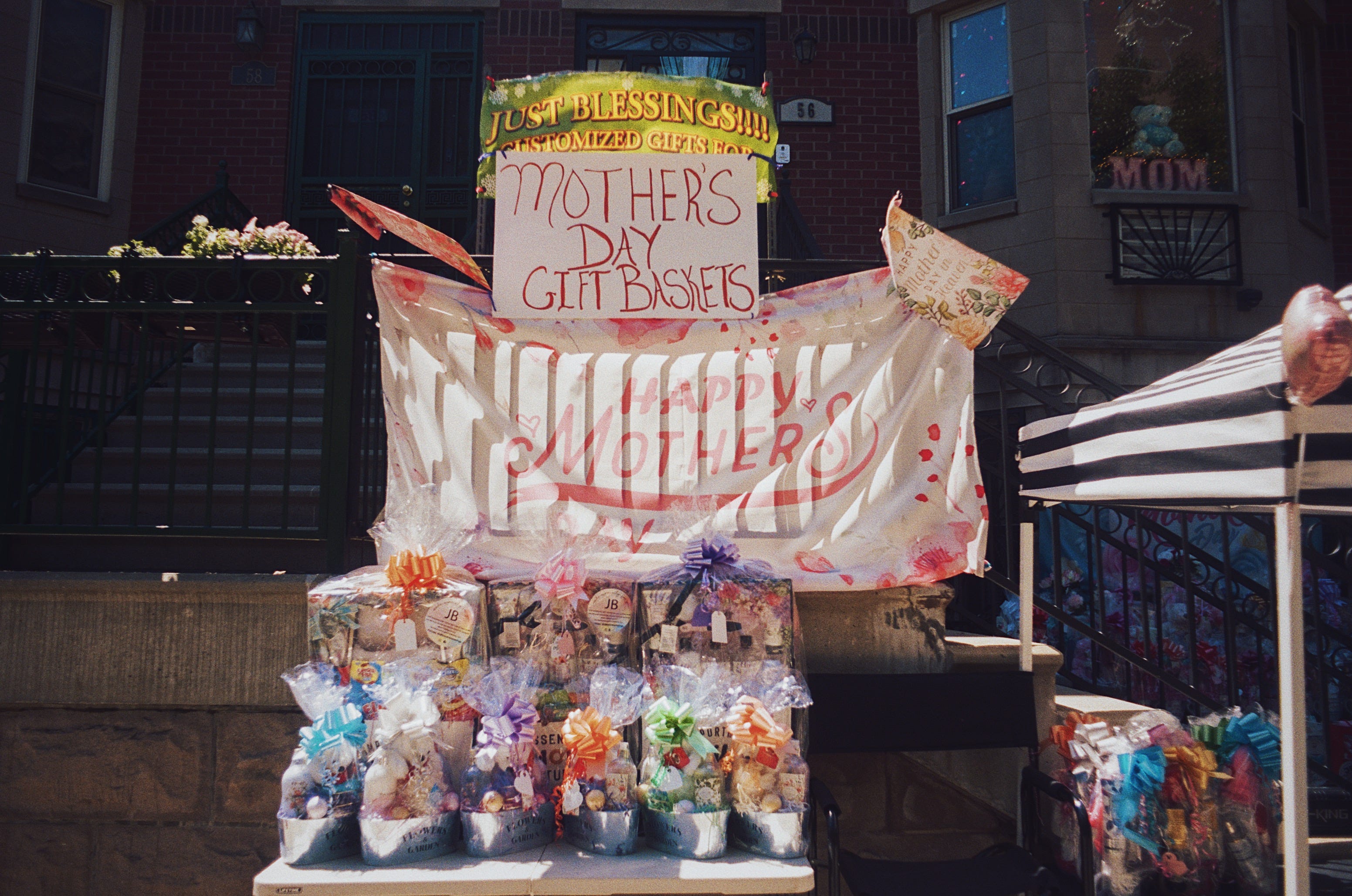
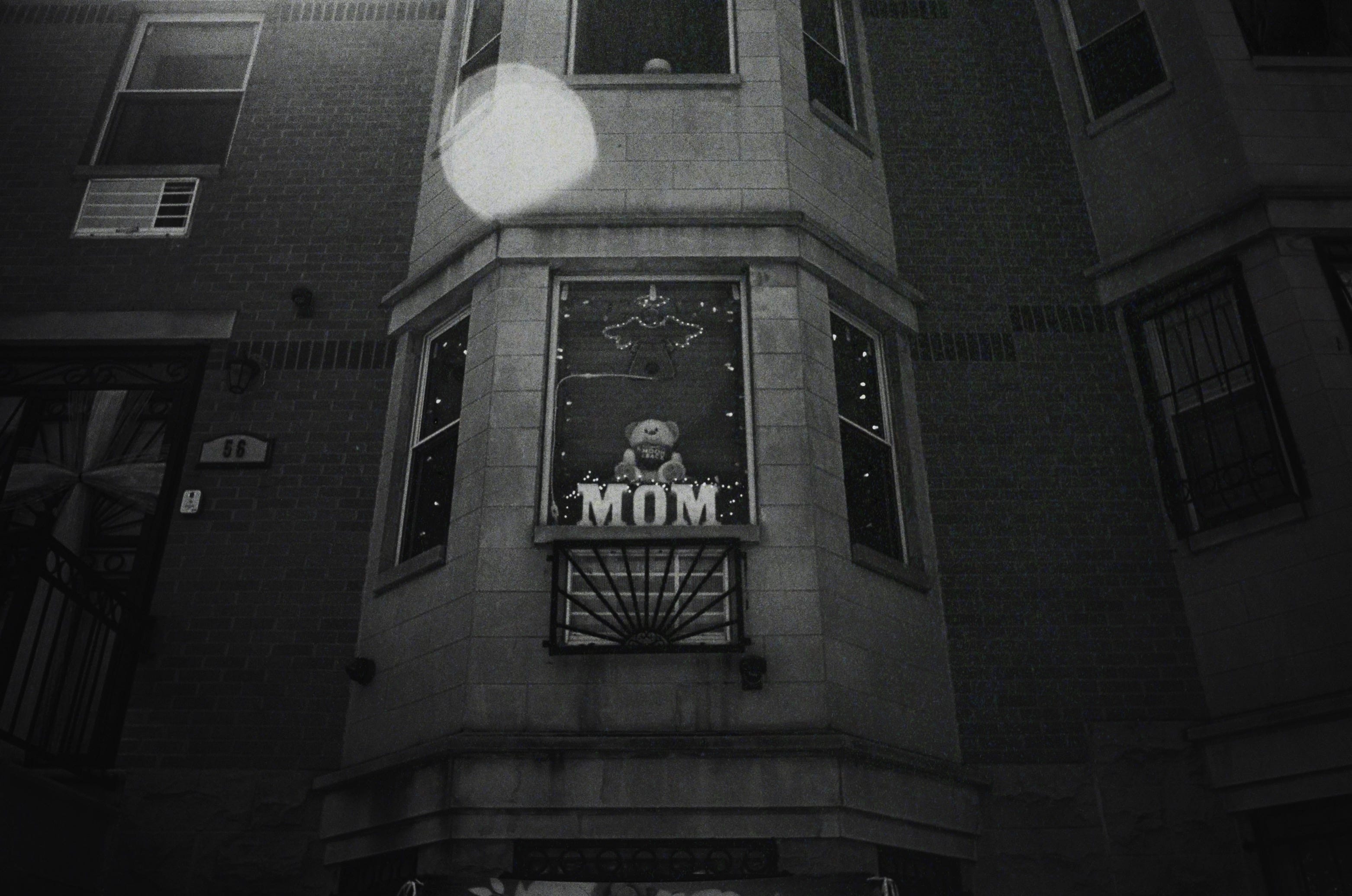
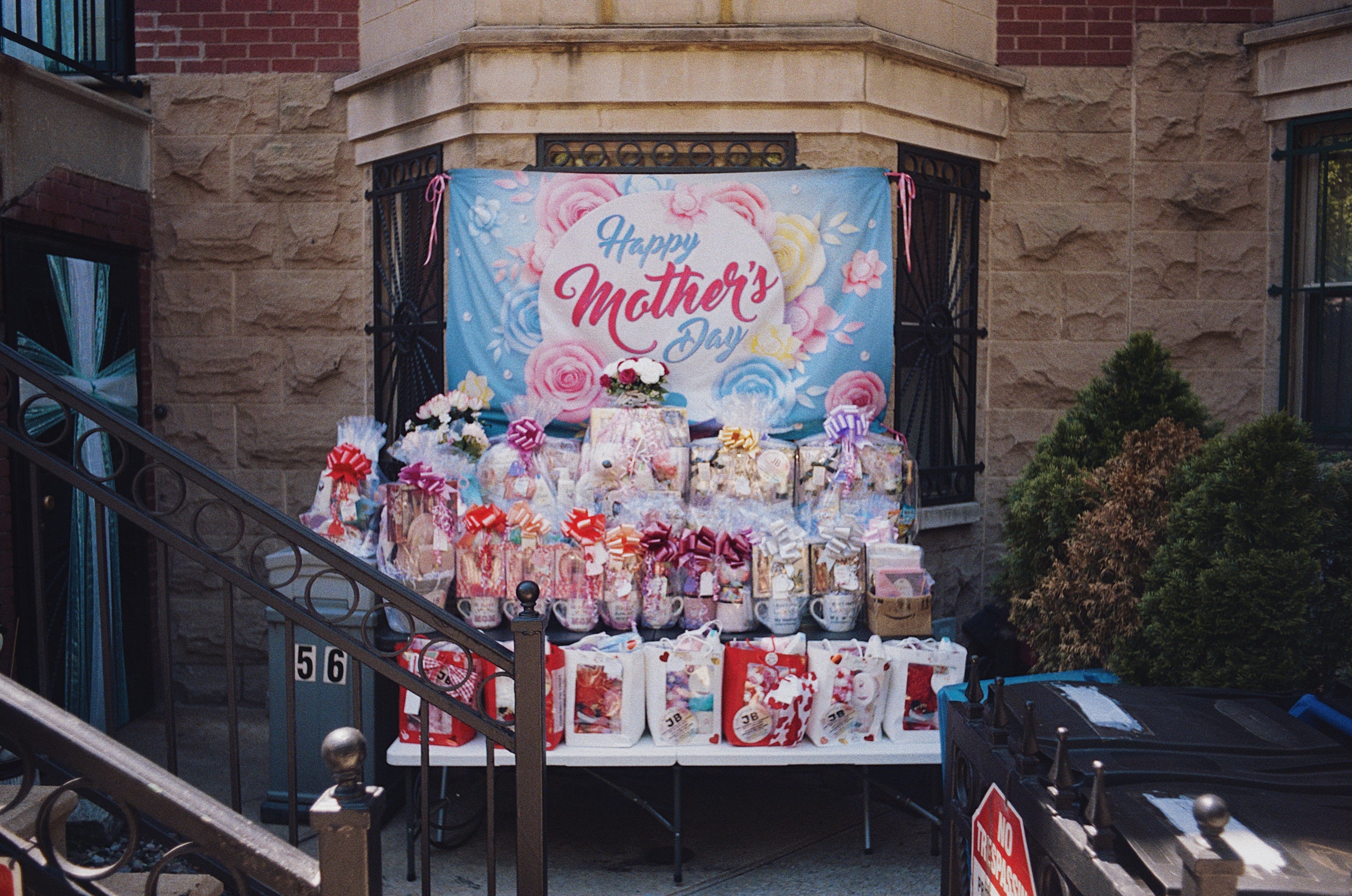
Something loosened in her after the photographs were done. She told me her neighbors and clients were still giving her grief for not setting up on Valentine’s Day this year. She delivered her defense on the matter with absolute, unimpeachable authority. “It was too cold. I’m not sittin my ass out here in the cold for some love.” We both laughed at that for a moment, and then we discussed the neighborhood. She’s originally from Brooklyn, not far from where I live now, and she hasn’t gone back in years, watching from a distance the way the whole place has been pulled apart and reassembled into something unrecognizable to anyone who grew up there. We said our goodbyes and be-safes before I continued east, walking Lexington and Third and First and eventually finding myself on Paladino Avenue as the afternoon started to soften around the edges.
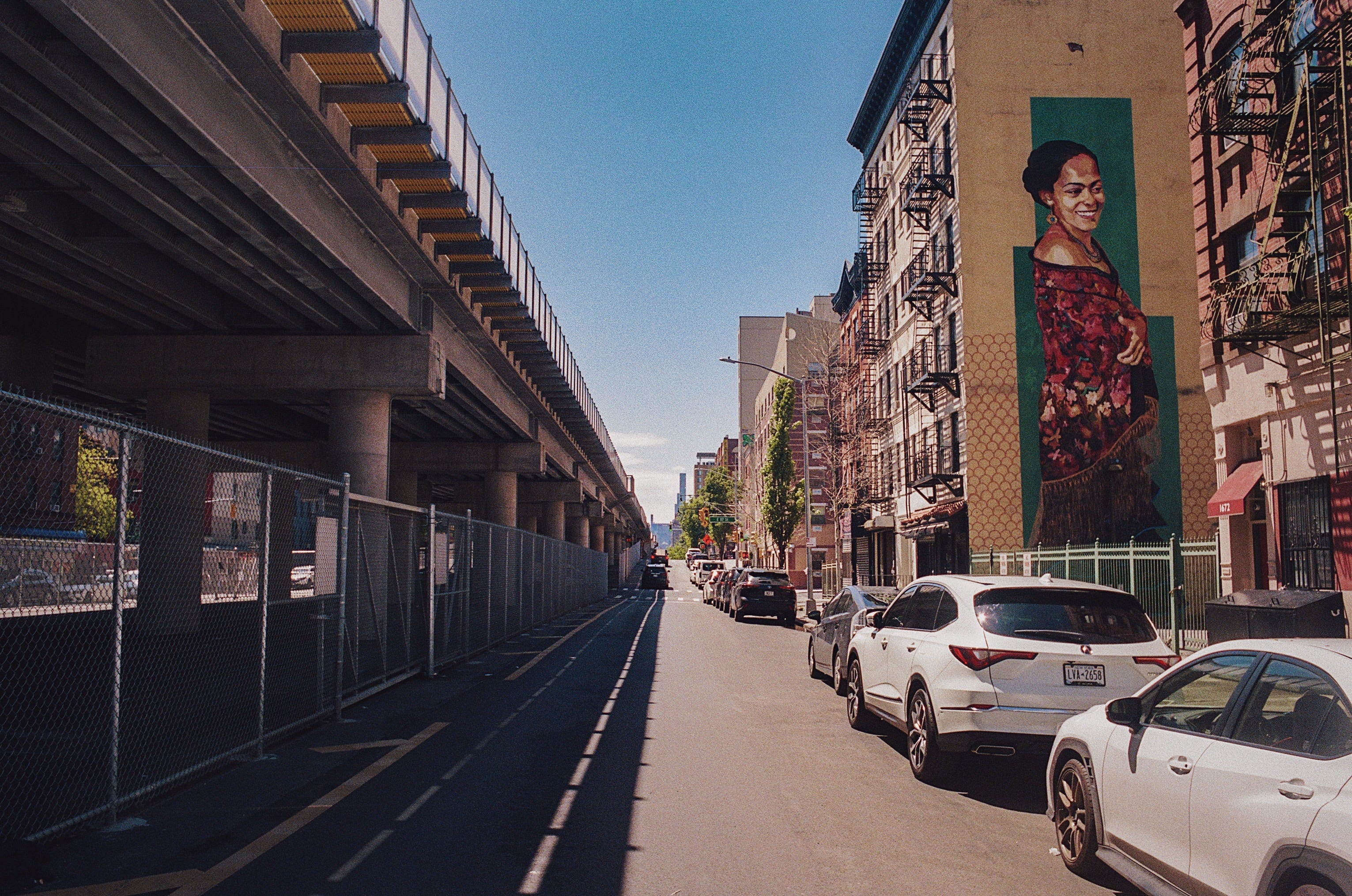
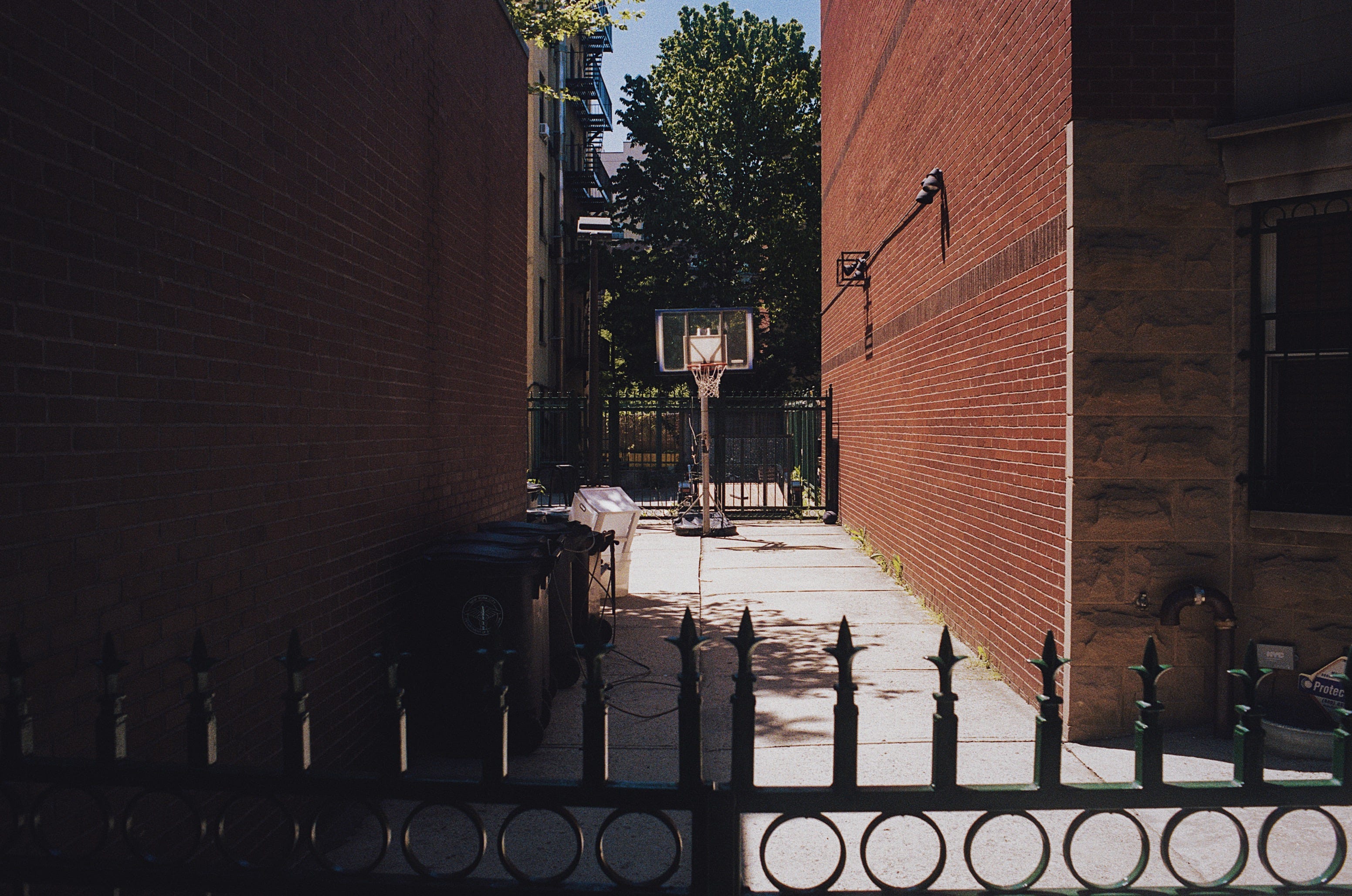
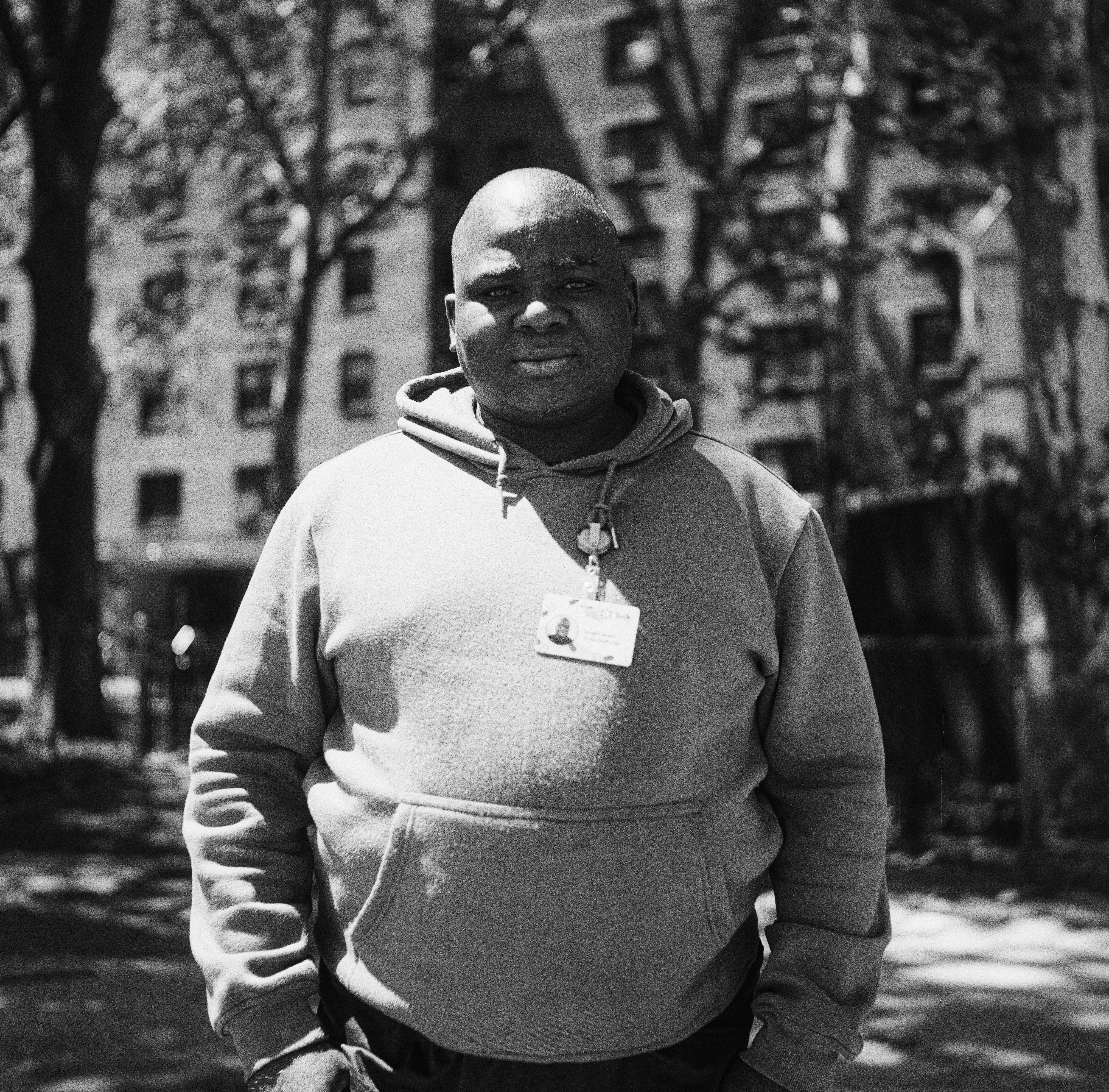
I was making my way along Paladino when a car window came down and a man leaned out asking how much for a photograph, the question delivered with the same matter-of-fact New York directness I’d been fielding all day, as though hiring a photographer off the street in the middle of the afternoon was a completely unremarkable thing to do, which in this neighborhood, on this day, it felt like it was. I gave him the same answer I’d given everyone else. He stepped out of the car with a wide, open smile and an outstretched hand and told me his name was Ismail. We shook, he asked me where I wanted him, so I positioned him in the frame I had in mind and counted down from three, then pressed the shutter. When I told him we were done his whole face changed, the composed, straight-backed expression he’d held for the photograph giving way immediately to a broad, delighted grin that was an entirely different portrait from the one I’d just taken. We traded information, I followed him on Instagram, and I found out he shoots as well. We stood there on Paladino Avenue for a few minutes just talking about it. The cameras, the city, before the afternoon pulled us both back into it and we went our separate ways.
It was getting into mid-afternoon by now, the sun still sitting high and bright but with a few more clouds moving across it than there had been in the morning. Big, slow-drifting ones that slid over the face of the sun every few minutes and brought with them a brief, merciful drop in temperature before peeling away again and letting the heat back in. I turned southwest and started making my way back across all the avenues I’d already walked, retracing the geography of the day in the opposite direction, the blocks looking different now with the light coming at them from a new angle and the afternoon crowd thicker on the sidewalks than the morning one had been. I came down Third Avenue somewhere around 118th and just kept walking, letting the avenue carry me south through the 110s. I walked past bodegas with their fruit stands spilling out onto the sidewalk in bright stacked rows of mangoes and plantains and loose bundles of cilantro, past barbershops with their doors propped open and the sound of clippers and conversation drifting out into the heat, past the slow ordinary machinery of a neighborhood going about its afternoon in no hurry, until somewhere around 105th I found a couple sitting outside a local bodega and stopped.
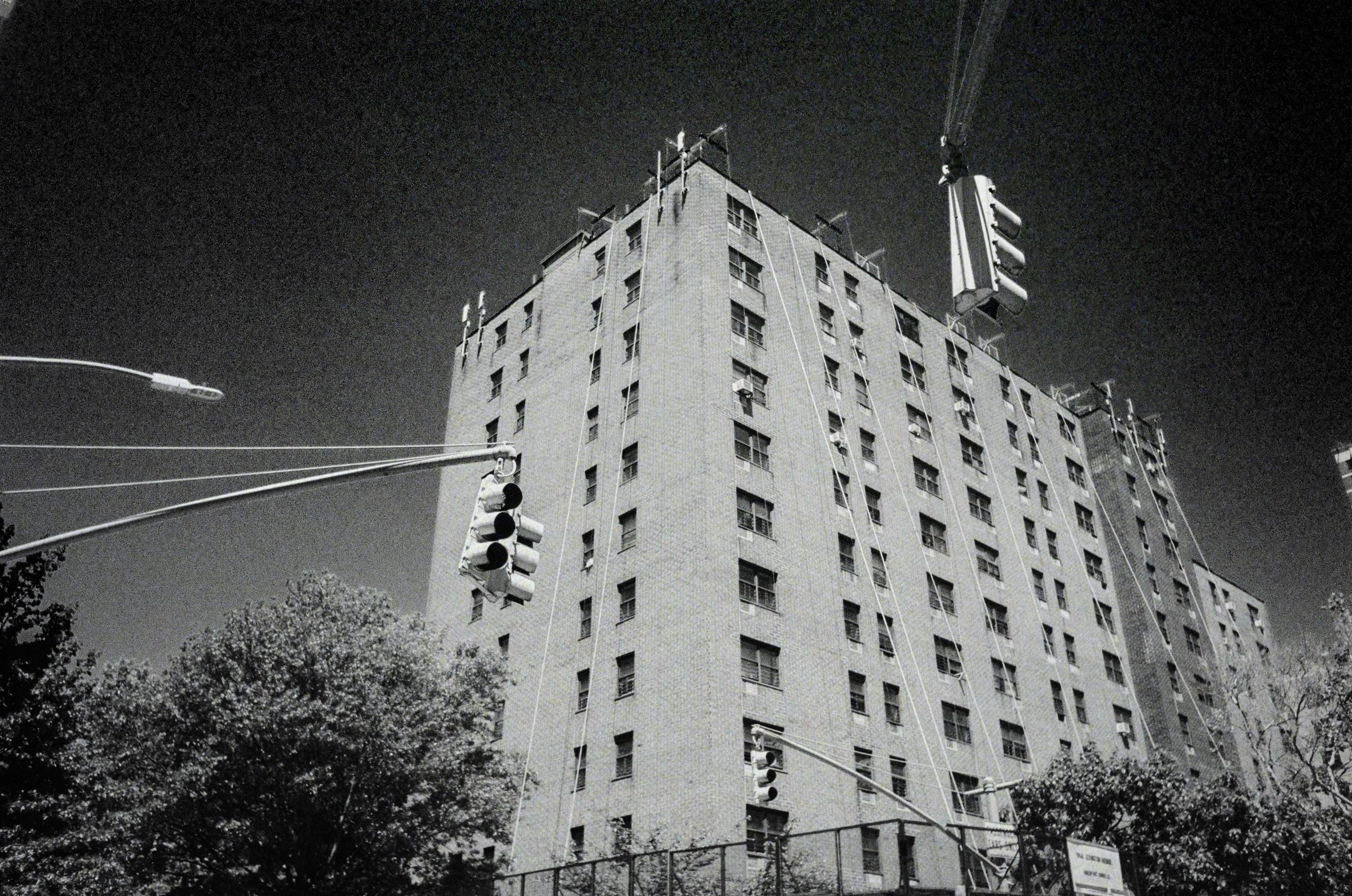
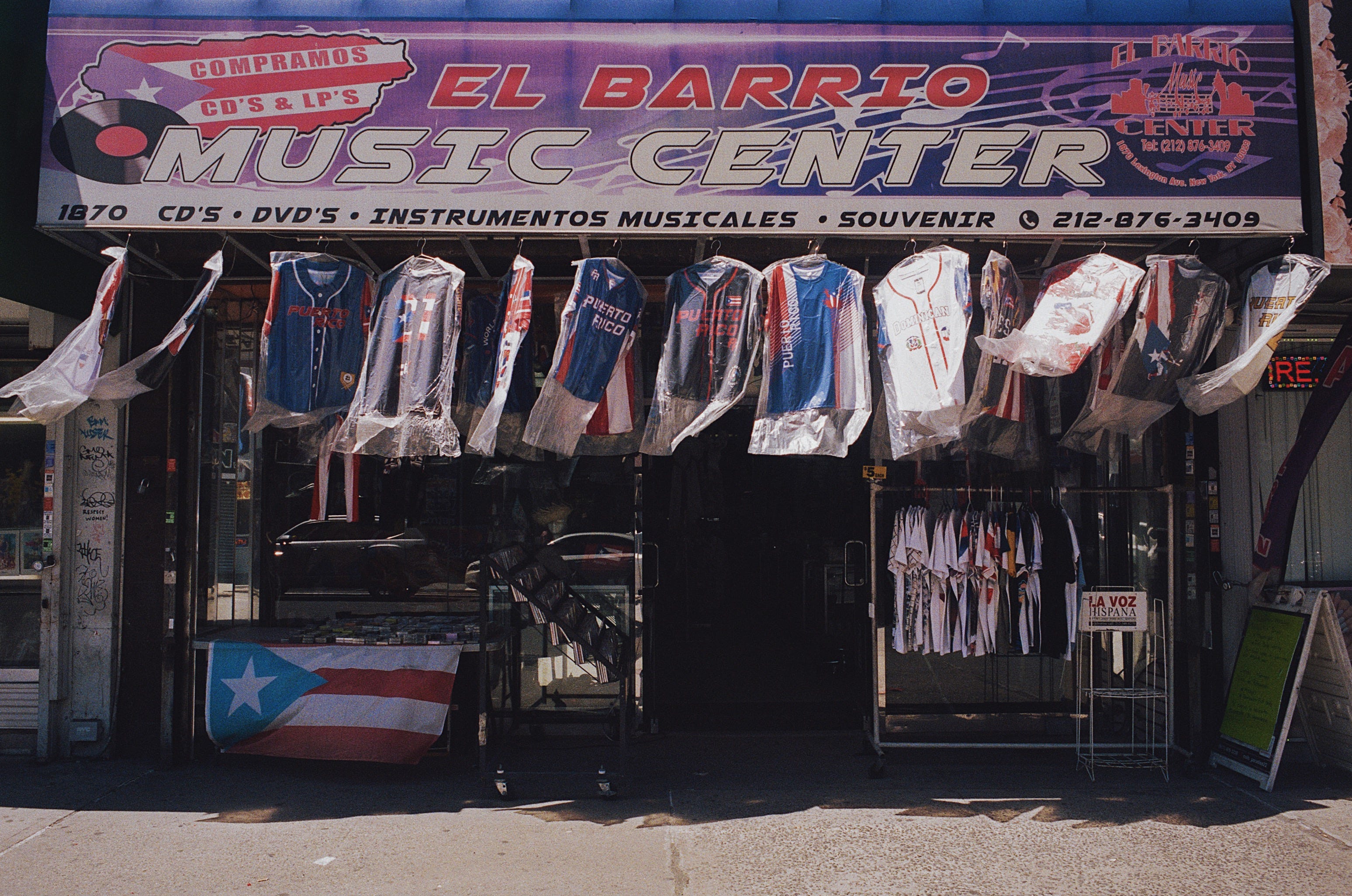
People ask me often about the cameras. Why so many? What’s the point of carrying all three? What does it say about me that I can’t commit to just one? The criticism comes in a few different flavors. Some call it pretentious. Some call it try-hard. Some say it suggests inexperience, that a photographer who really knows what they’re doing picks a tool and works it. That switching between bodies is the behavior of someone who hasn’t figured out what they’re after yet. That it’s indecisive at best and performative at worst. I’ve heard all of it, and I understand where it comes from, but I think it mostly misunderstands what the cameras are actually doing out here. Within the photography world, among people who know the craft, who understand street work, who can spot a shooter moving through a crowd with a single body pressed close to their chest, waiting for the moment to materialize before raising the camera and disappearing again, I might look like a lot of things. But out here, on Third Avenue in the middle of a Friday afternoon, to the people actually living their lives on these blocks, three cameras hanging off a tall white guy’s neck and torso isn’t a threat or an intrusion most of the time. It’s a curiosity. It opens something up. More times than not they come to me first, wanting to know what all the equipment is, what it does, whether I’m serious about it. The ones who know nothing about the photography world are often, funnily enough, the ones most convinced that I must be. The cameras become an entrance into conversation, and the conversation becomes an invitation, and somewhere in that exchange, the distance between stranger and subject collapses into something more honest than anything I could manufacture by being invisible.
“As I’ve grown older in the craft I’ve found myself less interested in the photograph that happens to people and more interested in the one they choose to be part of.”
It’s something I’ve been thinking about more as I keep working. This question of visibility, of whether the photographer’s presence in the frame, acknowledged or otherwise, changes what the photograph means or only what it looks like. I’ve moved gradually toward what I’d call a William Klein approach in certain situations. Not disappearing, not hunting from a distance and retreating before anyone registers what happened, but letting the subject know the moment is occurring, making them an active participant in what’s being created rather than an unwitting one. Not always. There are images that require you to be invisible, that only exist because nobody saw you coming. But more and more I find that the photograph made in full or partial awareness, where the subject looks into the lens knowing exactly what’s happening and chooses, in that instant, how they can exist in it, carries something the candid one sometimes doesn’t. A kind of dignity. An agreement between two people about what this moment is worth.
The couple outside the bodega asked me the same question everyone asks…how much. I gave them the same answer I’d been giving all day. They laughed and said alright then, held each other’s hands, and smiled for the camera with the full, unguarded warmth of two people who’re genuinely happy sitting exactly where they are, leaning into each other. They were ecstatic in an easy way, their faces open and bright, completely at ease with being seen. I asked them where they were from, and the answer came back without a pause, delivered with a kind of mystical yet deeply serious certainty that stopped me mid-thought: “Baby, we are all from everywhere and nowhere all at once.” I didn’t have a follow-up for that. I had no idea how to respond to that. It was the truest answer anyone had given me to any question all day.
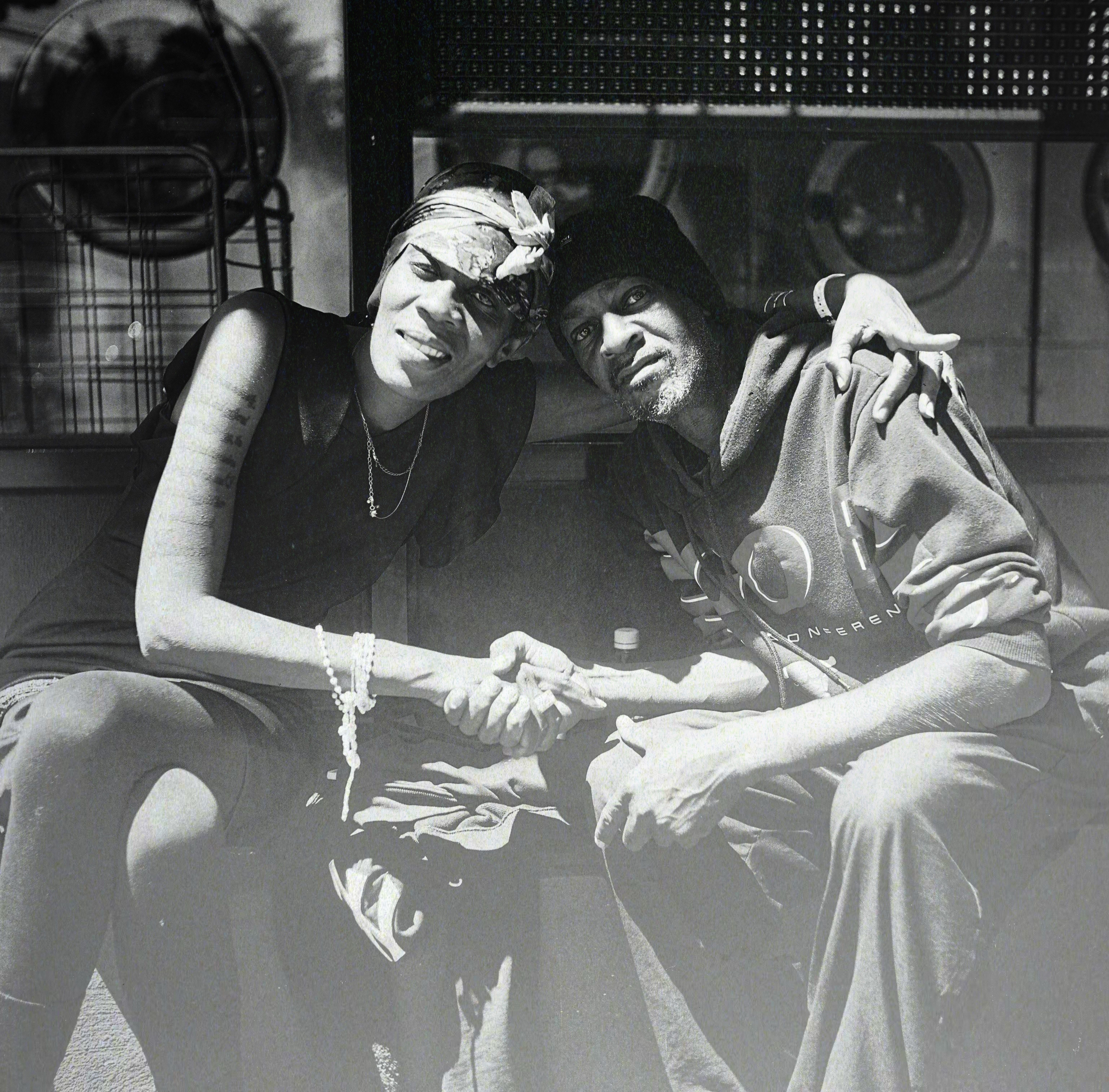
We talked for a bit after that. They were unhoused so I offered to get them something to eat. They declined with a graciousness that made the offer feel small by comparison. They said they were happy just to have been photographed, and they meant it in a way that wasn’t deflection or pride but something simpler and more complete than either of those things. It felt like a genuine sufficiency, a sense that the afternoon had already given them what they needed. I told them I’d love to print the photograph and find a way to get it to them. They looked at me with total calm and said “The world will bring us back together again.” I thanked them for the conversation and meant it, turned and pressed on toward Fifth Avenue with that line sitting somewhere in my chest.
I’ll be honest… the Upper East and Upper West Side have never done much for me photographically. I’ve made peace with that at this point. Something about the stretch between 100th and 86th street has always felt closed off to me. Like a frequency I can’t quite tune into. The streets, too wide and too manicured, and the people moving through them, too practiced at not being noticed or bothered to offer much to someone carrying cameras and looking for a reason to stop. I don’t know if it’s the old money quietude of the buildings, the generations of families who’ve refined the art of minding their own business to something approaching a cultural tradition, or just some inexplicable dead zone in my own luck, but I’ve never once come away from that corridor with anything I was proud of. So I gave up on it today and turned into Central Park instead, stepping off the avenue, through the tree line, and into that different world the park becomes the moment the city falls away behind you.
The grass on either side of the path was a deep, saturated, almost electric green. The kind of green that only shows up for a few weeks in May before the summer heat begins to bleach it out. Thick and recently cut, the short, dense blades still holding the faint clean sweetness of fresh clippings in the warm air all around me. The trees overhead were in full new leaf, broad, generous canopies of pale yellow-green that the afternoon sun pressed through in long, soft columns of diffused gold light, shifting slowly across the path as the breeze moved the upper branches so that walking through it felt like moving through something that was itself breathing. The light, never fully still, never fully the same from one step to the next. The path beneath my feet was packed and dark, slightly cool through the soles of my shoes. On the open lawns to either side, the ground had the faint give of earth that had been soaked through with a recent rain that hadn’t fully dried back out yet, soft and yielding underfoot where the grass was longest.
What I walked into first was the full noise of what appeared to be every school child in the northern half of Manhattan spread across the North Meadow fields in enormous, brightly colored groups, their voices carrying across the open grass in overlapping waves of shrieking and laughing, accompanied by the piercing plastic shriek of coaches’ whistles. The whole meadow alive with the chaotic, sun-drenched energy of a field day in full swing. I watched it for a moment, the blur of small bodies in matching colored shirts sprinting across the grass, sneakers churning up small divots in the soft turf, the adults at the edges clapping and calling out encouragement in voices stretched thin from the effort of being heard over all that joyful noise, then moved on through it, south toward the reservoir.
The path down to the Jacqueline Kennedy Reservoir opened up into a long, wide gravel track that circled the water’s edge. The crunch of it underfoot dry and gravelly, loud in contrast to the concrete I’d been walking before. The reservoir itself spread out to my right in a vast, glassy, blue-grey stillness that seemed to exist in its own separate atmosphere from the rest of the park. The air above it, seemingly cooler and damper, carrying the faint dark mineral smell of standing water, the surface absolutely unbroken and mirror-smooth except for the occasional slight dimpling where a gust of wind brushed across it and raised a thin rash of tiny ripples that ran for a few yards before dissolving back into stillness. The clouds overhead were reflected in it, gracing a soft, slow-moving mass of white and pale grey reproduced in the water below them in exact detail so that looking out across the full width of the reservoir you saw the sky twice. The joggers on the path moved past me in a steady, rhythmic procession, the sound of their footfalls in the gravel arriving just before they did and fading just after, their breath audible in the open air, the small rush of displaced warmth they carried with them brushing past my arm as they went.
I came south past the Great Lawn, where the ballfields were running full and loud, the sharp woody crack of a well-hit ball carrying clean across the open grass every few minutes, the fielders’ voices calling to each other in short urgent bursts.
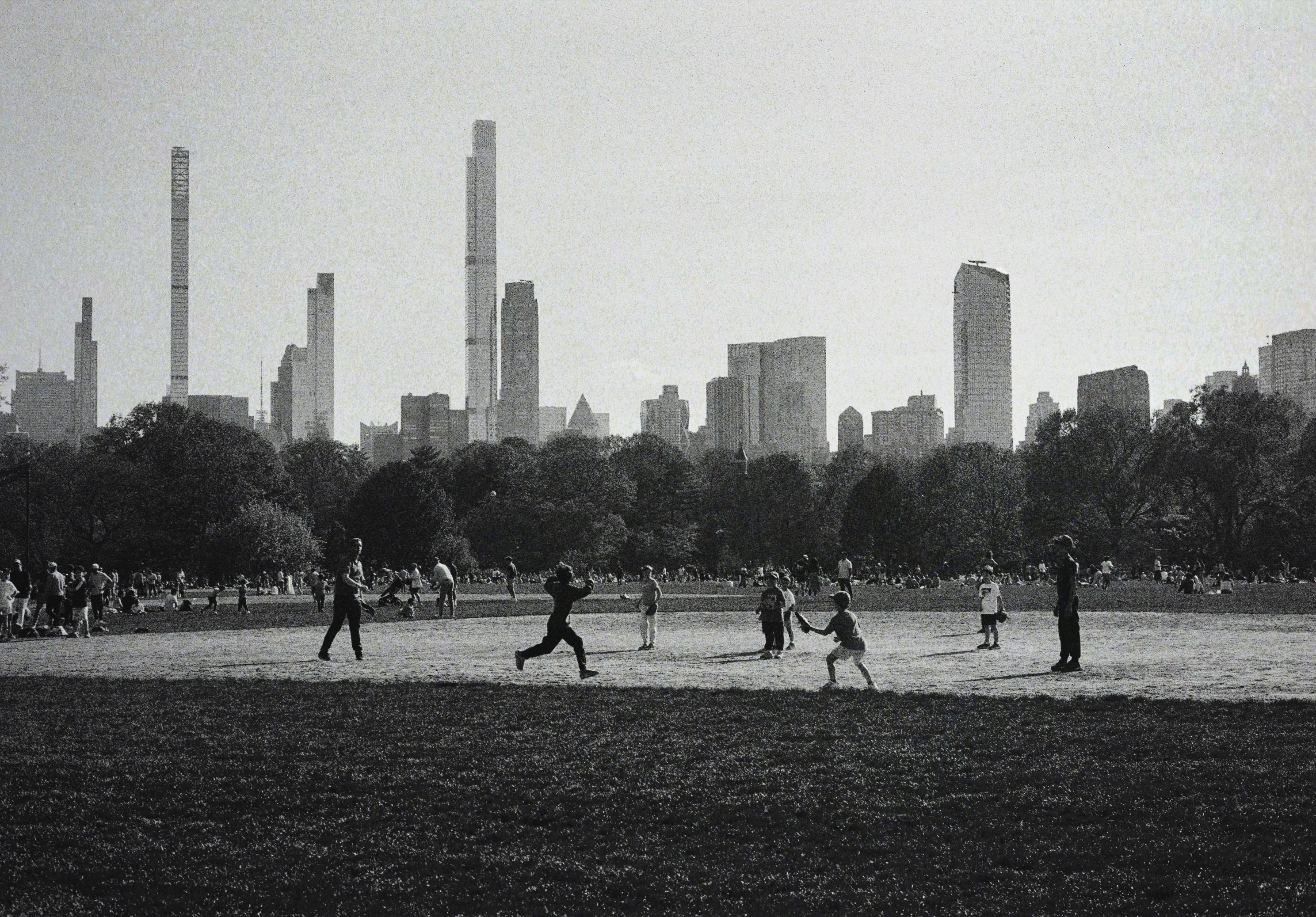
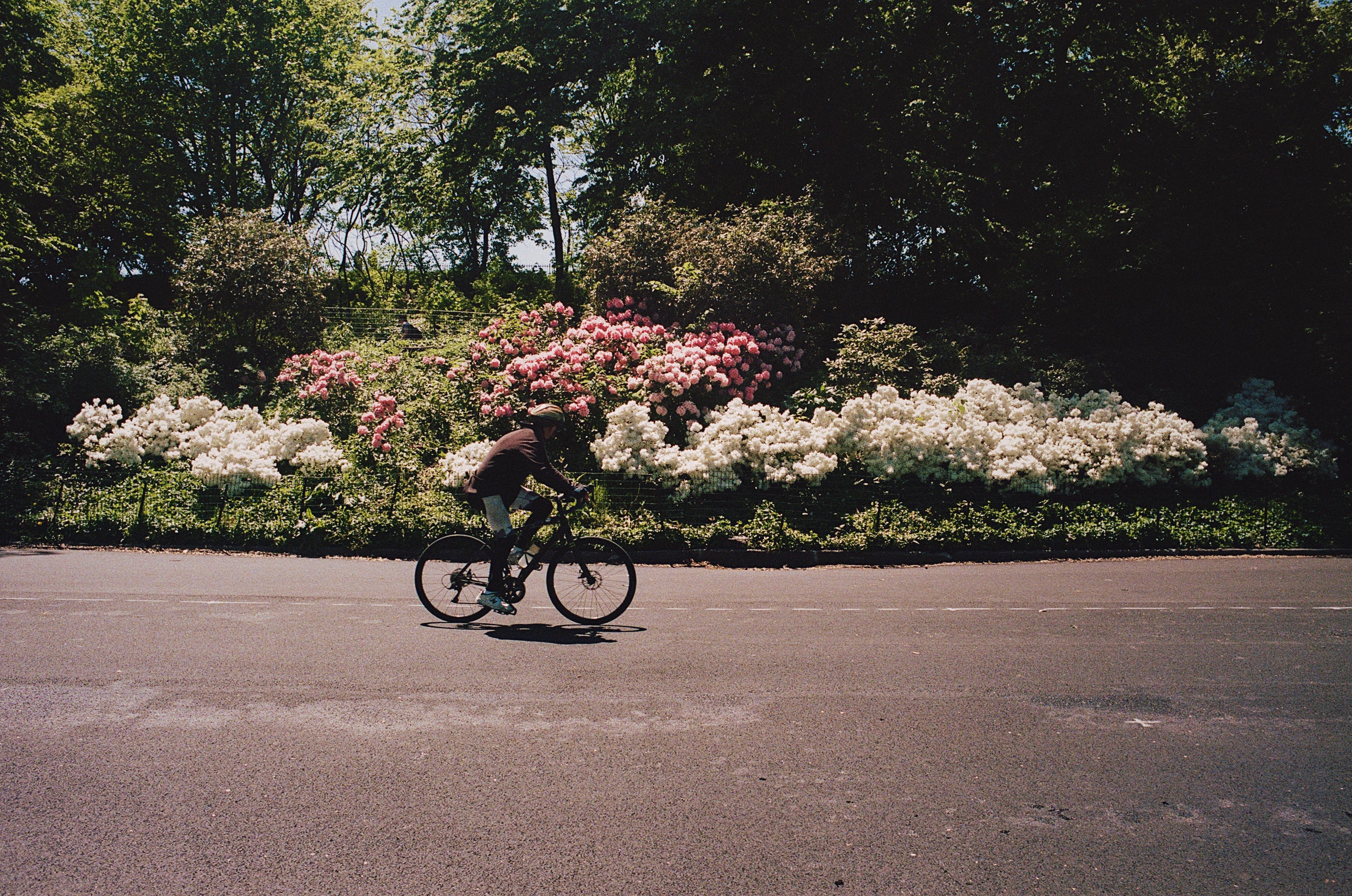
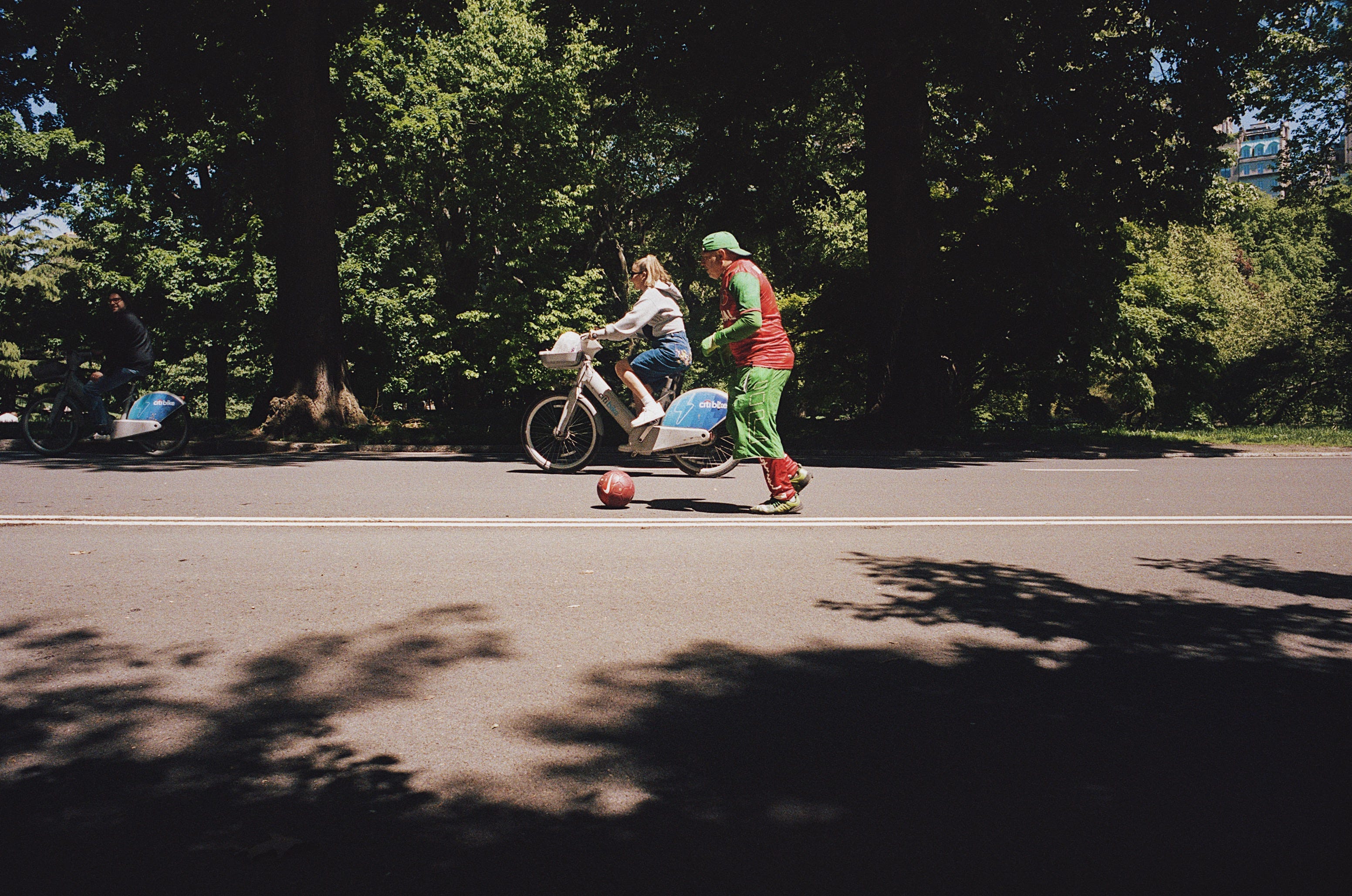
I walked past the Obelisk, standing tall and pale grey against the deep green of the trees behind it, its ancient carved surface chalky and faintly rough-looking in the afternoon light. I continued past King Jagiello’s heavy dark bronze form up on its pedestal, before walking onto East Drive, wandering under the long corridor of elm trees that line it on both sides, their trunks thick and deeply grooved with age, the bark a rough, ridged, dark grey-brown, and the canopy above me dense enough that the light coming through it was broken into small bright shifting pieces that moved across the pavement in a slow, restless pattern, warm where they landed and noticeably cooler just beside them in the shade. Bright pink and white flowers blossomed on the side of the road as bikers hustled their way around the central park loop, whizzing past the scenery in hopes of decimating their Personal Bests.
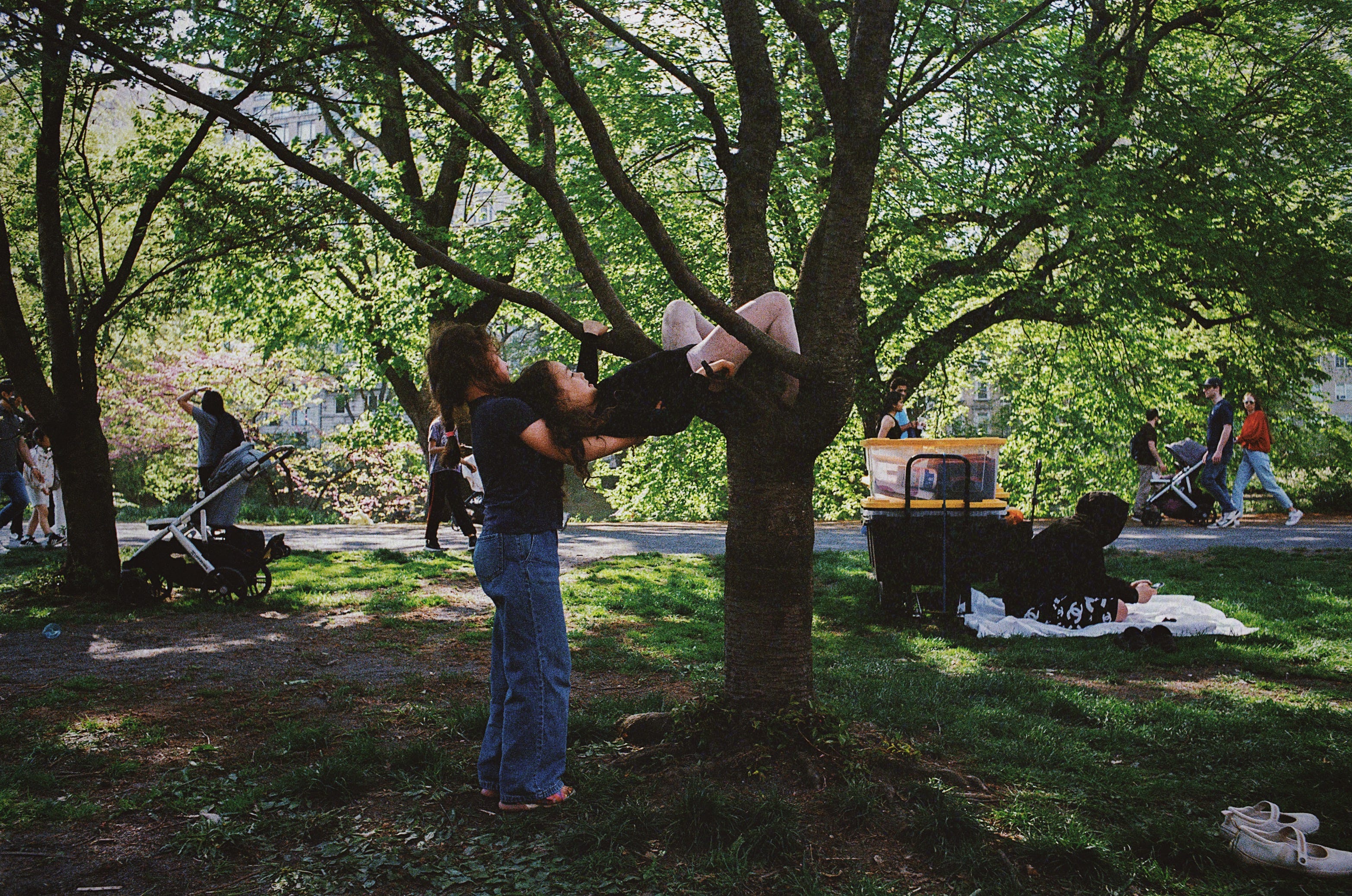
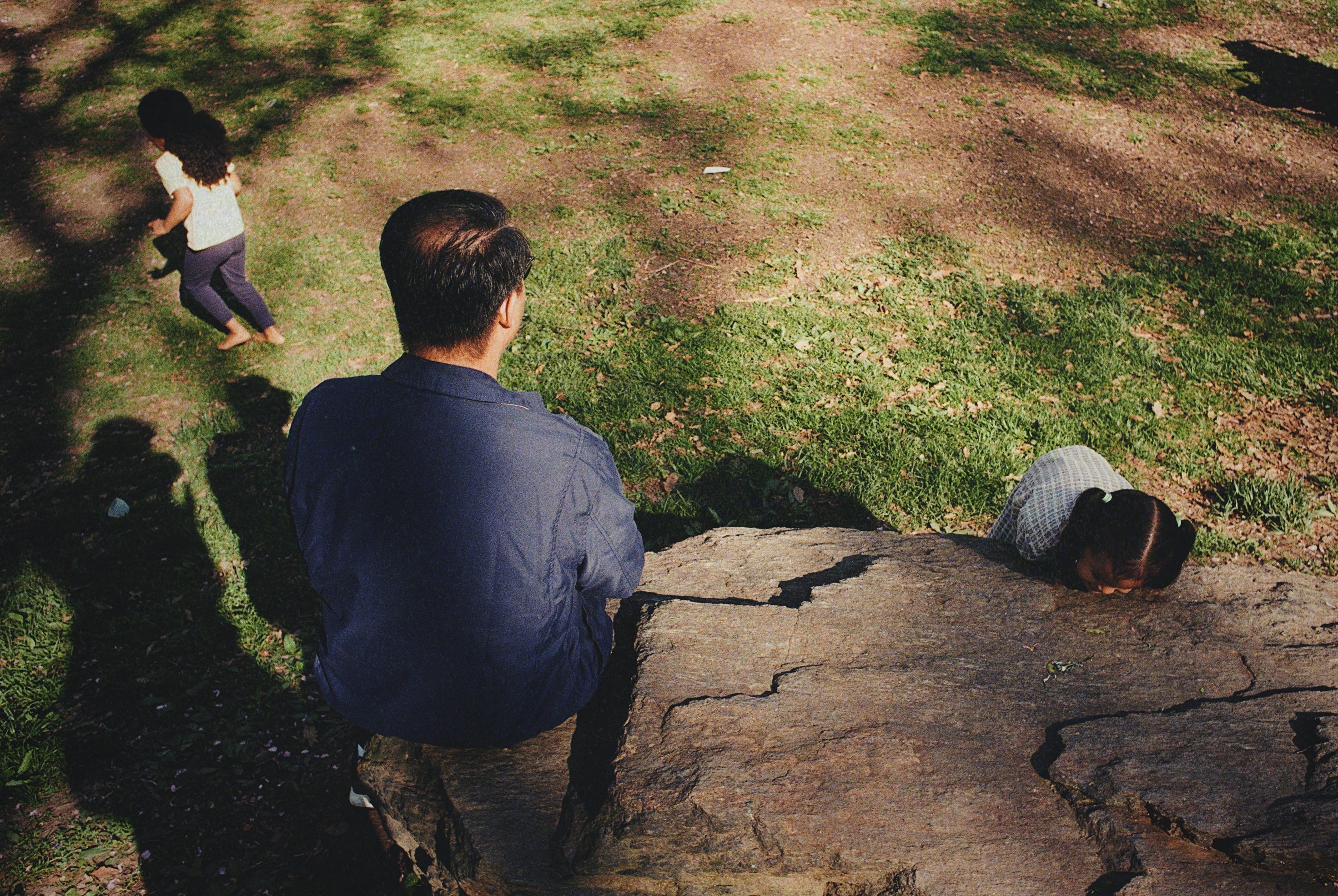
The Boathouse appeared through the trees. The smell of fresh cut grass giving way to something richer and slightly more stale. Lake water mixing with the faint drifting warmth of food coming from the restaurant terrace. Beneath all of that, the dry, resinous smell of sun-heated wooden dock boards. The flowering trees along the edge of the sidewalk were in full dense bloom, their branches so heavy with clusters of small pink and white blossoms that they drooped slightly under the weight of them, the petals a soft, almost translucent white at the center, deepening to a warm pale pink at the edges. Every few seconds, a small cluster of them let go in the breeze, drifting down slow and turning through the warm air onto the pavement, collecting against the curb in soft loose drifts. The jazz from the restaurant terrace came through the gates in a low stream. The round, woody warmth of an upright bass underneath, a piano comping loosely above it, the whole thing easy and undemanding in the afternoon heat, absorbed into the ambient sound of the park without calling too much attention to itself. On the terrace itself the lunch crowd leaned back in their chairs under wide cream-colored umbrellas, the white tablecloths lit warm gold where the sun fell across them through the gaps in the tree canopy above.
Out on the lake the small green wooden rowboats were scattered wide across the dark water in every direction. The paint on their hulls, a faded, chalky sage green, slightly scuffed along the waterline where they’d been knocking against the dock and against each other every new season. The families inside them, two parents, three children, sometimes four, everyone a little too large for the available space, and all seemingly never have rowed a boat before in their life sat with their knees pressed together and their oars working at cross purposes, the boats rotating slowly in long idle arcs across the surface of the lake. Their oar blades slapped the water with a flat, wet sound each time someone overcorrected like that of a pissed off beaver. The children dangled their fingers over the sides into the dark green water, which was gross in afternoon warmth. Their voices carried clearly across the open lake, high, bright, excited, while the parents called to each other from one end of the boat to the other over the tops of their children’s heads, their voices lower and slightly more strained. Speaking with the tone of two people that just realized this was more physically demanding than either of them had anticipated. I stood at the edge of the path and watched all of it for a while, the blossoms coming down behind me, the bass and piano still threading through the trees, the light on the water growing warmer and longer as the afternoon began its slow lean toward evening.
I reached Bethesda Fountain, the low, continuous rushing sound of water falling into the wide circular basin had yet to start as it still sits empty. The plaza surrounding the basin was bustling with people. I found one of the long shaded stone benches that runs the full width of the terrace on the far side, sat down, and cracked open the Canon F1.
The back of the camera opened with a struggle. It’s been getting stuck recently, so I sacrificed a few fingers to get it open. Finally, a mechanical click, and the spent roll of Fuji came loose in my fingers. I set it carefully into my bag, pulled a fresh roll of Portra 400 from the side pocket, loaded it, and sat for a moment on the cool stone with the camera in my lap while the plaza moved around me. To my left the tourists had packed themselves into a dense, shoulder-to-shoulder mass along the railing at the water’s edge, their phones and cameras raised above their heads at every angle, all of them pointed at the lake spreading out beyond the fountain’s far basin, its surface glittering in the full afternoon sun in a broad, shifting scatter of sharp white light. The geese moved through it all with a slow, proprietary calm, their dark heads and heavy bodies utterly unbothered by the crowd pressing in around them, pausing at intervals to orient themselves toward a camera with the well-practiced patience of animals that have understood exactly what’s expected of them, as if they were circus performers. The turtles sat out on every rock and log breaking the water’s surface near the bank, their dark shells domed and glistening, heads extended toward the sun with an expression of such thorough, reptilian contentment that it seemed almost rude to disturb it.
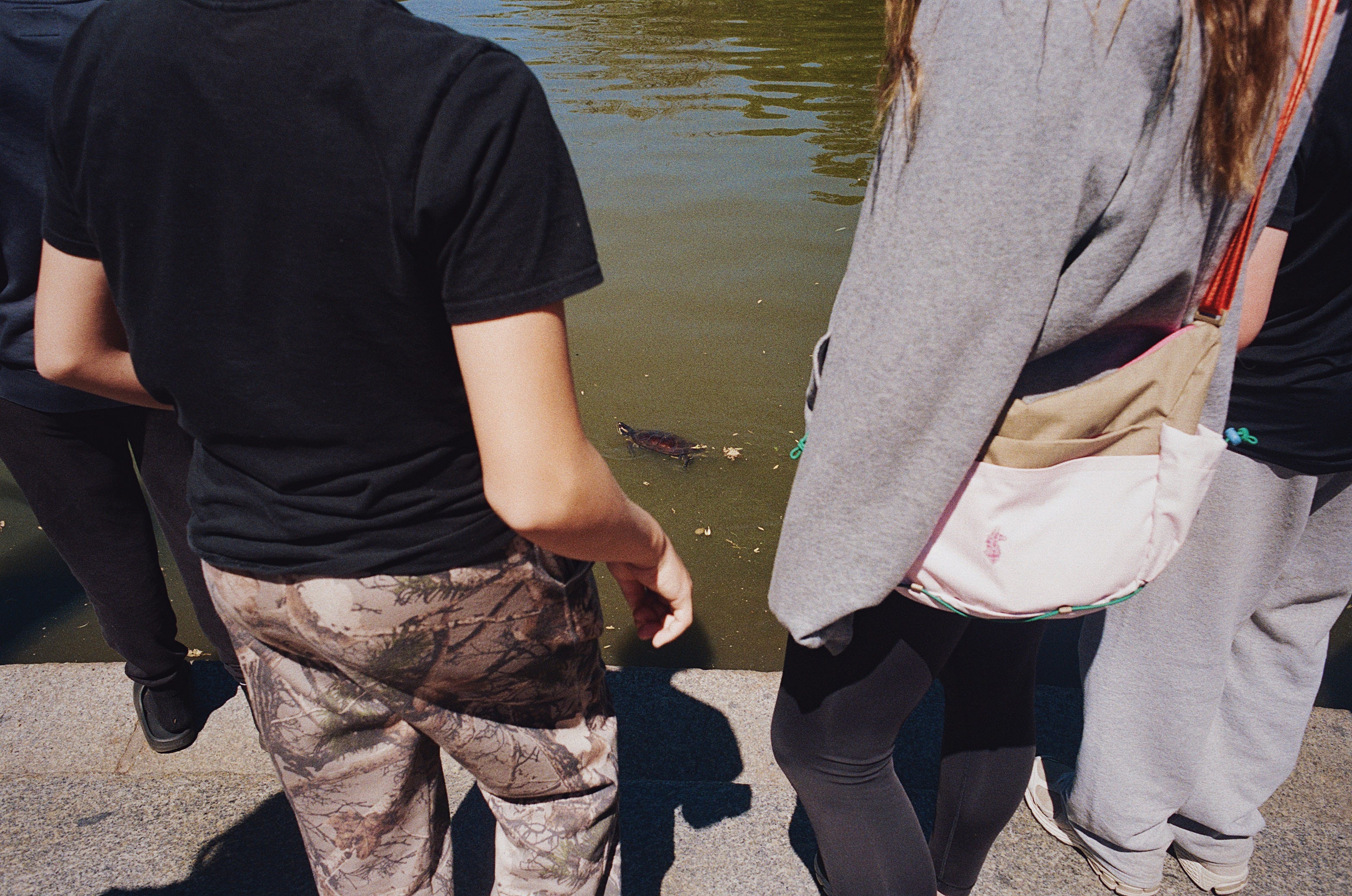
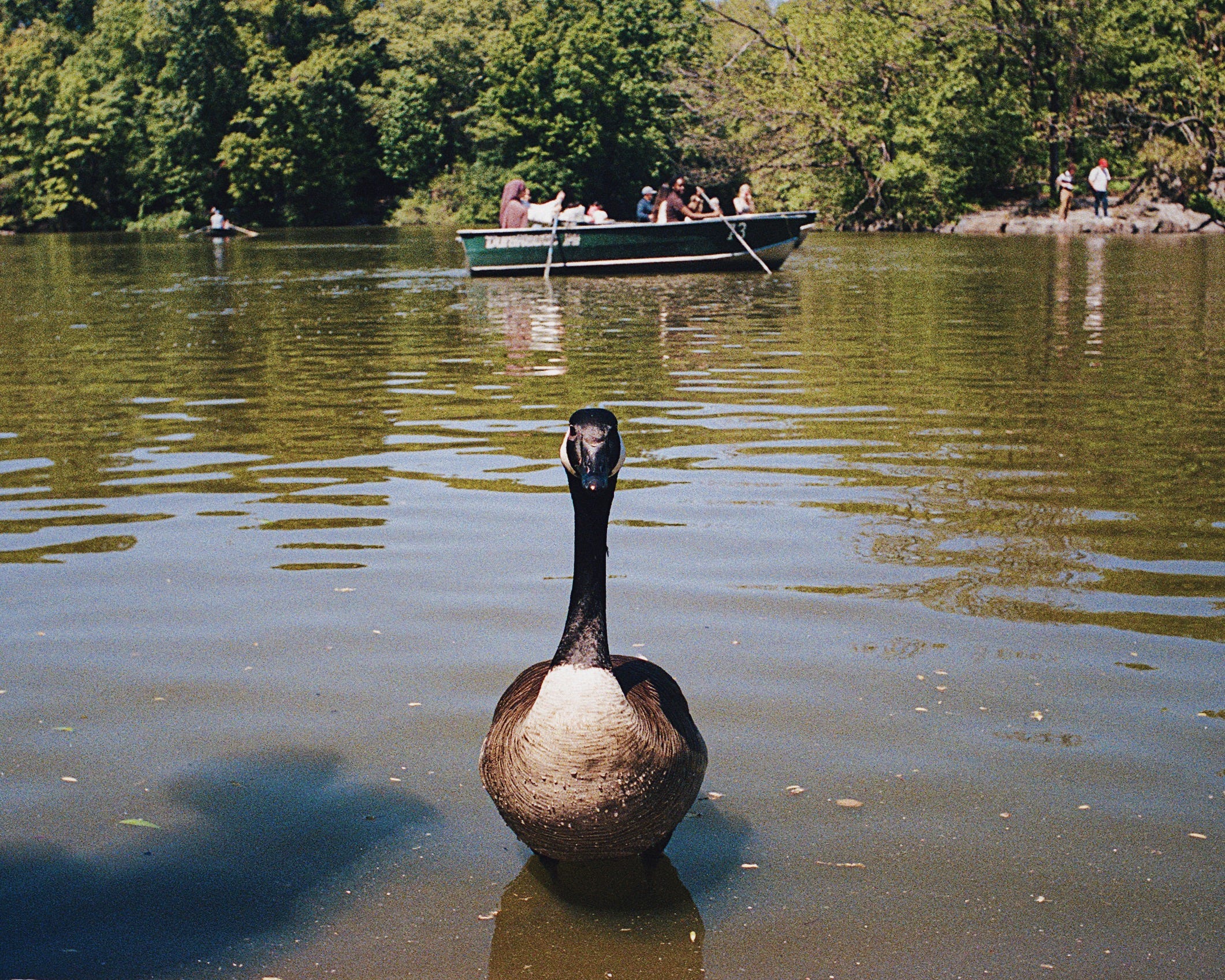
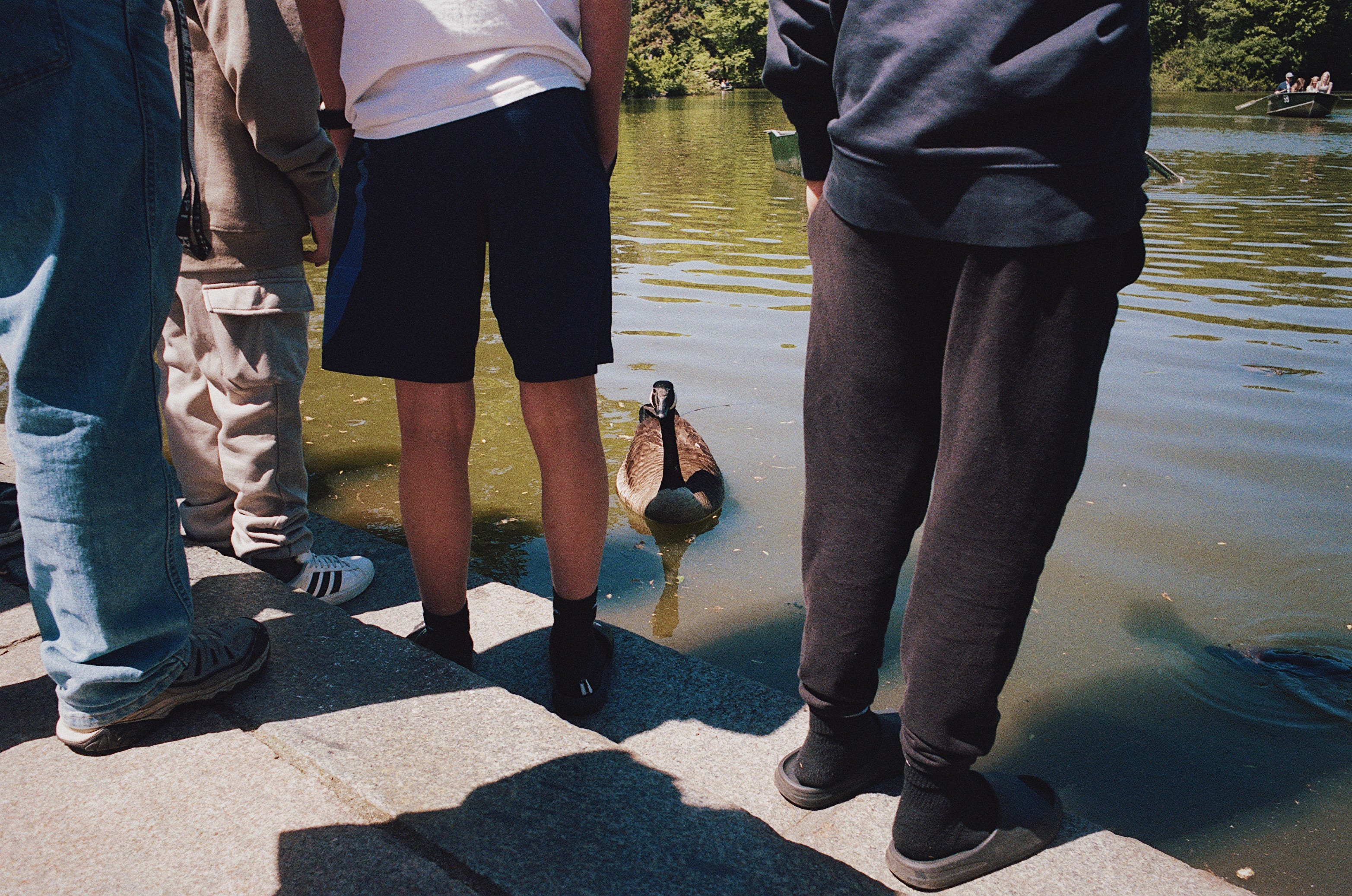
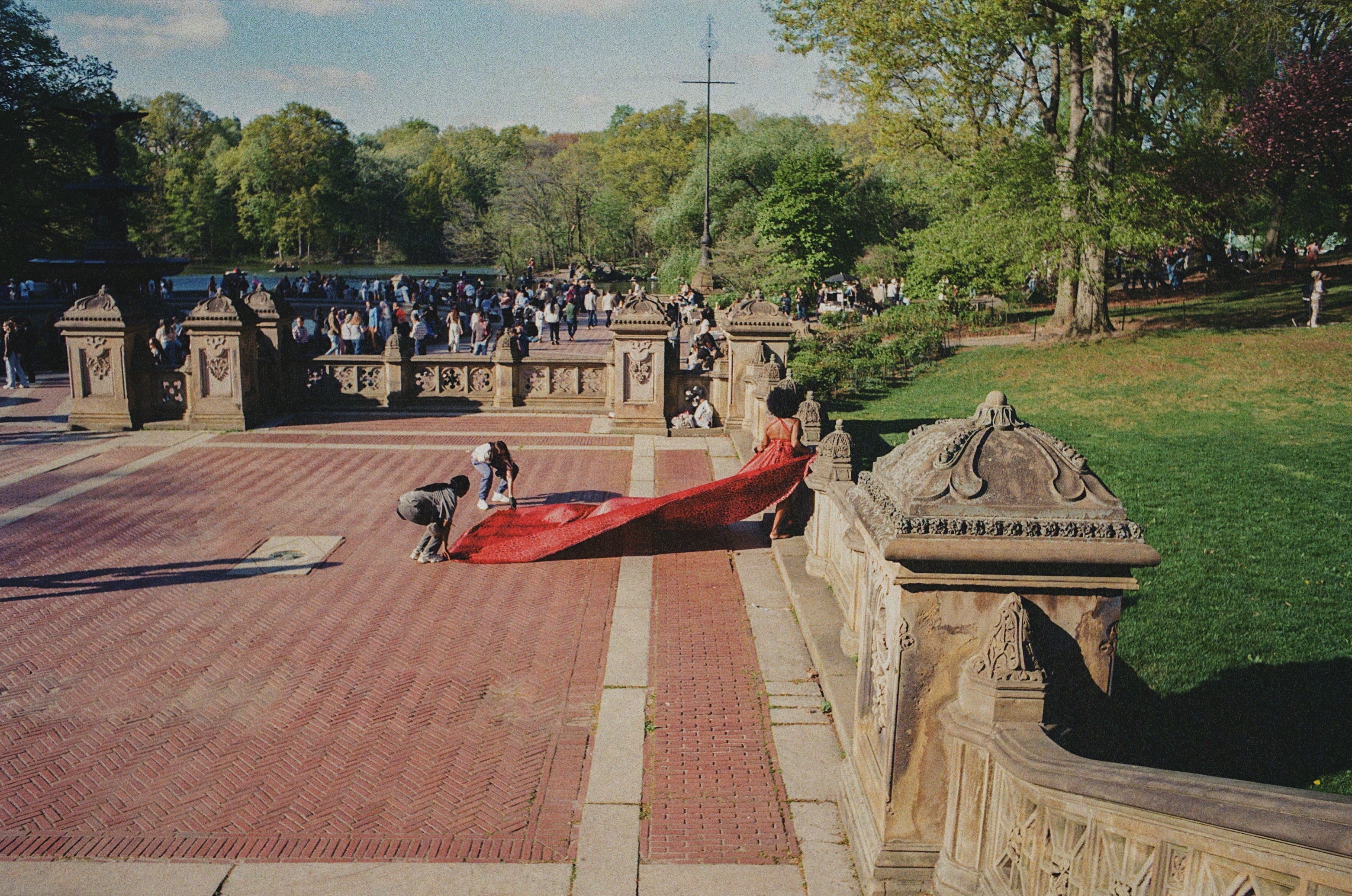
I circled the fountain a couple of times, watching the crowd move around it in an eddying current that large tourist gatherings take on in open spaces. People flowing in from the staircase above, peeling off toward the railing, reforming into loose clusters around the basin’s edge, the whole mass turning gently on itself while the fountain stood empty and dry. I pushed back up the wide stone stairs to the main terrace level above and came out onto the main path heading north toward the Mall.
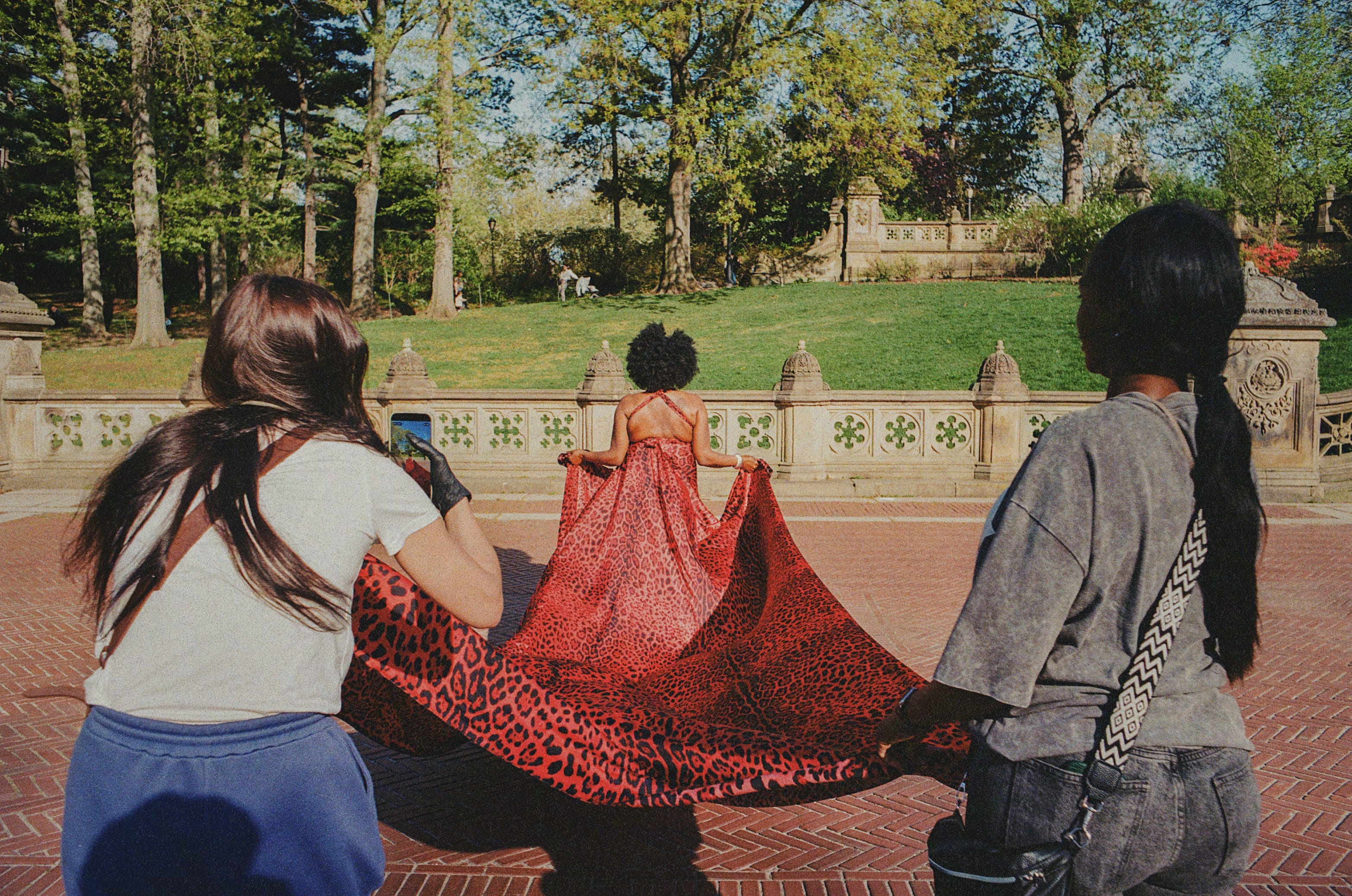
The volleyball courts to the right were deep into the afternoon, every court running a full pickup game. The sand churned loose, dry and pale from the hours of play. The men playing had long since shed their shirts, their backs and shoulders gone deep red-brown in the sun, the muscles across them tightening and releasing with every dig and spike, their voices sharp and immediate every time a point swung one way or the other, the urgency in them ratcheting up with a tight, competitive edge the closer the score got. The sound of the ball hitting forearms and palms carried across the path in clean, flat percussive cracks and the sand sprayed out from under their feet in small arcs every time someone dove for a low ball, landing and settling back in slow falling curtains across the churned court.
The Mall opened up ahead of me as I moved east. The long, straight, cathedral-like corridor of American elms running the full length of it on both sides, their massive trunks rising thick and deeply furrowed from the ground, spreading into a high interlocking canopy of green above the path so dense and complete overhead that the light underneath it was transformed into something dappled and cool. The air, several degrees lower under the trees than it had been in the open sun, carrying a faint loamy earthiness from the dark soil around the tree roots. The path itself, wide and smooth, the sounds of the park muffled inside the long elm corridor, footsteps and voices softened by the weight of the canopy above, and on both sides the wooden slat benches along the path held the afternoon’s slow population of readers, phone-scrollers and people simply sitting with their faces tilted up toward the patches of light coming through the branches.
Coming out the southern end of the Mall I moved toward the rocky outcroppings that rise above the pond near Gapstow Bridge, the schist pushing up through the soil in broad striated shelves of dark grey and rust-brown rock. Their surface, rough and granular under the hand, warm from a full day of sitting in the sun. The tourists had claimed every flat surface of the rocks above the pond, sitting and standing in disorganized, sun-warmed clusters, their faces bright and full of the unguarded delight of people encountering the concrete jungle for the first time.
The skyline of Billionaires’ Row, those greedy fucks, pressing up above the tree line to the south in its dense, glittering vertical wall of glass and pale stone. The towers catching the late afternoon light on their upper floors in sharp, bright bands of blinding white light that ran down their facades and met the dark mirror of the pond below. The sunlight fell across all those upturned faces at a long, raking angle, deep and shadow-rich. I couldn’t stand looking at it anymore, so I scurried over to Fifth Ave.
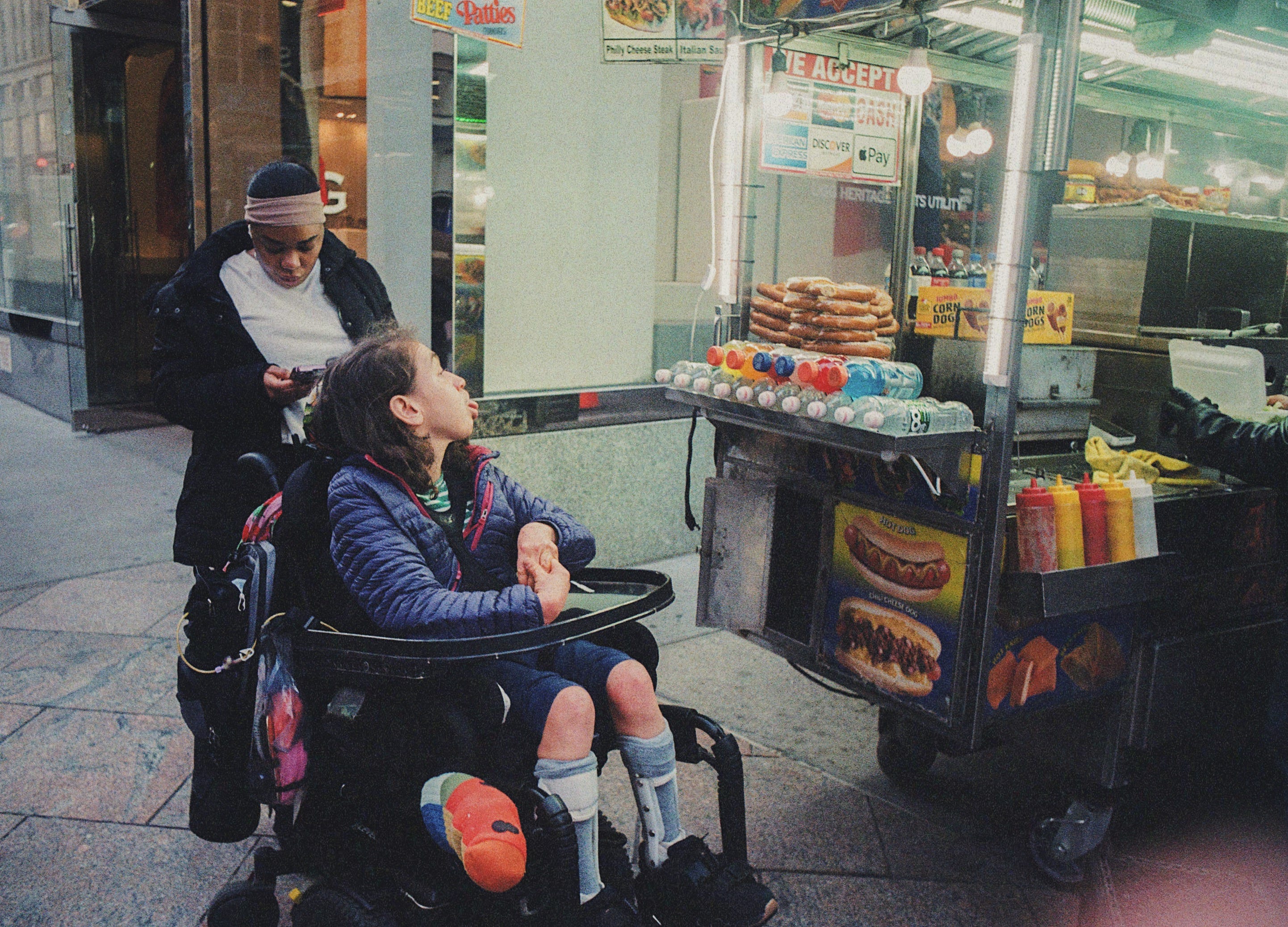
I’ve been walking Fifth Avenue for years now. I know this stretch between 59th and 42nd the way you know the ABC’s. The avenue here is wide, loud and relentlessly full. The sidewalks running dense with bodies moving in both directions at once, tourists slowing to crane their necks upward at the building facades while the people who work in the towers above Madison and Sixth cut through the crowd on both sides with the low, forward-leaning urgency of people who stopped seeing any of this a long time ago. The smell of the vendor carts comes first. The grey, slightly sulfurous steam rising from the hot dog carts’ stainless steel bins, the doughy, faintly stale smell of the oversized pretzels sweating under their heat lamps, the whole combination of it carried on the warm afternoon air up the avenue in a long, rolling, familiar wave that I’ve breathed in on this block more times than I could count. The carts are strung along the curb at loose intervals the full length of it, their chrome surfaces catching the sun in bright flat flashes, vendors leaning against them with their arms folded in the gaps between customers. Between them, spread out on low folding tables or hung from portable display panels, the work of the street artists who set up along the avenue’s edge. Paintings and photographs and prints, their surfaces turned toward the foot traffic in the hope that someone moving through the crowd will slow down long enough to look.
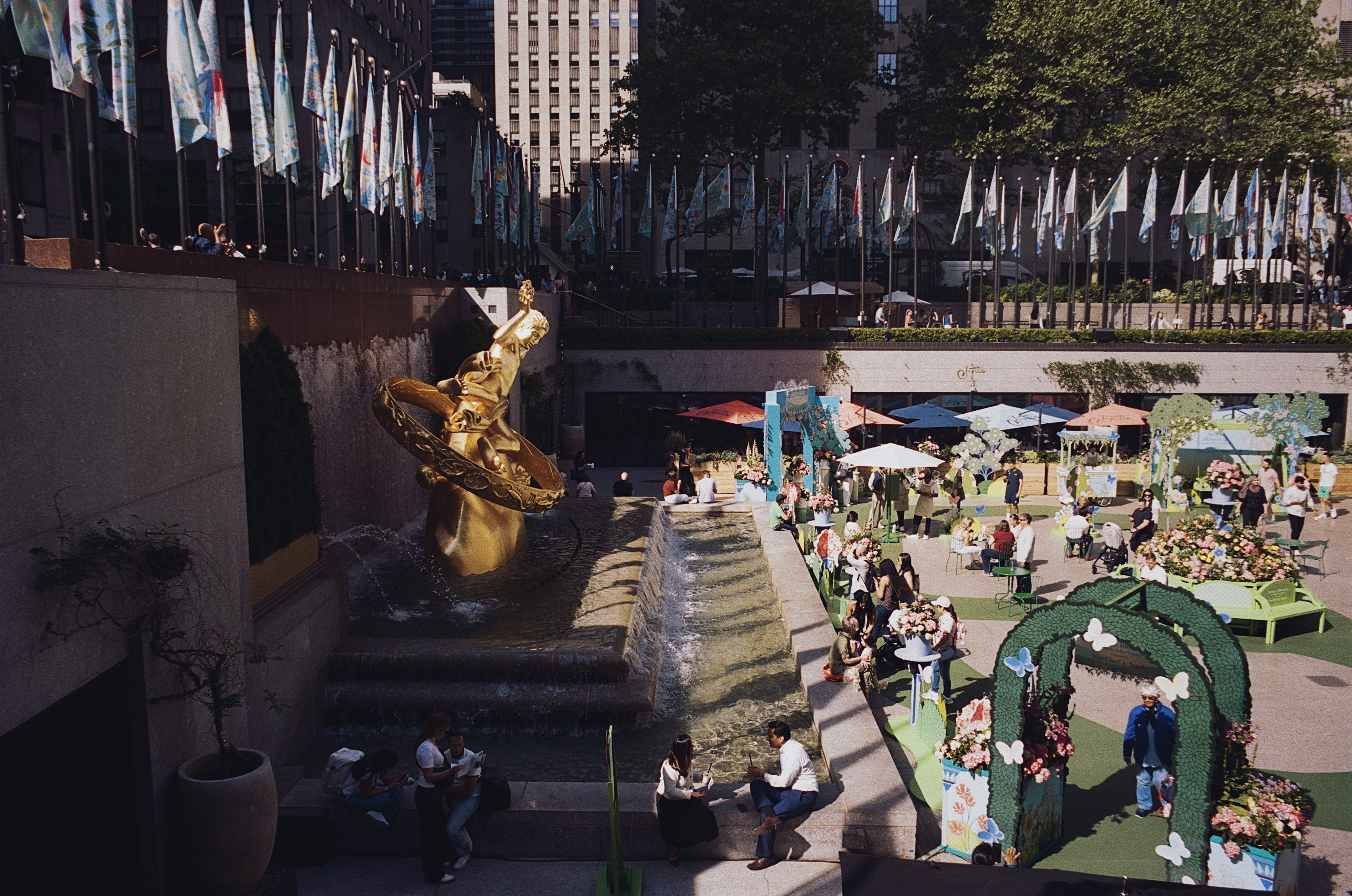
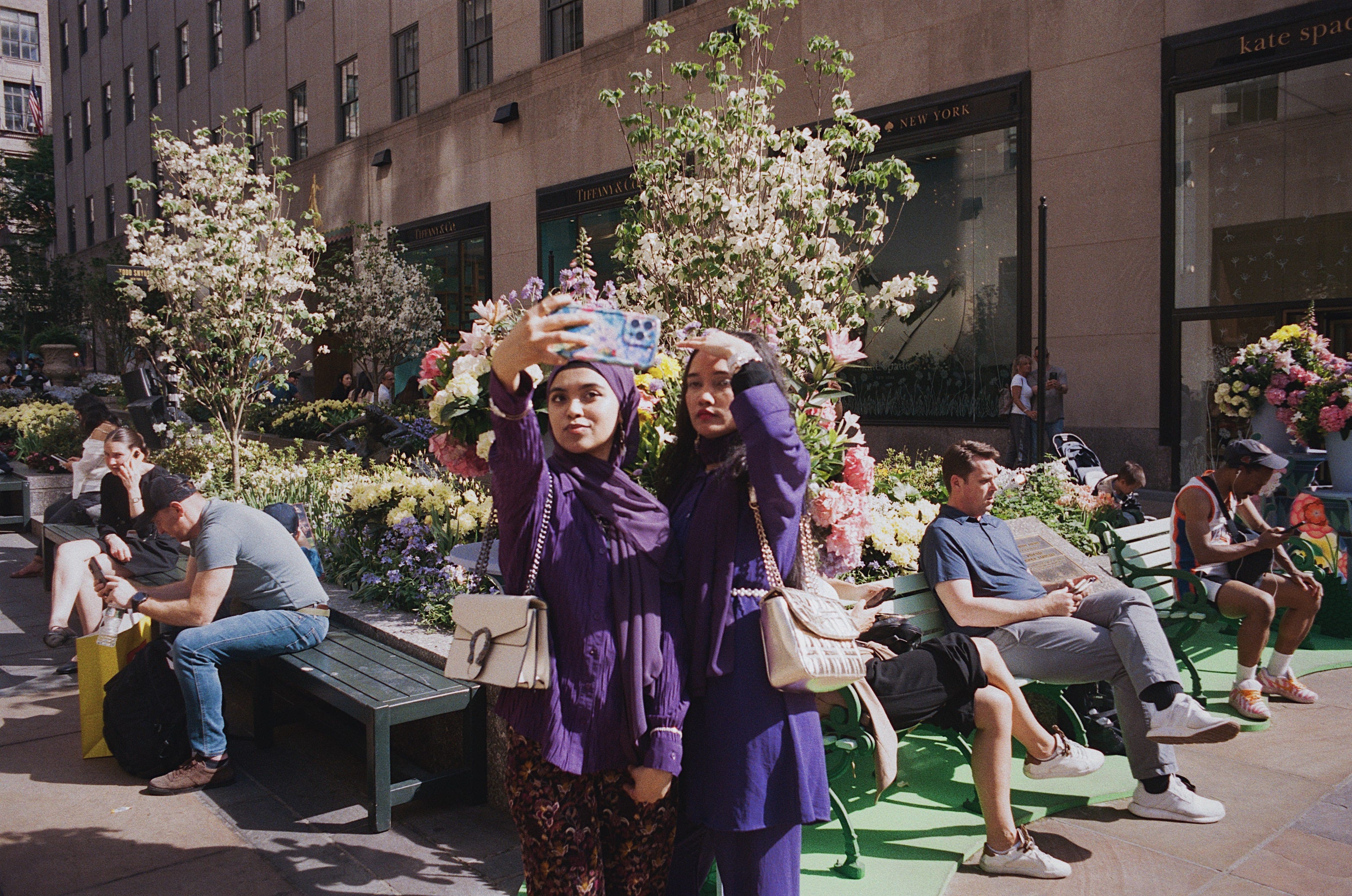
The light on Fifth Avenue in the mid to late afternoon is the reason I keep coming back to it. The avenue runs straight and true north to south. In the hours before the sun starts its drop the light comes down the full length of it at a long, clean, nearly horizontal angle, falling hard and golden off the upper floors of the buildings on the west side of the street, cascading in bright, warm sheets across the wide sidewalk below so that the faces of the people walking through it are lit from the side in that deep, sculptural way that turns every passing stranger into a portrait waiting to happen.
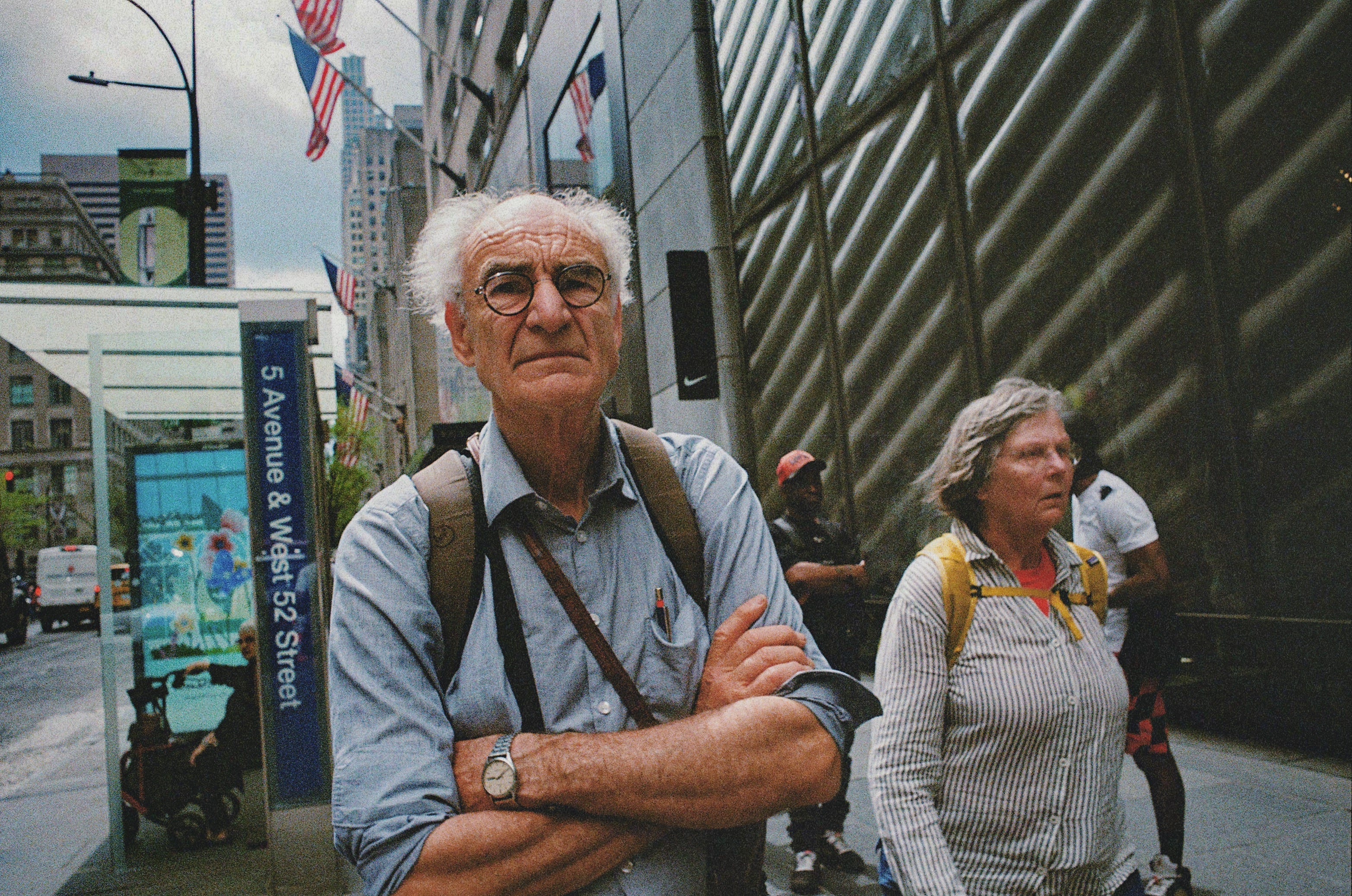
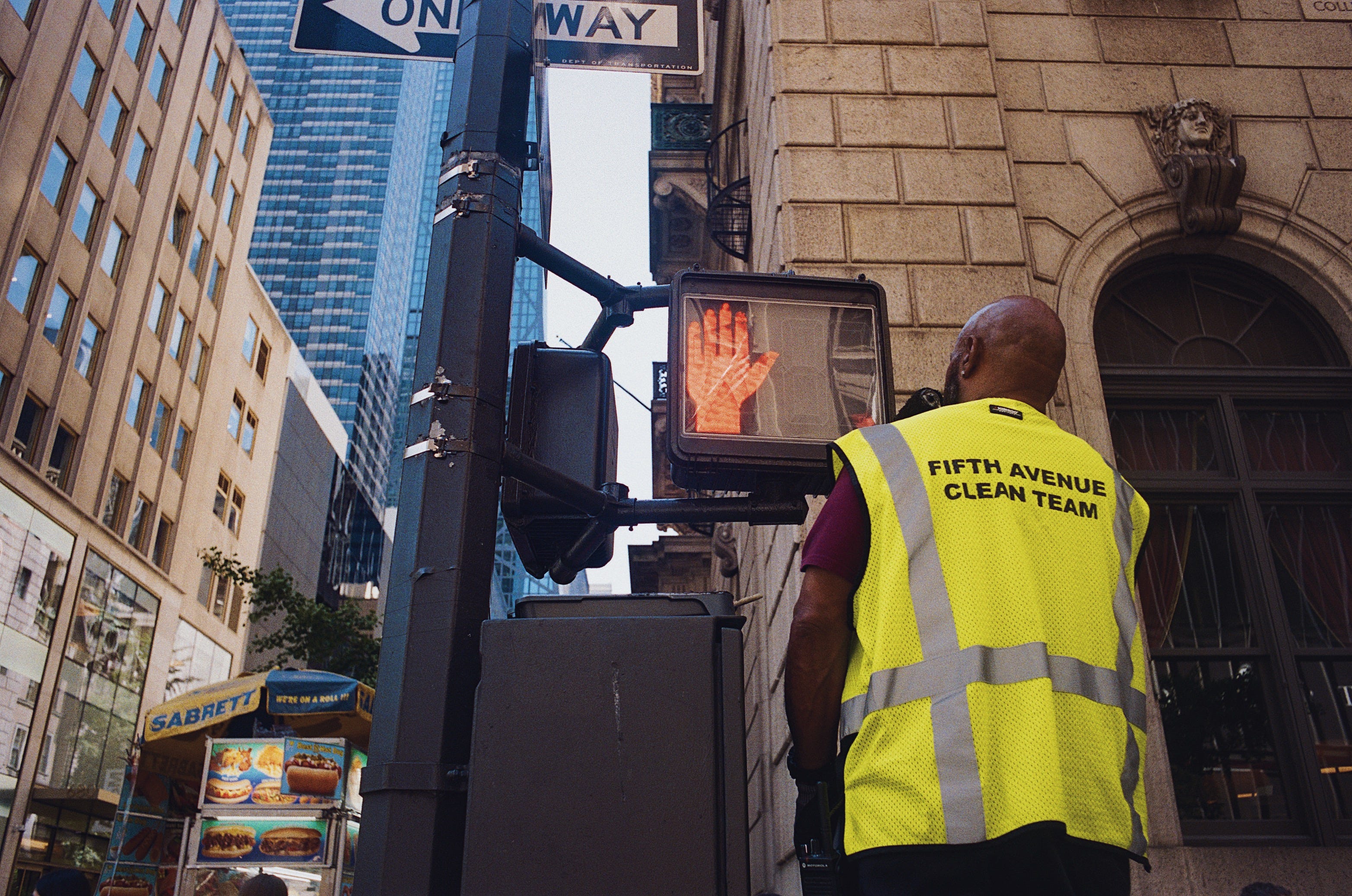
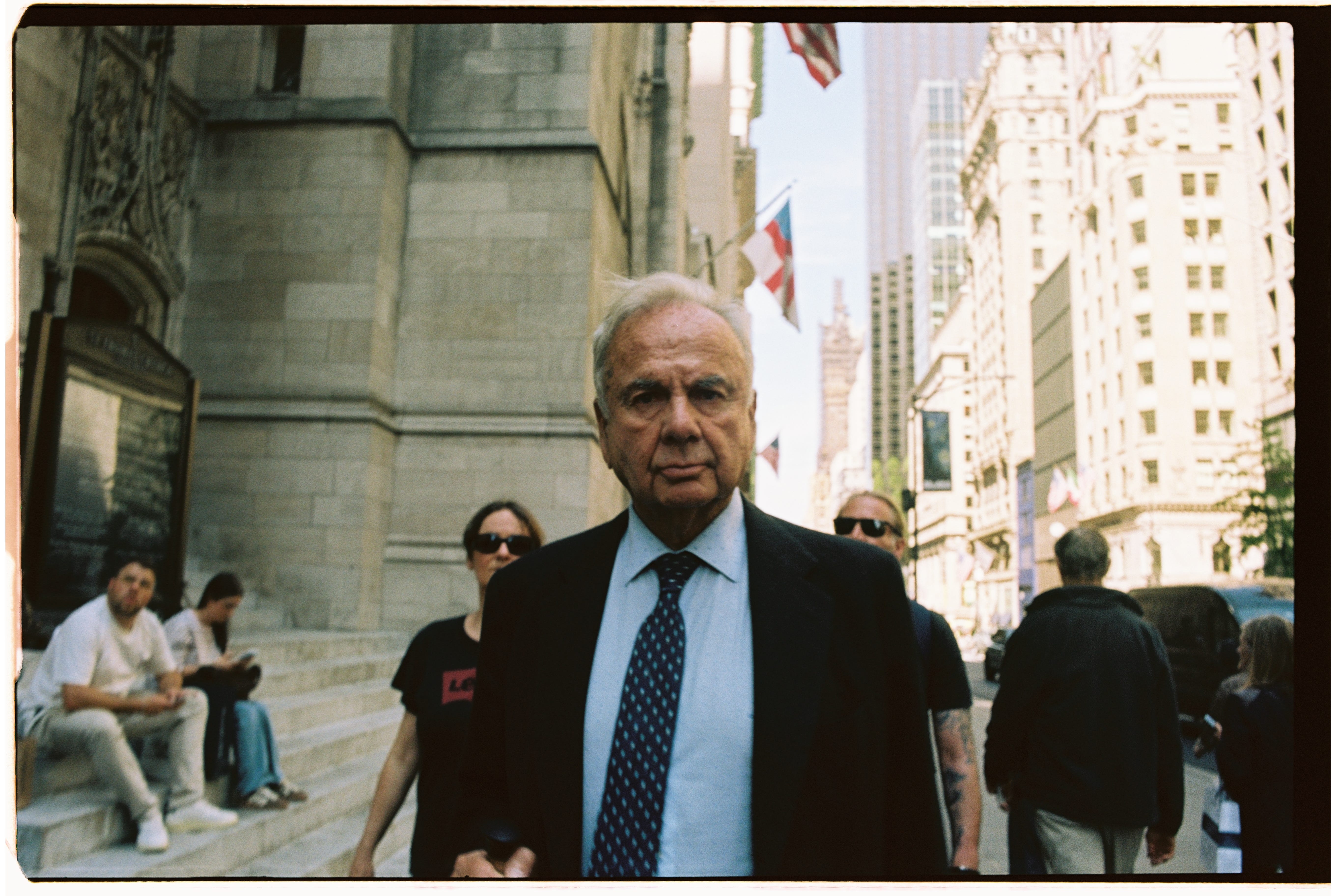
It catches the upturned faces of tourists stopped below Atlas outside 630 Fifth, that enormous bronze figure straining under the weight of the celestial sphere above him, his broad back and knotted shoulders lit in sharp relief by the afternoon sun, the faces below him tipped up and softly illuminated in its reflected warmth. It falls in long diagonal bars through the arched entrance of Saint Patrick’s Cathedral, where the dark stone of the facade absorbs it and the pale limestone details along the spires and window frames glow faintly against the deep grey behind them. The people stopped on the wide front steps to photograph it stand halved in light and shadow, one side of their faces warm and bright while the other side completely lost to the dimness of the cathedral wall behind them.
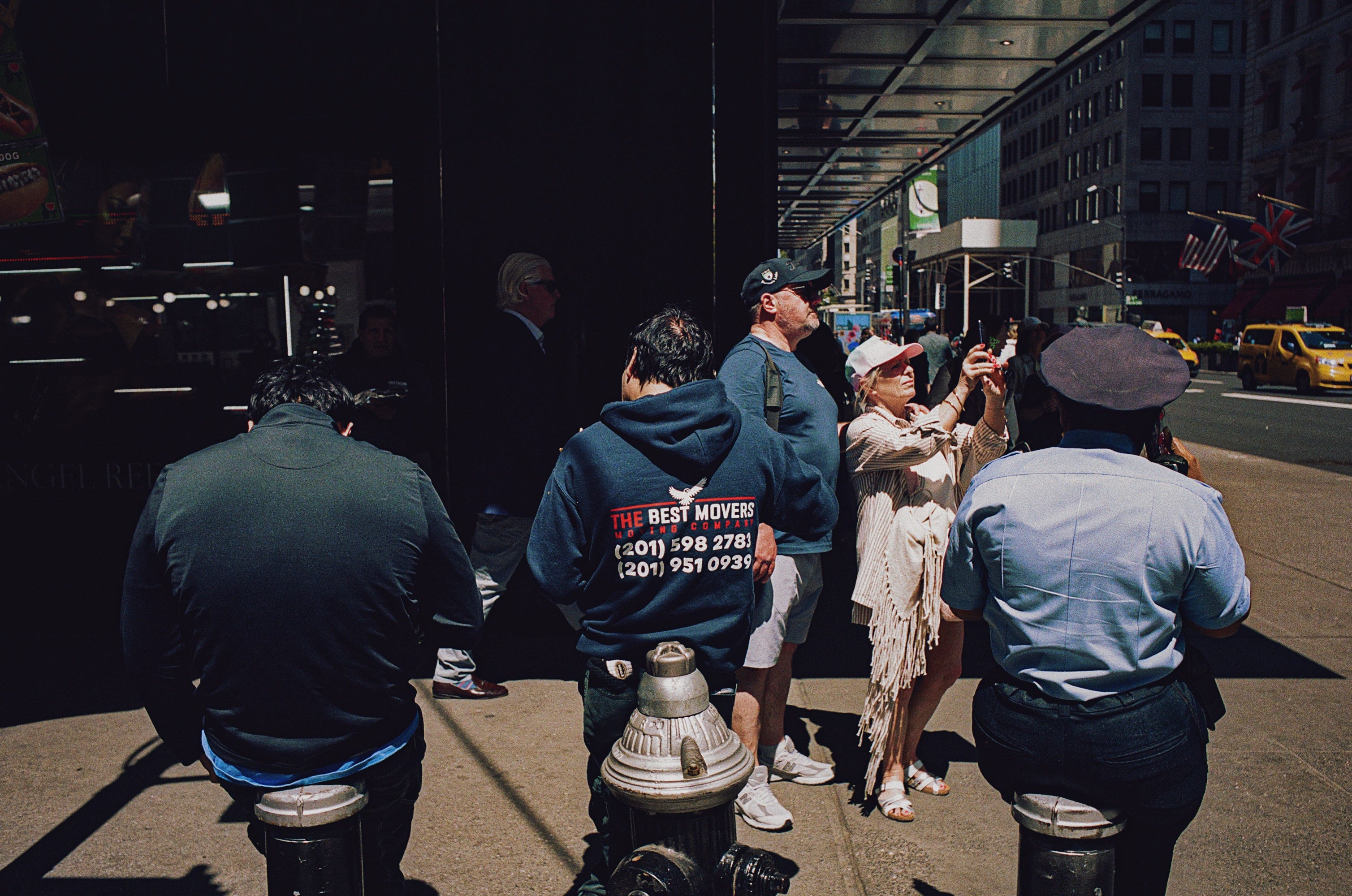
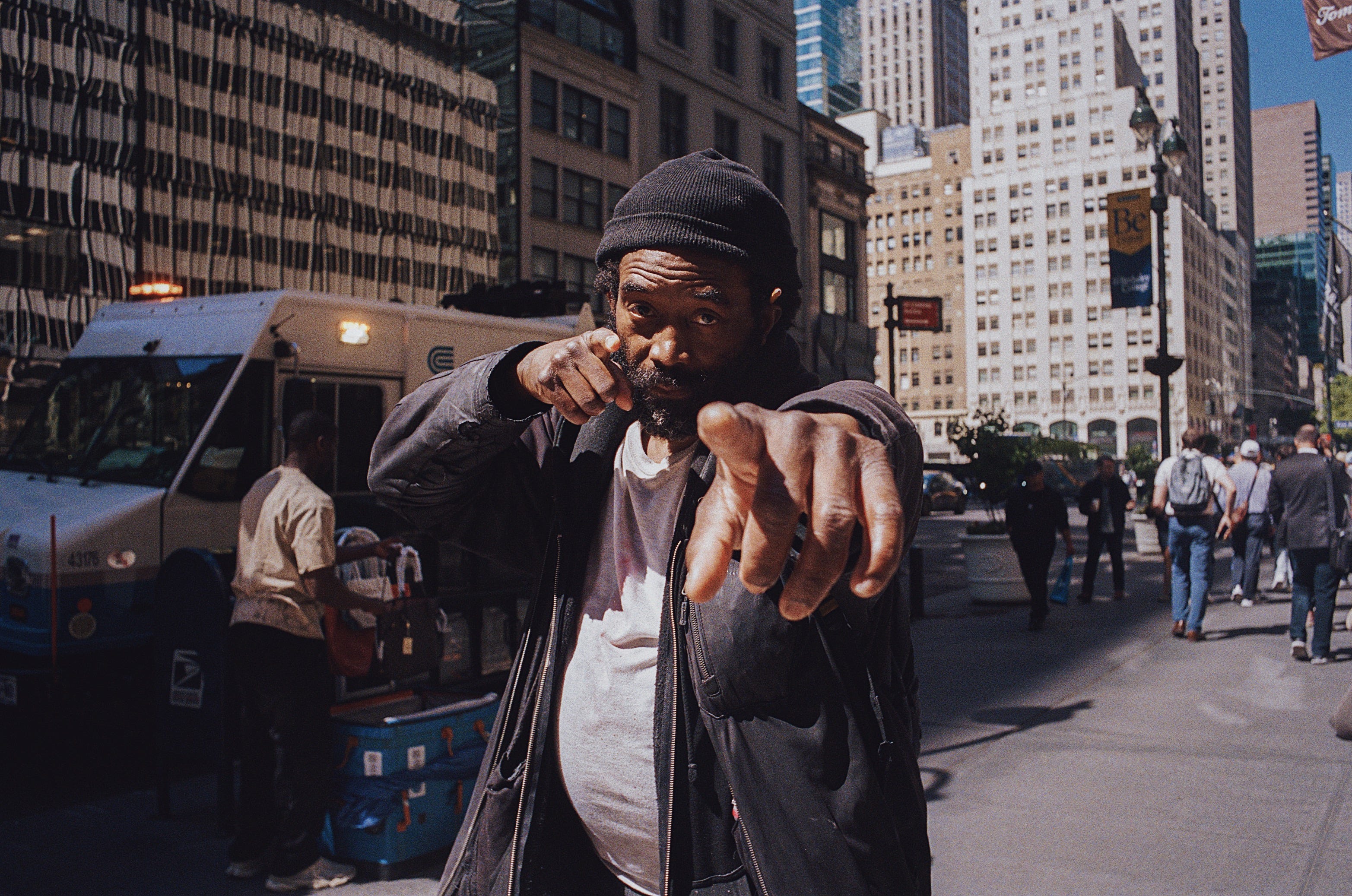
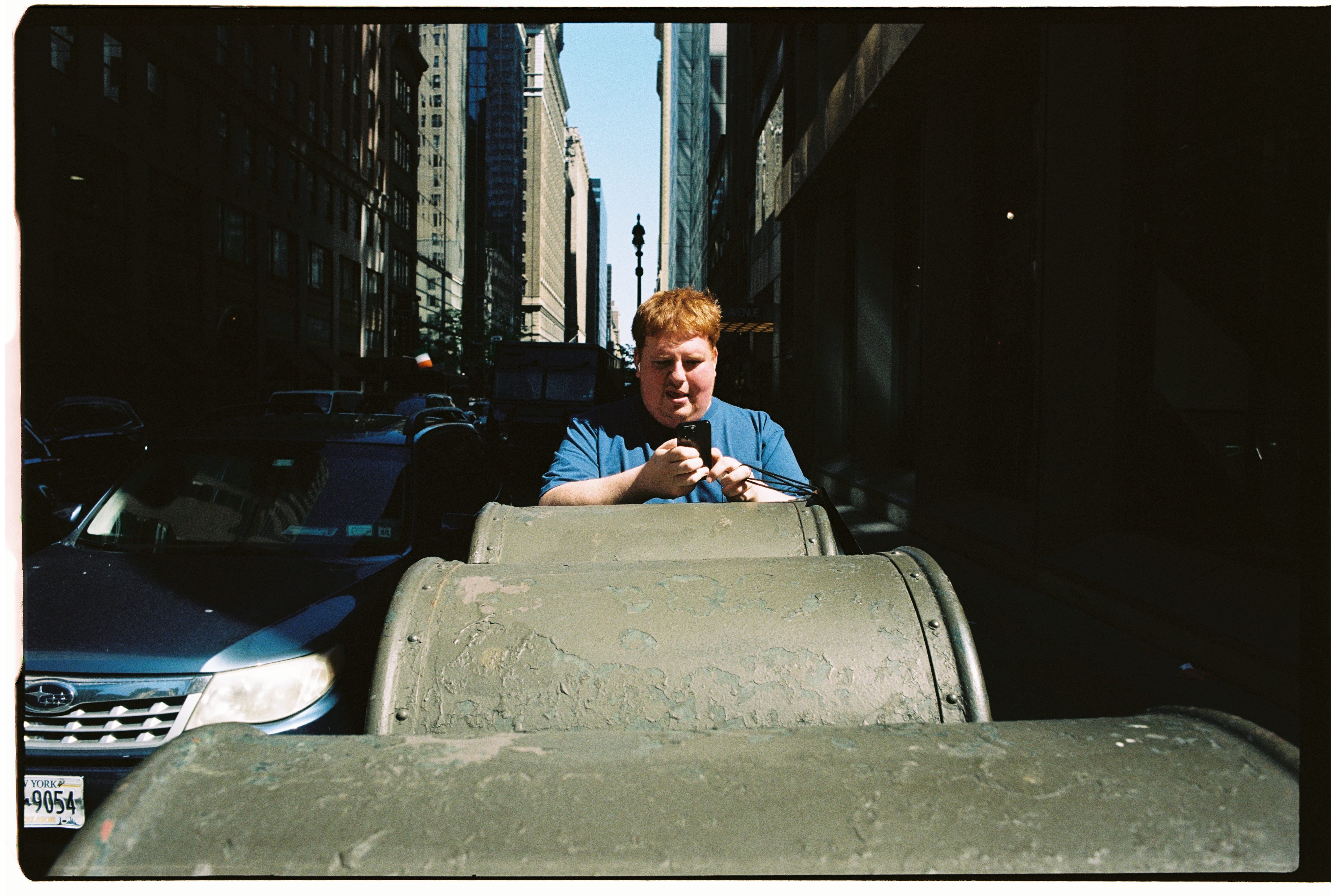
I walked the full length of it twice, once down each side, slowly, the cameras hanging loose and low, not rushing anything, letting the avenue show me what it wanted to. It’s the one place in the city where I feel genuinely invisible. The foot traffic is too thick and too self-absorbed, too continuously stimulated by everything pressing in from all sides for one more person with cameras to register as anything worth noticing. I move through it with that freedom that only anonymity in a dense crowd provides, the ability to stop and raise a camera, to compose and wait without anyone around me adjusting their behavior in the slightest. The crowd on the avenue on a warm afternoon in May is an almost entirely primary-colored thing. The plain t-shirts and athletic shorts and sneakers of the tourist majority filling the sidewalks in solid, bright, uncomplicated blocks of color. Red, white and black with the annoying pale grey that seems to be the default setting of approximately a third of the human race. It’s against this backdrop, moving through it with a certainty of dress and bearing that reads immediately. From a distance, the occasional sharply turned out man or woman appears, their clothes cut close and deliberate, the fabric and fit of them carrying a considered weight that stops the eye and holds it for a moment before the crowd closes back in and they’re gone.
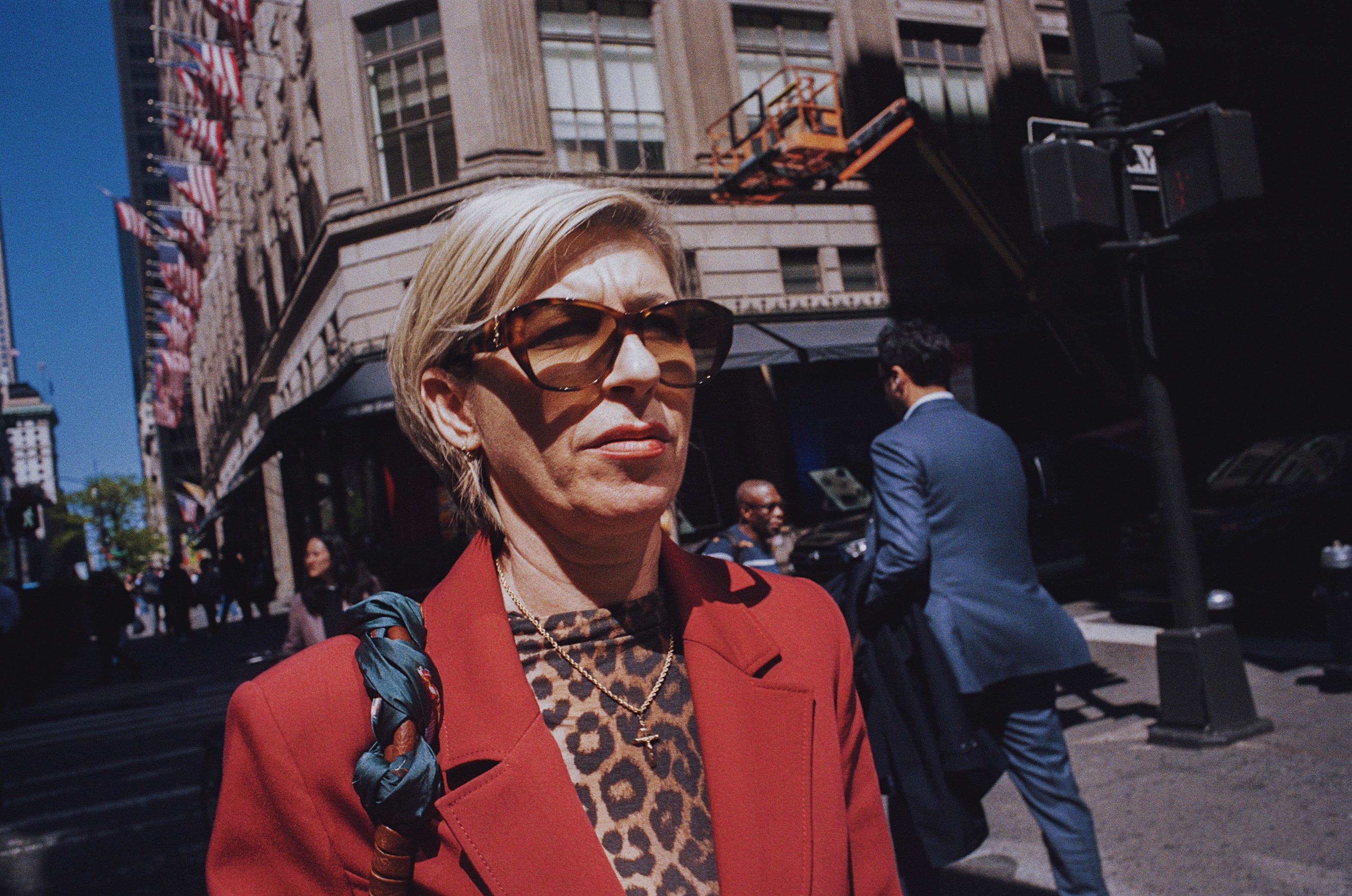
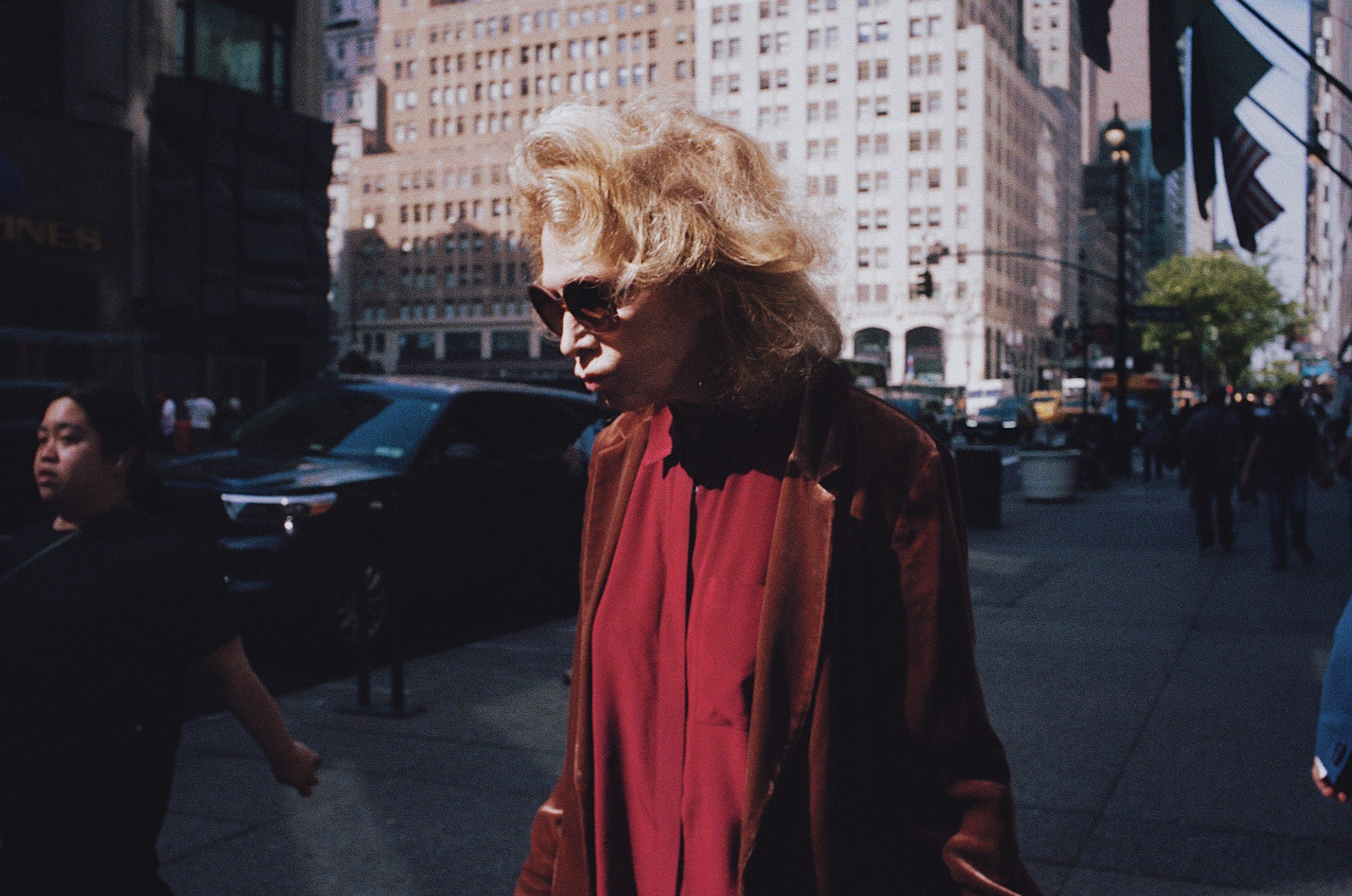
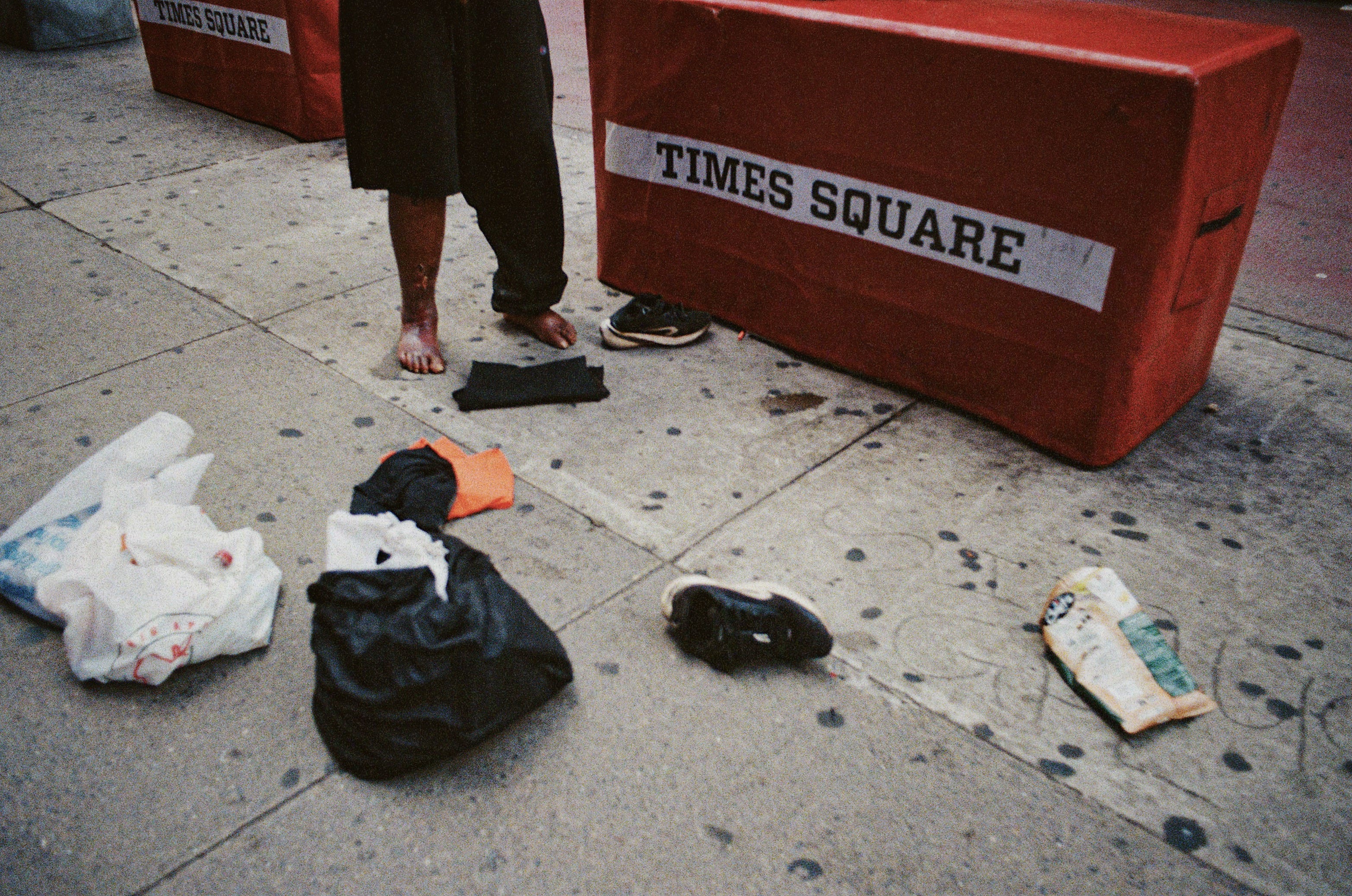
Here’s the other thing about Fifth Avenue, the thing that’s been true for as long as I’ve been walking it and that nobody moving purposefully along its sidewalks seems to find remarkable enough to slow down for. Along the base of the buildings, tucked into the shallow recesses of the granite facades, settled against the broad stone steps leading up to the heavy brass and glass entrance doors of the tower lobbies, the unhoused have made their places for the afternoon, their belongings arranged around them in the careful, considered way of people who’ve learned to organize a life within a very small footprint of space. A man with a deeply weathered face and a sleeping bag folded beneath him sits with his back against the cool stone of a building whose lobby, visible through the glass behind him, is all polished marble and security desks and elevator banks rising into the upper floors where the square footage runs to figures that require several more digits than the average person ever has occasion to think about. The shoppers, the finance people, the tourists, move past him on the wide sidewalk in a continuous, self-replenishing stream, their eyes forward or tilted up toward the building tops or fixed on their phones. The gap between his outstretched legs and the next passing foot sometimes no more than a few inches, and the whole transaction, or rather the studied, practiced, entirely mutual non-transaction, happens in plain sight on one of the most photographed and celebrated streets in the world, in the full warm gold of the afternoon sun, as if it’s simply the natural order of things, unremarkable, not worth breaking stride for, just another feature of the avenue like the vendor carts and the cathedral and the light.
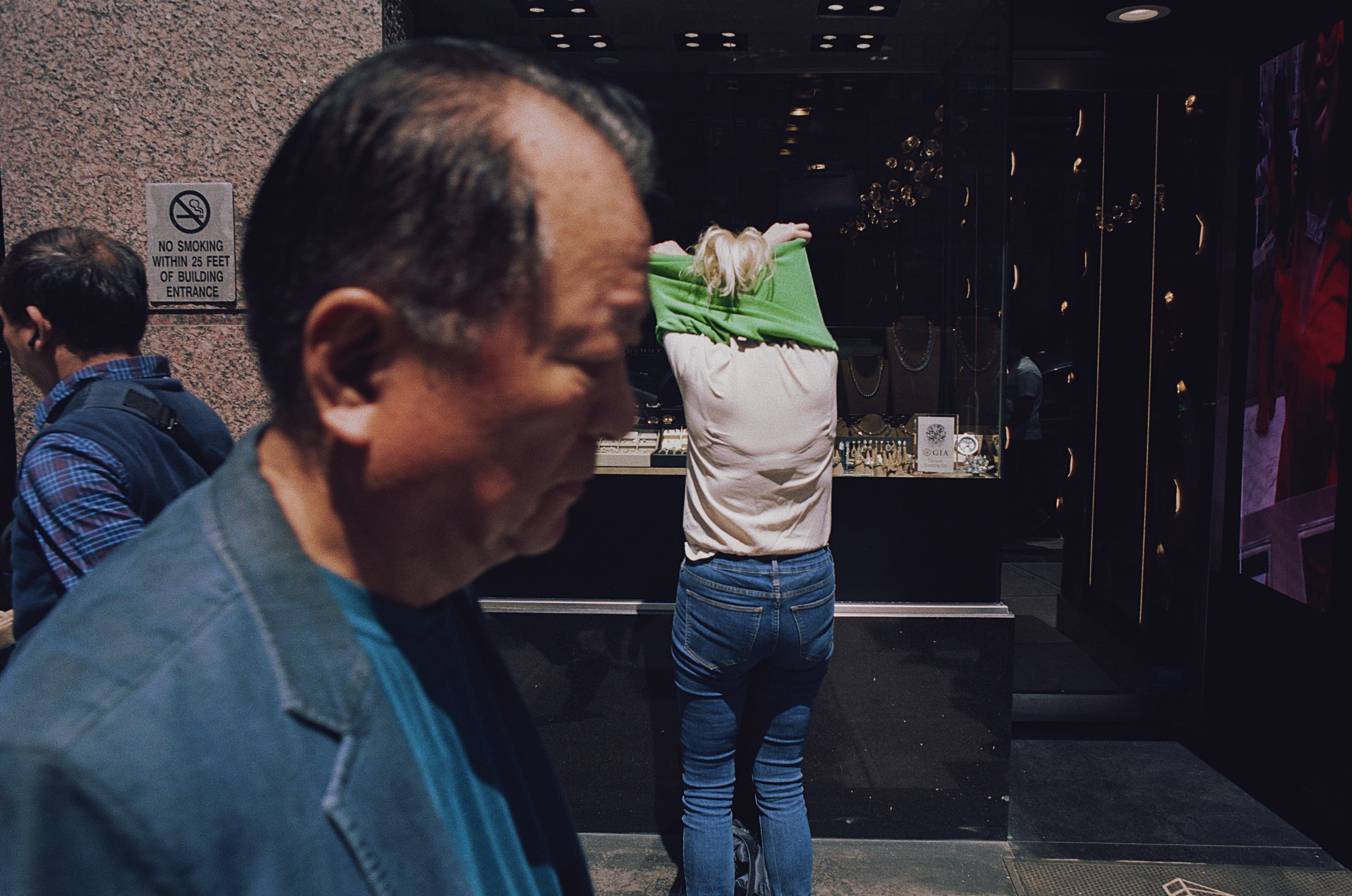
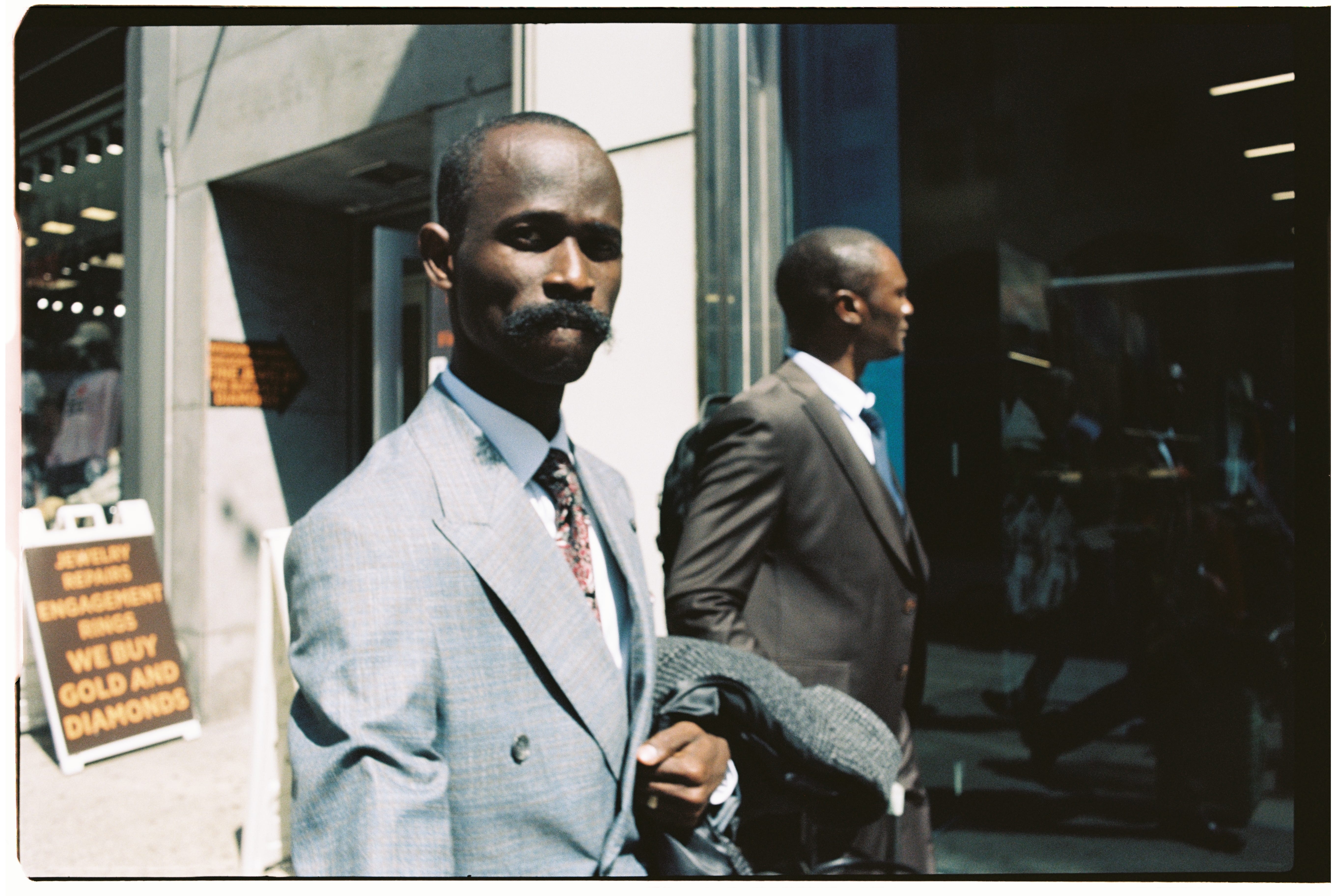
I turn off Fifth and walked west on 47th Street, the avenue falling away behind me immediately. The wide tourist-flooded sidewalk giving way within half a block to the dense, compressed, low-ceilinged world of the diamond district, which runs its single grimy block between Fifth and Sixth with the insular, slightly feverish energy of a place that’s been conducting its own private business for so long that the rest of the city’s simply arranged itself around it and left it alone. The light changes the moment you turn onto it. The buildings on both sides of the narrow street are tall enough and close enough together that the sun only reaches the pavement in a thin strip down the center of the block for a few hours of the day. By mid-afternoon the street sits in a deep, cool, flat shadow that makes the whole block feel removed from the warm afternoon outside it, the air damper and closer, carrying the heavy, slightly acrid smell of cigarette and cigar smoke that’s been exhaled onto this stretch of sidewalk for so many consecutive decades that it seems now to come from the buildings themselves, from the mortar between the old bricks, from the very concrete underfoot.
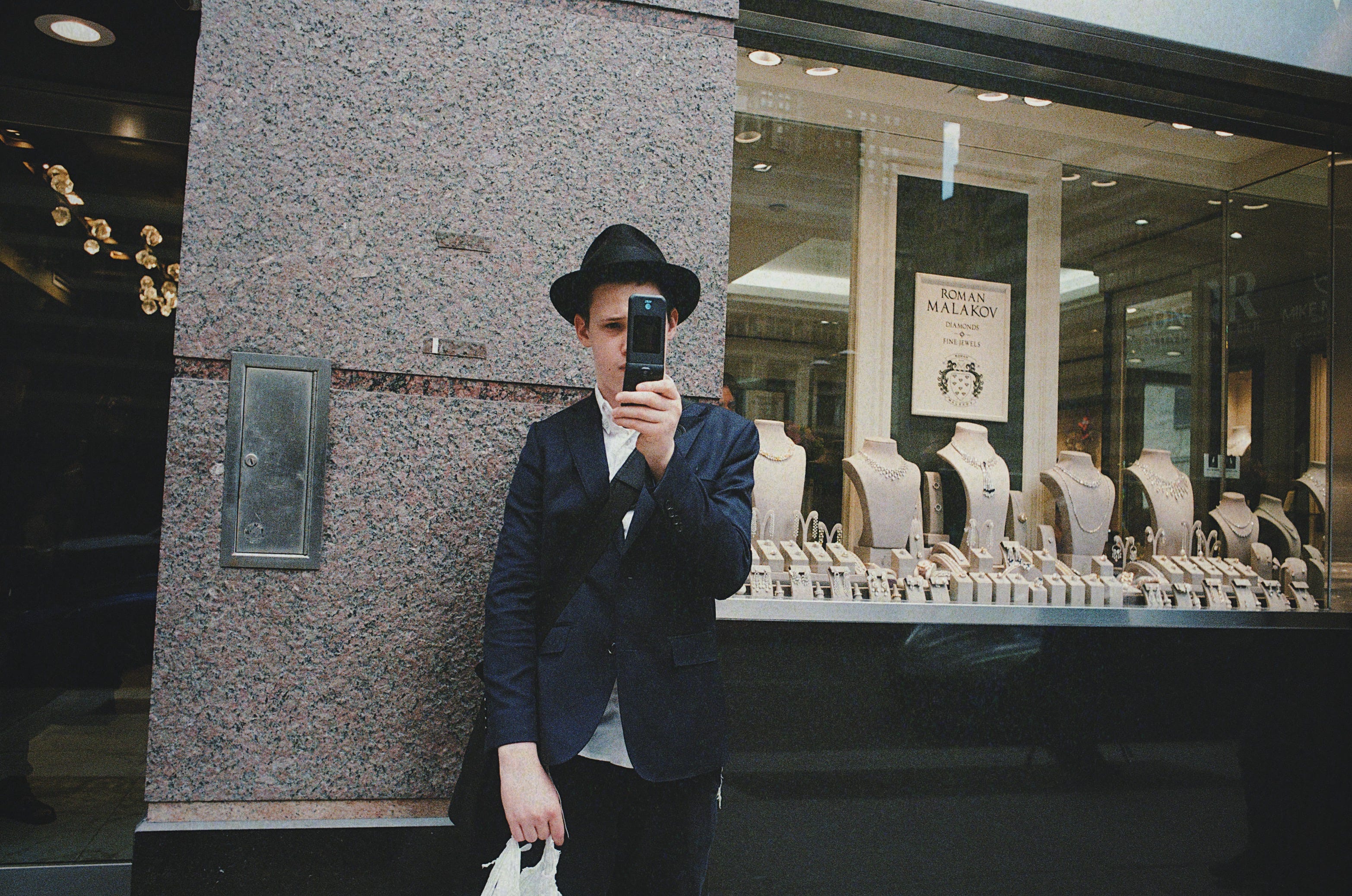
The storefronts run the full length of both sides without interruption, their display windows crammed floor to ceiling with trays of rings and bracelets and loose stones arranged on dark velvet under harsh fluorescent light that gives everything in the windows a cold, hard, slightly aggressive glitter. The gold and platinum faceted surfaces of the stones throwing small bright points of reflected light out onto the sidewalk in front of them where the men and women who work these establishments have come outside in waves, standing in tight clusters of two and three in front of their own doorways with cigarettes burning between thick fingers. Their voices low and close, moving between languages mid-sentence with the fluid ease of people who’ve been doing business in several of them simultaneously for their entire adult lives. Their faces are deep-lined and watchful, the skin around their eyes creased into permanent fine folds from years of squinting at stones under loupe and lamp, their foreheads furrowed and heavy. They stand on the sidewalk with a dense, planted quality, shoulders back, taking long slow drags off their cigarettes and exhaling upward in thick pale streams while their eyes move up and down the block with a slow, continuous, professionally calibrated attention that takes in everything.
The tourists who wander in from Fifth move differently on this block, their pace slowing as they press their faces toward the window glass to look at the displays inside, the reflections of their own faces floating pale and ghostly over the trays of jewelry behind the glass. The men standing outside the doors watch them with the expression of people who’ve learned to distinguish, from a distance and within a few seconds, between the customer who’s gonna spend real money and the one who’s gonna take fifteen minutes of your time and buy nothing. A camera changes the calculus considerably. The block has its own long memory of who’s come through it with a lens and what that’s meant for the people whose faces ended up in the resulting photographs. The response to a camera appearing on 47th Street is swift. Figures peeling away from the sidewalk and back through their doorways with a practiced sideways step, the venetian blinds in the narrow ground-floor offices tilting fractionally as someone on the other side adjusts the angle without touching the cord, a face appearing briefly in the gap and then gone. The ones who stay outside and keep smoking do so with a deliberate confidence, drawing on their cigarettes and looking directly at you with flat, dark, entirely unreadable eyes that make it absolutely clear they’ve seen considerably more concerning things on this block than a photographer and aren’t about to be made uncomfortable in front of their own establishments.
To work here, you have to come correct. You walk with your shoulders squared and your chin level. You make eye contact first, you hold it without blinking, you nod, they nod back, and in that small exchange a provisional understanding is reached that you aren’t here to cause trouble and that they’re not going to make any for you. You keep moving, and you don’t linger in front of any one doorway long enough to make anyone nervous. The big men in their polo shirts and their tight dress pants, their heavy gold chains lying thick and flat against their chests, their signet rings broad and dull-gleaming on their thick fingers, their belt lines riding low under the considerable overhang of their middles, move down the sidewalk with a slow waddle, a weight-forward gait that takes up more of the pavement than strictly necessary and is entirely aware of doing so. You step aside for them the same way you step aside for a slow-moving car on a narrow street, not because you’ve been told to but because the geometry of the situation leaves you no reasonable alternative.
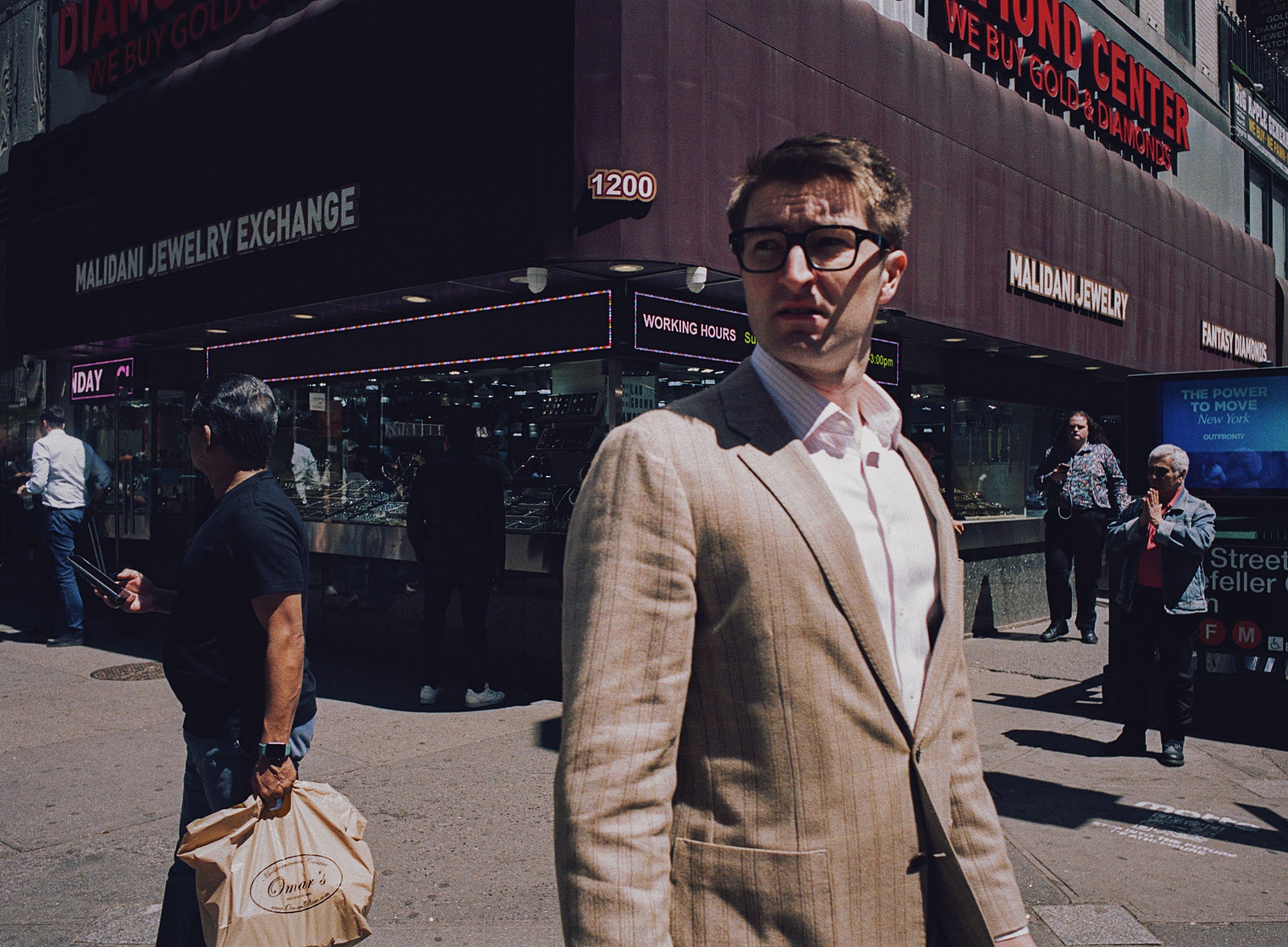
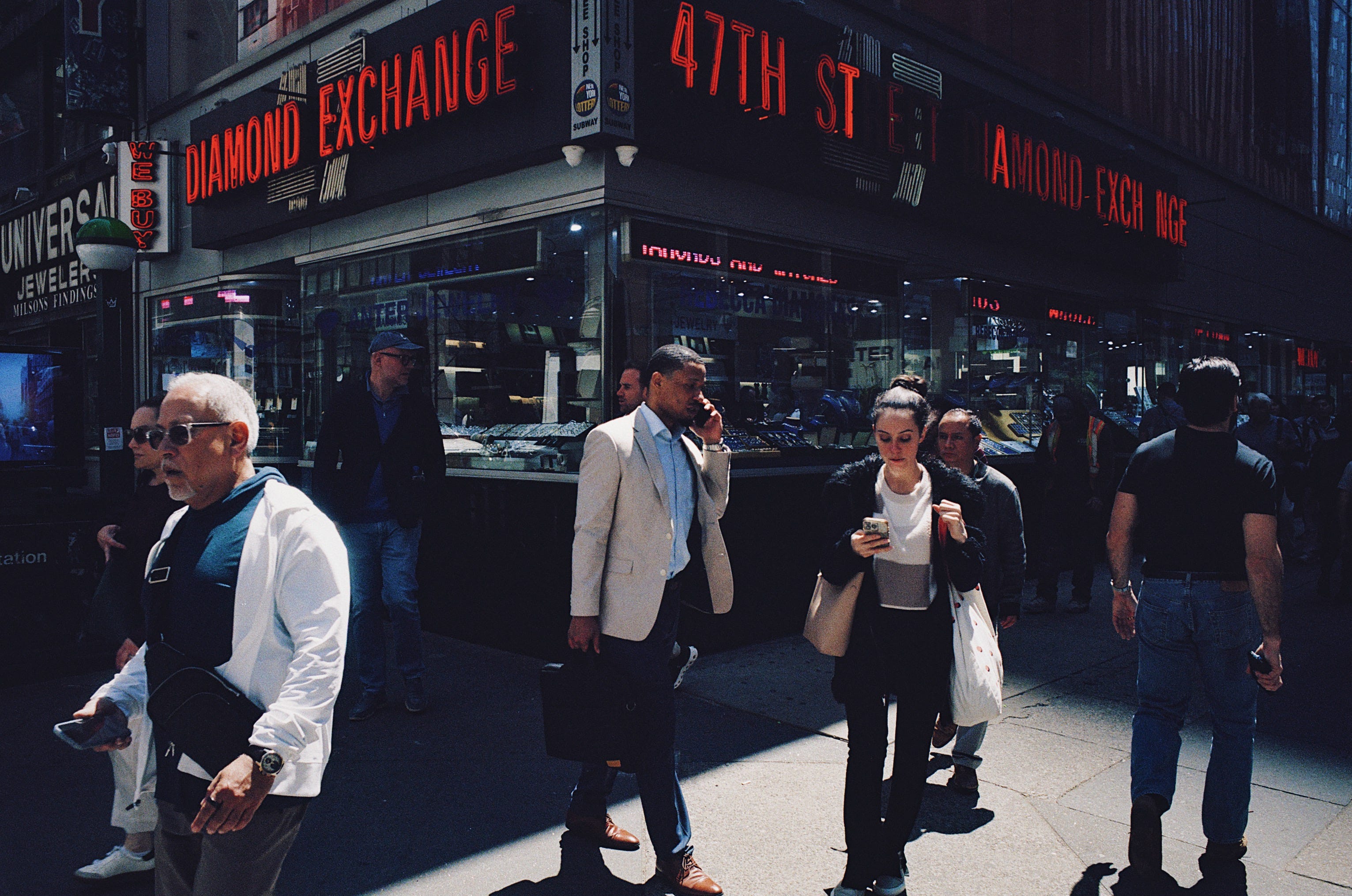
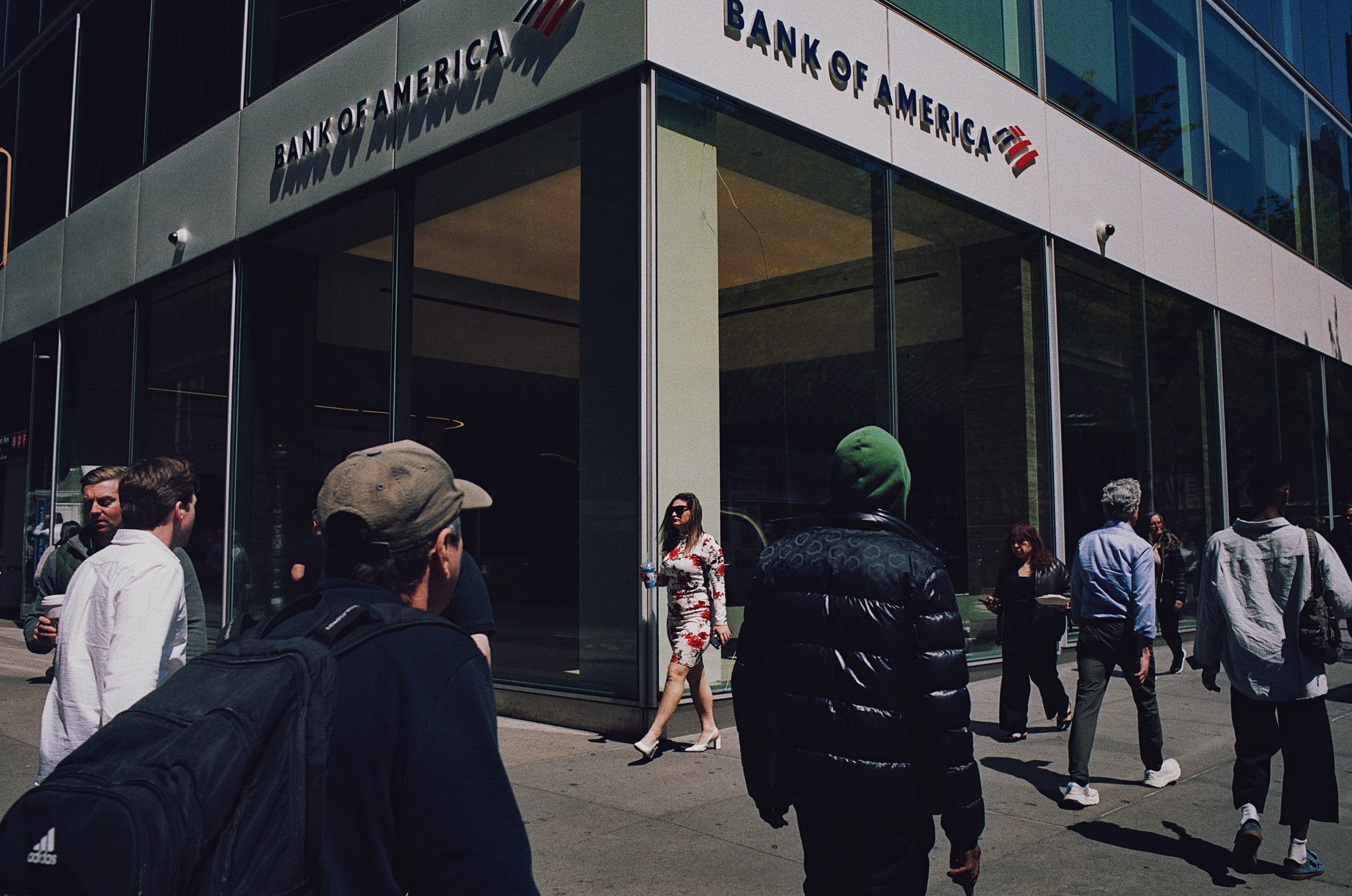
I smoked another cigarette and walked the block twice. I let the street get used to me before I settled into my corner at Sixth Avenue, where 47th Street opens back up into the full width and noise of the avenue. The light returns all at once, dropping hard and warm onto the intersection from above. I spent the next forty-five minutes crossing back and forth between the two corners on either side, working the light the way it was offering itself. The long afternoon sun coming at a low crosswise angle through the intersection, falling in a dense, amber-edged shaft across the wide crosswalk so that the people moving through it stepped in and out of brightness with each stride, their faces catching the light fully for a single step and then falling back into the cooler shadow of the building line on the far side. The diamond district workers coming out onto Sixth for lunch or for another cigarette moved through the intersection with their dense, purposeful heaviness, their dark coats and thick-soled shoes with the glint of their jewelry catching the low sun in brief, hard flashes of gold and silver as they crossed while the tourists came through at the same moment from the perpendicular in their bright loose clothes. The two streams crossing and briefly interweaving in the middle of the intersection before separating again on the other side, going their entirely different ways. The signs above the storefronts on the district side of the corner ran in dense, overlapping layers of deep red and cobalt blue with heavy gold lettering, the colors saturated and rich in the afternoon light, bleeding slightly into one another where the painted surfaces had aged and cracked.
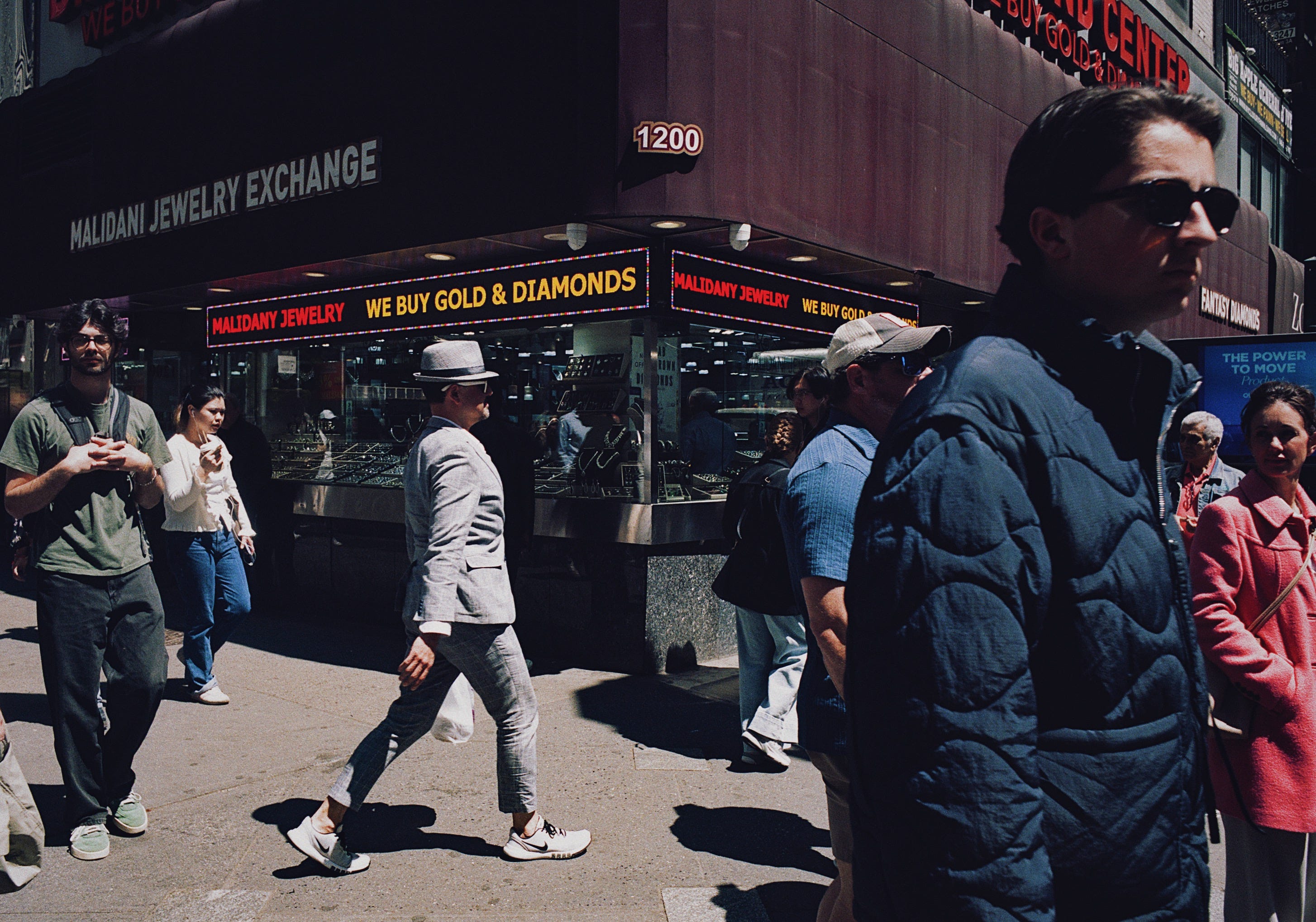
Sixth Avenue runs straighter and wider and considerably less romantic than Fifth. The buildings along it taller, more recent and purely corporate in their ambition. Their facades, flat planes of dark reflective glass and brushed concrete rising up forty, fifty, sixty stories, throwing the avenue below into a deep, hard-edged shadow for most of the afternoon, the sunlight only reaching the pavement in bright fractured pieces where the cross streets cut through the building line and let it down in narrow diagonal shafts across the wide sidewalk. The men who work in those buildings come down onto Sixth in the mid-afternoon in a thick, continuous current, moving in the same direction with the dense, shoulder-forward momentum of people for whom the twenty-minute window between one meeting and the next isn’t a break so much as a logistical problem to be solved with maximum efficiency. Their suits are navy and charcoal, the occasional dark, corporate grey, cut close and freshly pressed, the fabric holding its crease with a stiffness that suggests it was dry-cleaned recently and will be again before the week is out.
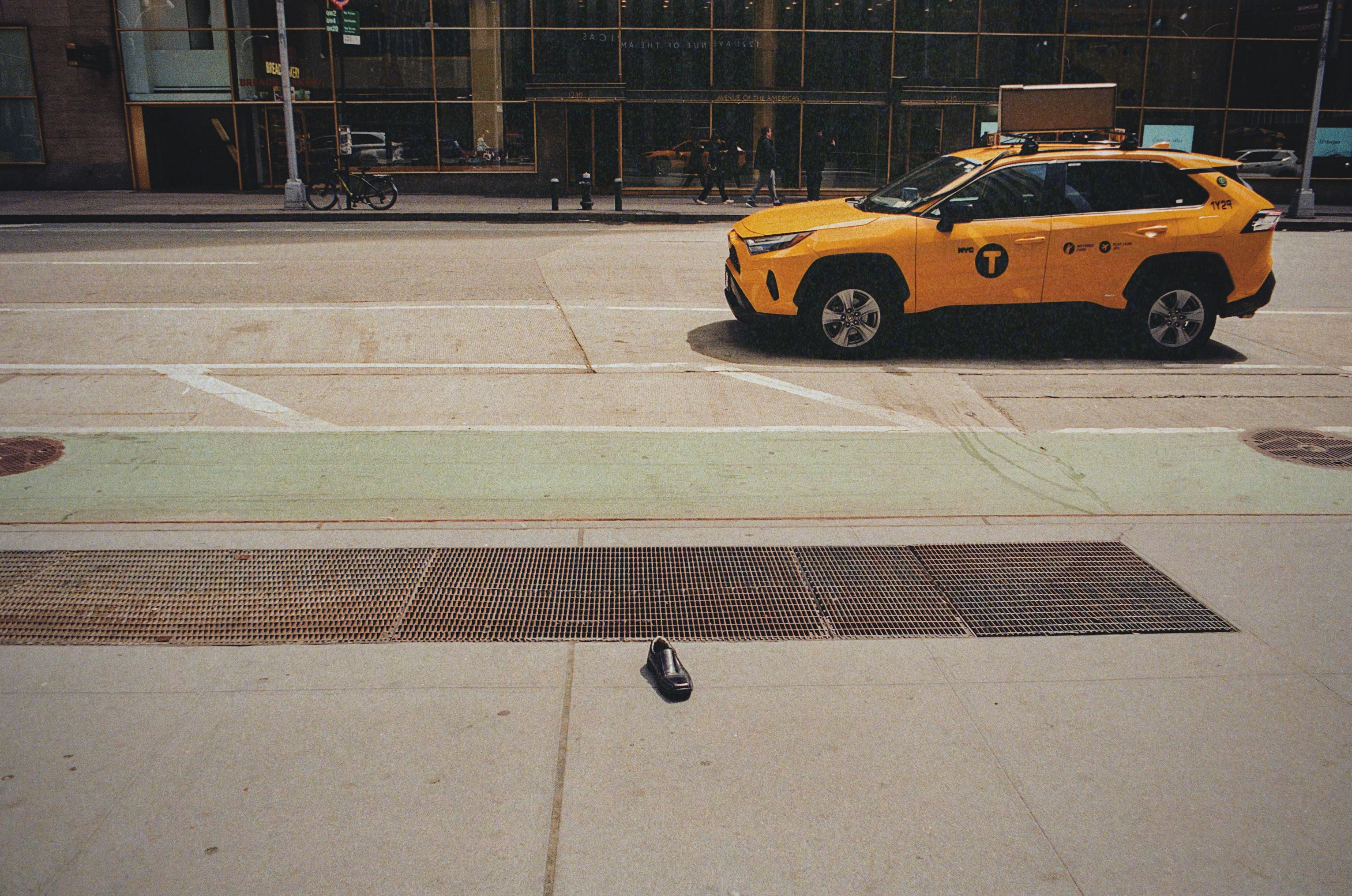
Their dress shoes, black, high-polished and hard-soled, strike the pavement under them in a rapid, overlapping percussion of sharp clicks that runs in a continuous undercurrent beneath all the other sound on the avenue, audible even through the traffic noise and the ambient roar of the city pressing in from all directions. Their faces carry the flush of men who spend the majority of their daylight hours in climate-controlled rooms under fluorescent lighting and find the brief exposure to actual afternoon sun more physiologically aggressive than they would prefer. A high, blotchy redness across the cheekbones and the bridge of the nose, the forehead damp, the collar of the dress shirt already beginning to wilt at the points despite the tie holding everything in place above it.
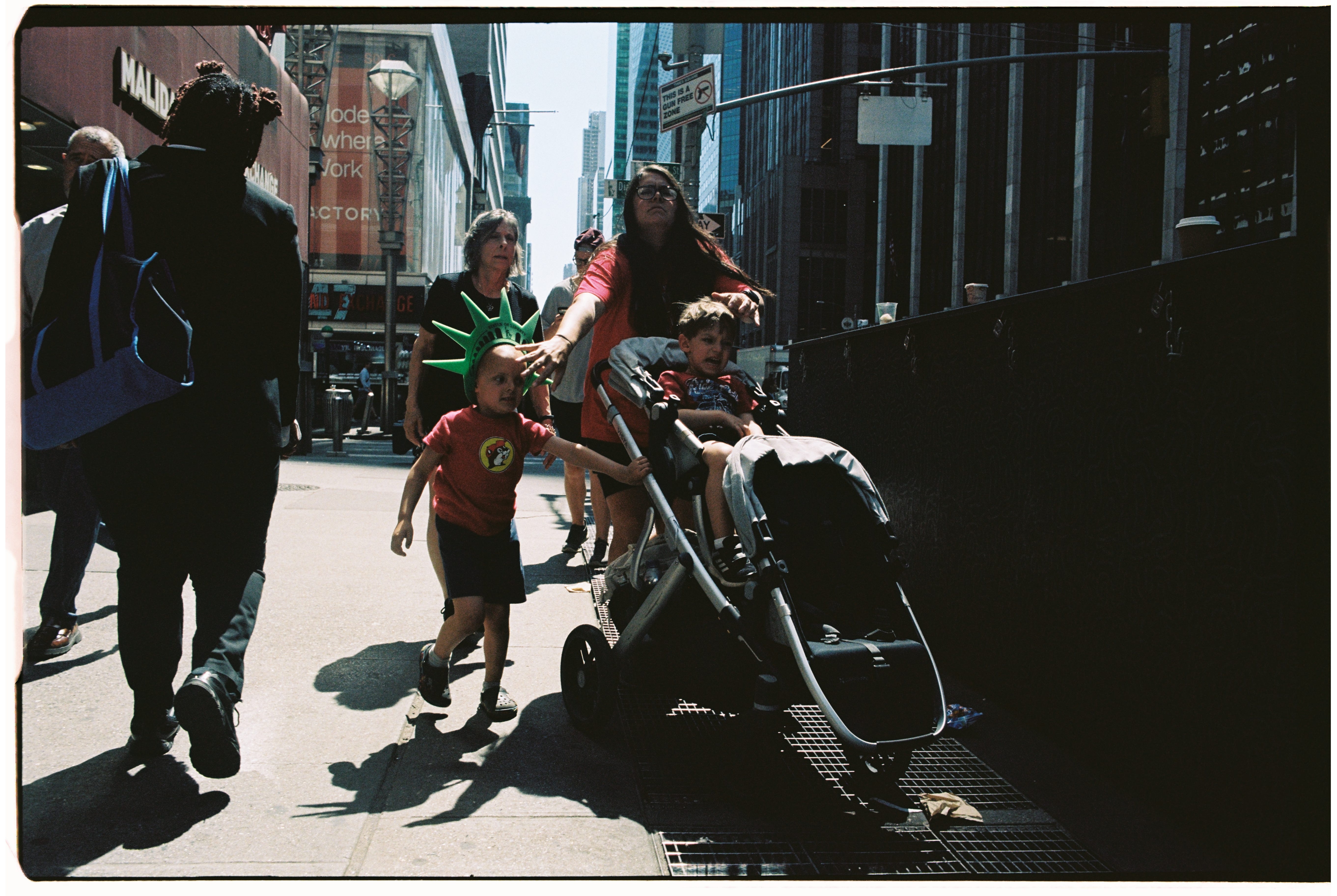
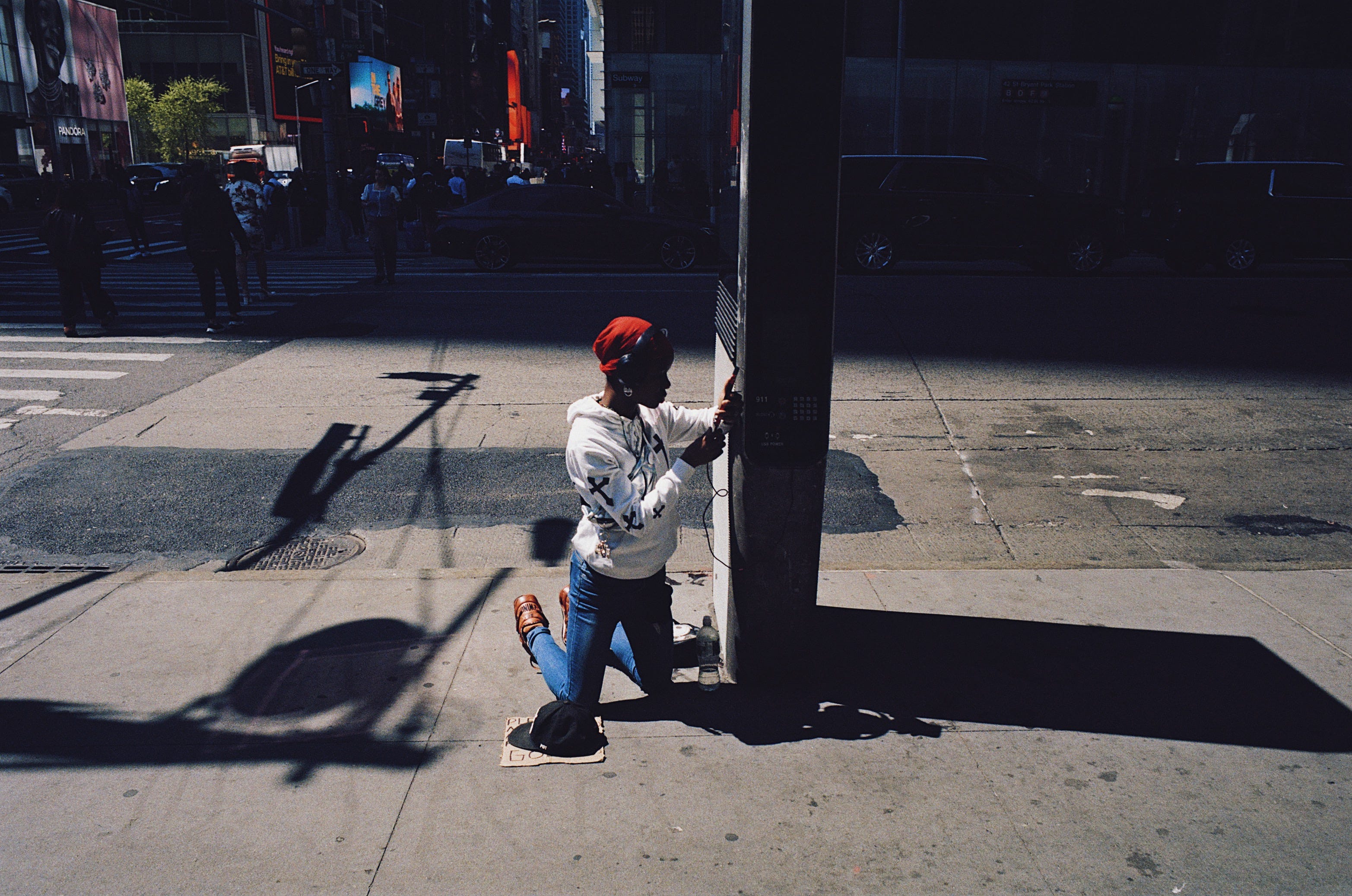
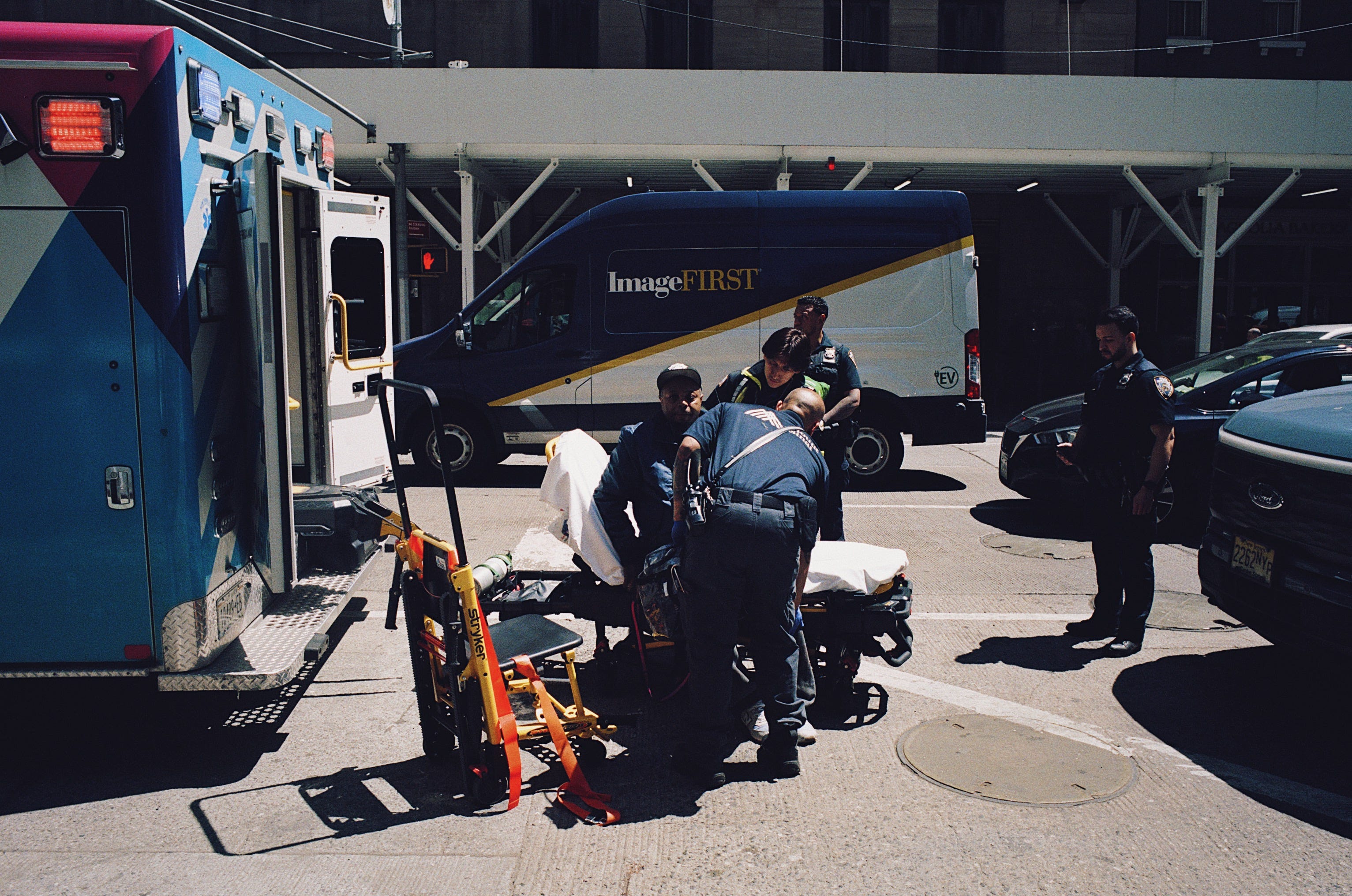
They move in pairs and loose threes, the conversations running hard and unbroken between them in the dense, self-referential shorthand of people who’ve been talking about the same things with the same people for so long that they no longer need full sentences to do it. Projections and basis points and quarter-over-quarter figures delivered in the flat, slightly nasal cadence of men who learned to perform competence early and’ve been performing it in the same register ever since. Their voices, carrying on the afternoon air in that tone that sits just below the frequency of anything you actually want to listen to, the dull music of people for whom language is exclusively a tool for moving information from one spreadsheet to another. The ones on their phones hold them pressed hard against their ears and talk at a slightly increased volume as they push through the crowd, one hand gripping the briefcase handle, the other clamped to the side of their head, their eyes fixed on the middle distance somewhere above the crowd in front of them, navigating the sidewalk by peripheral vision alone while they close out whatever needs to be closed out before they reach Sweetgreen.
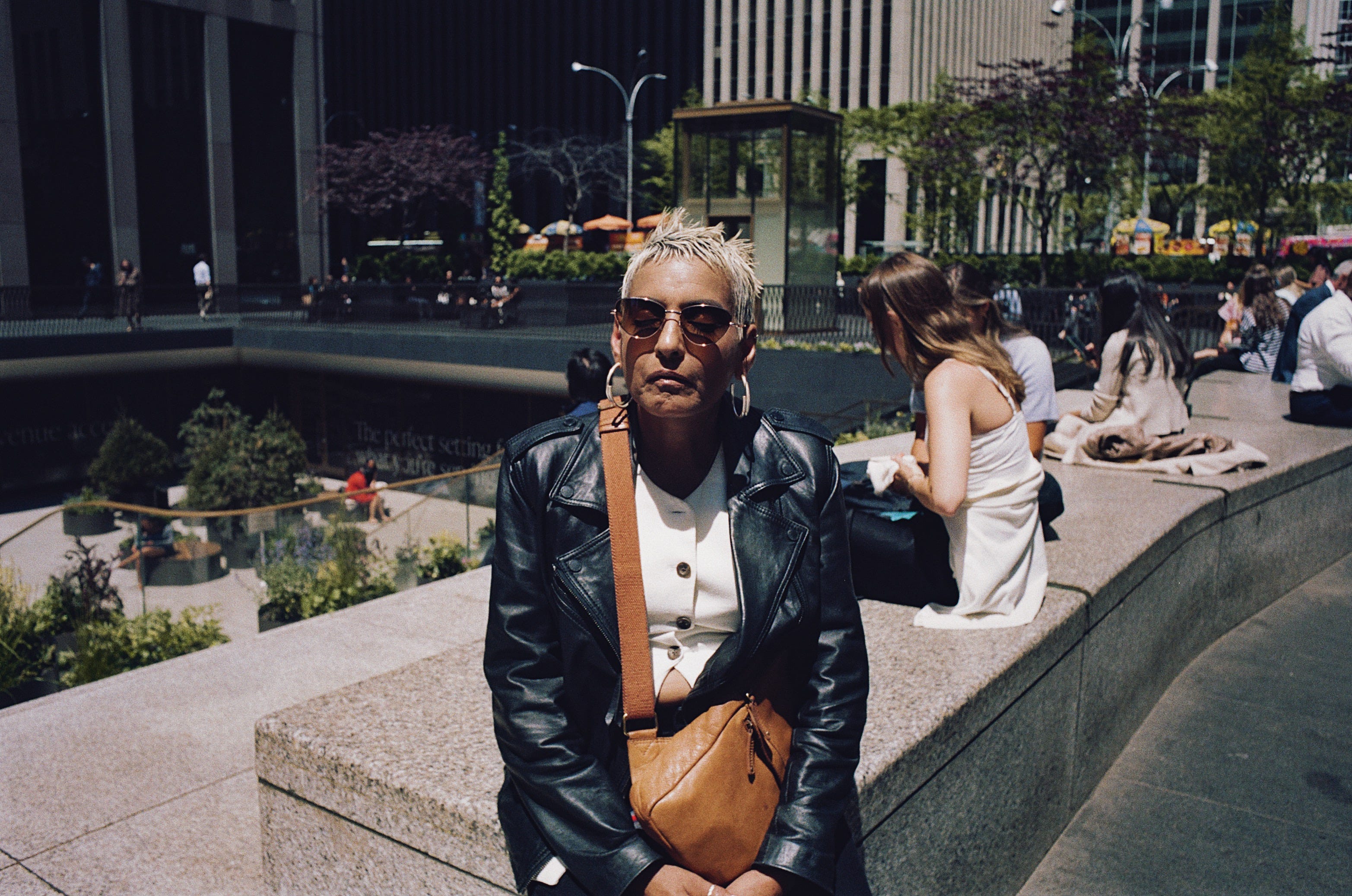
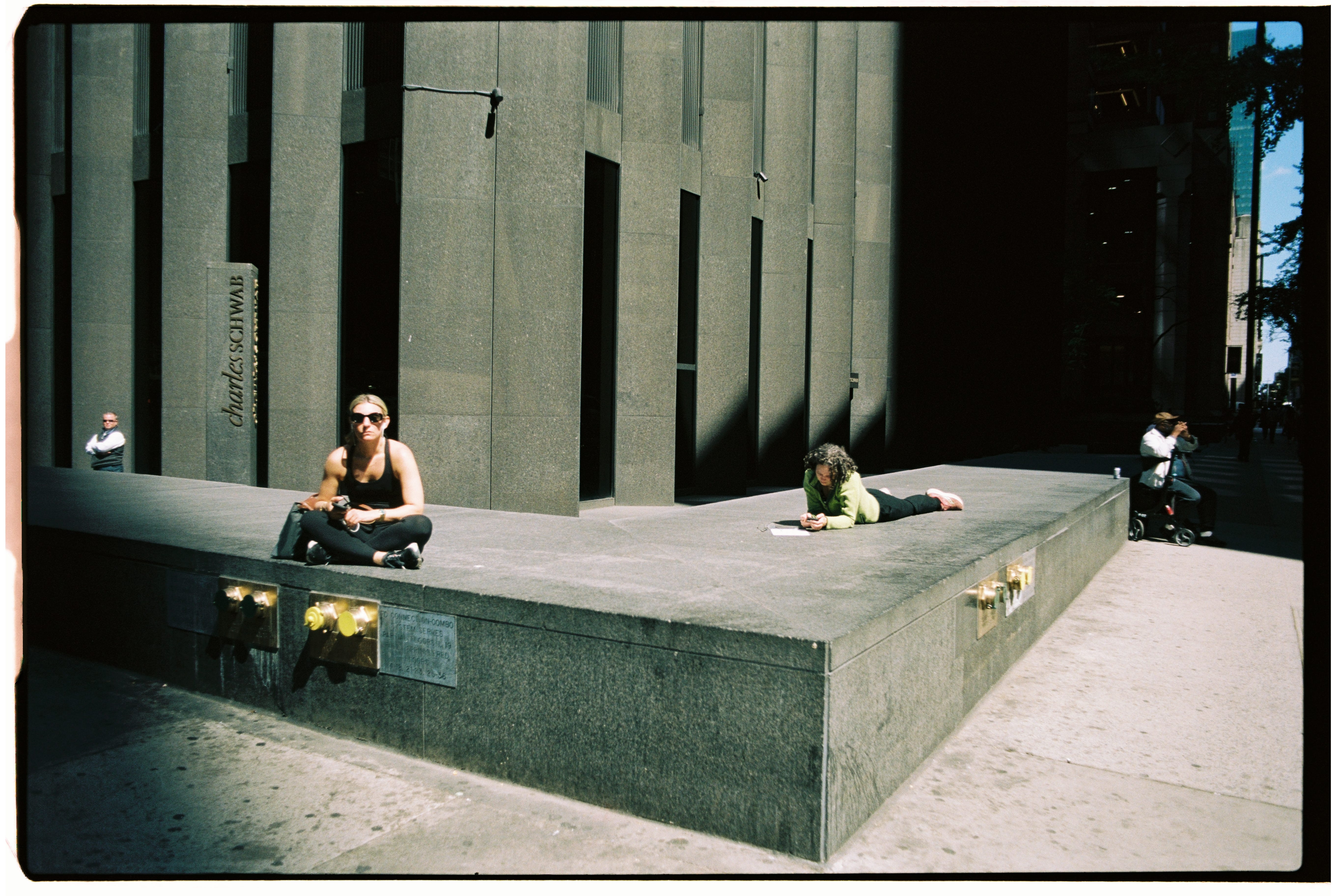
Scattered through all of this, occupying the low concrete public seating that lines the wider sections of the sidewalk along the avenue, the tourists sit with the loose, splayed, thoroughly unself-conscious ease of people who’ve been walking since early morning and’ve reached the stage of the day where the only priority is getting weight off their feet for ten minutes before deciding what to do next. They’re wearing every conceivable configuration of New York City tourist merchandise. The oversized grey I Heart NY sweatshirts, the navy blue NYPD and FDNY baseball caps pulled low over sunglasses, the tote bags printed with the skyline or the subway map or the Brooklyn Bridge, the whole accumulated costume of a city that’s been selling its own image back to visitors for so long that the image and the city have become difficult to separate from one another. They sit with their phones out and their sneakers off, their street maps folded incorrectly in their laps, eating the remains of whatever they picked up from the nearest chain half an hour ago. They watch the suits move past them on the sidewalk with the same mild, pleasant, entirely uncomprehending interest with which they’ve been watching everything else the city has put in front of them all day, which is to say with the open, generous, uncritical gaze of people who find it all equally and interchangeably remarkable.
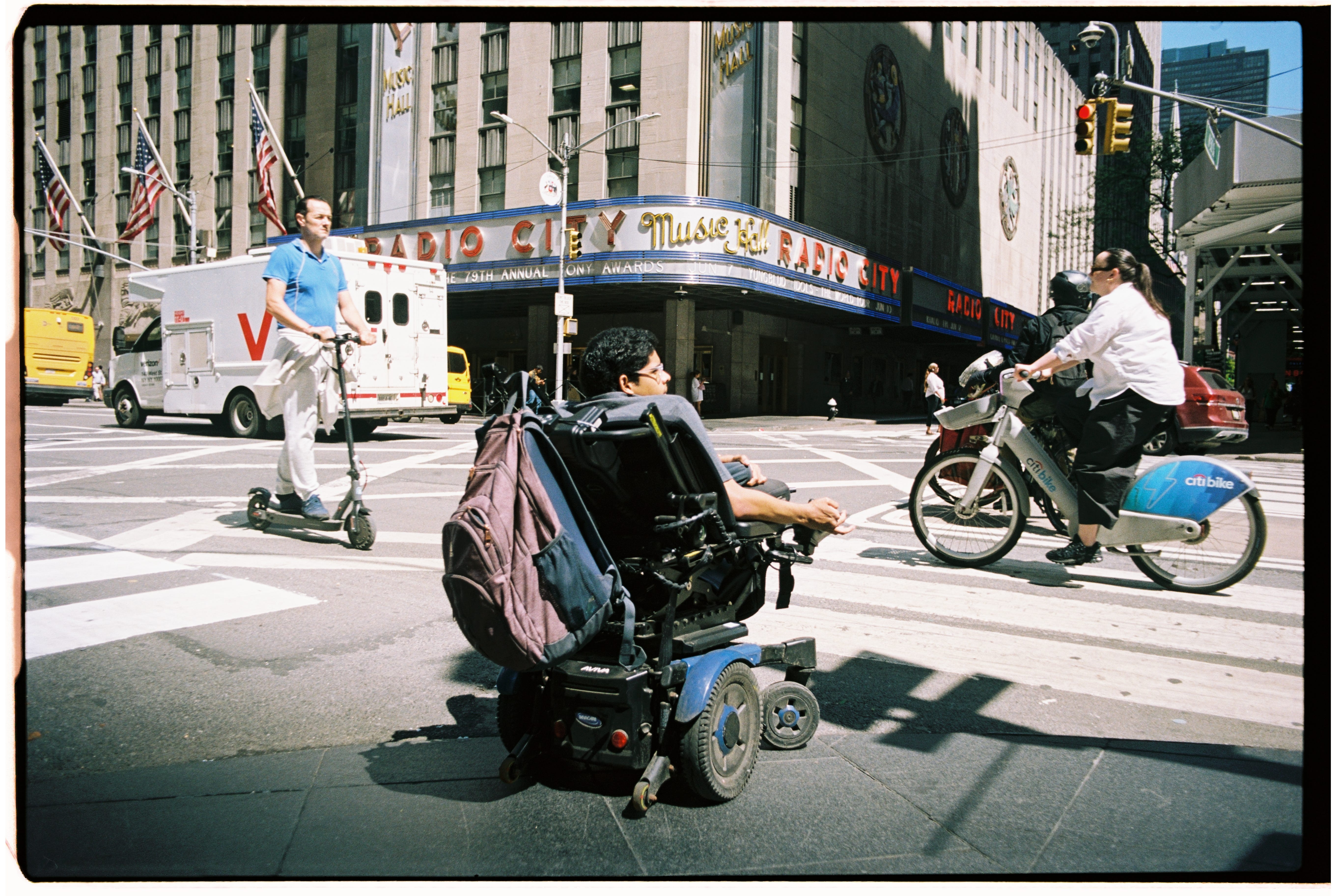
I walked the avenue north until it bent and widened, the buildings on either side pulled back and the sky opened up overhead in a sudden, startling expansion. The light changed from the hard, shadowed, glass-and-concrete grey of Sixth to something brighter and more chaotic. The signs beginning to multiply on the building faces above the street, first one or two, then a dozen, then an uncountable layered accumulation of them running up every available surface in every direction, their colors lurid, enormous and relentlessly saturated. The deep red, electric white, and acid yellow of them bleeding into one another across the facades of the buildings surrounding the intersection. Times Square arrived all at once. The volume and its assaultive brightness of signs and sunlight hitting the senses in a single undifferentiated wave the moment you crossed the threshold of the intersection. The crowd thickening immediately underfoot, the noise rising, the smell of the street changing to something warmer and more compressed. I walked into the middle of it with the cameras up and the afternoon still burning.
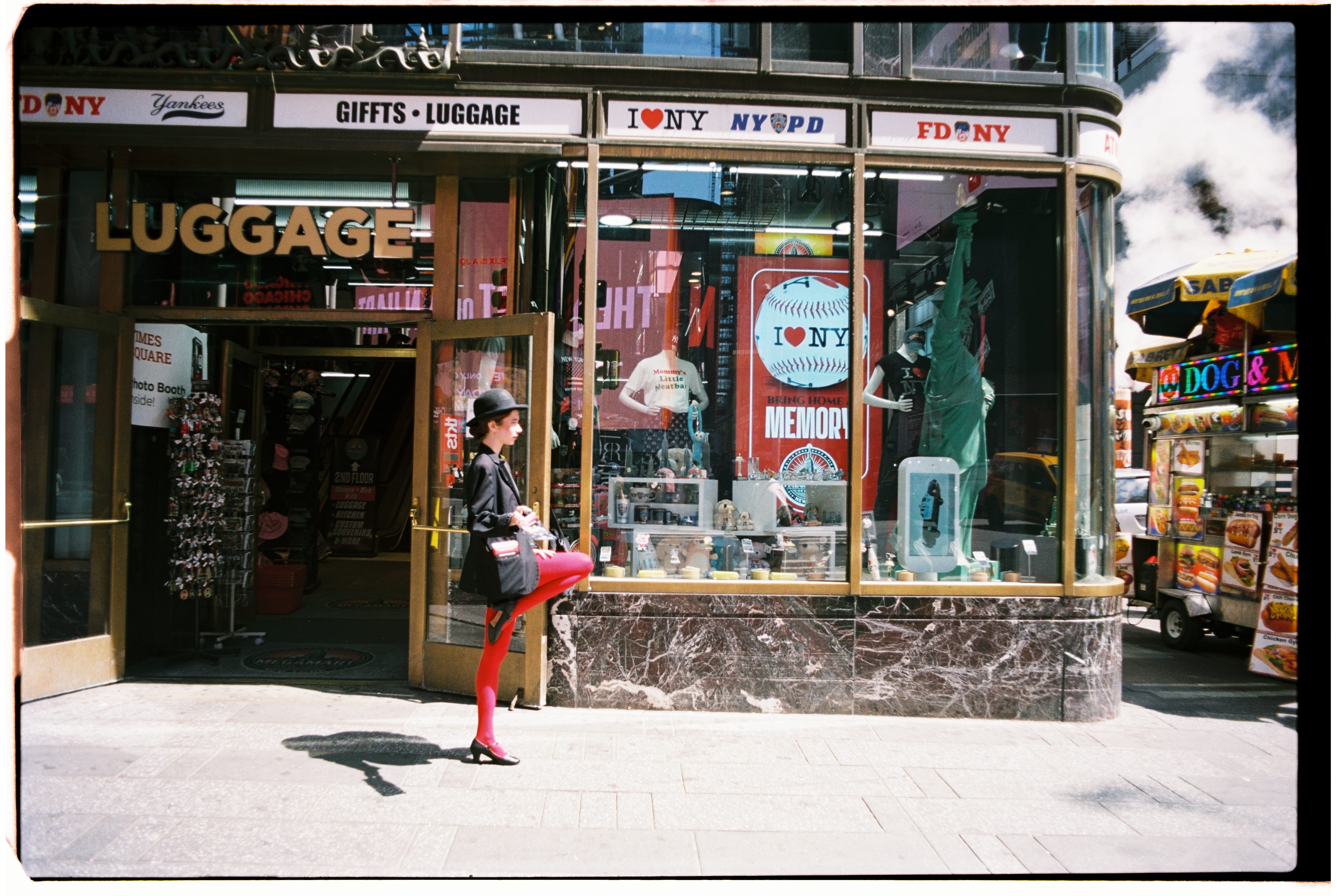
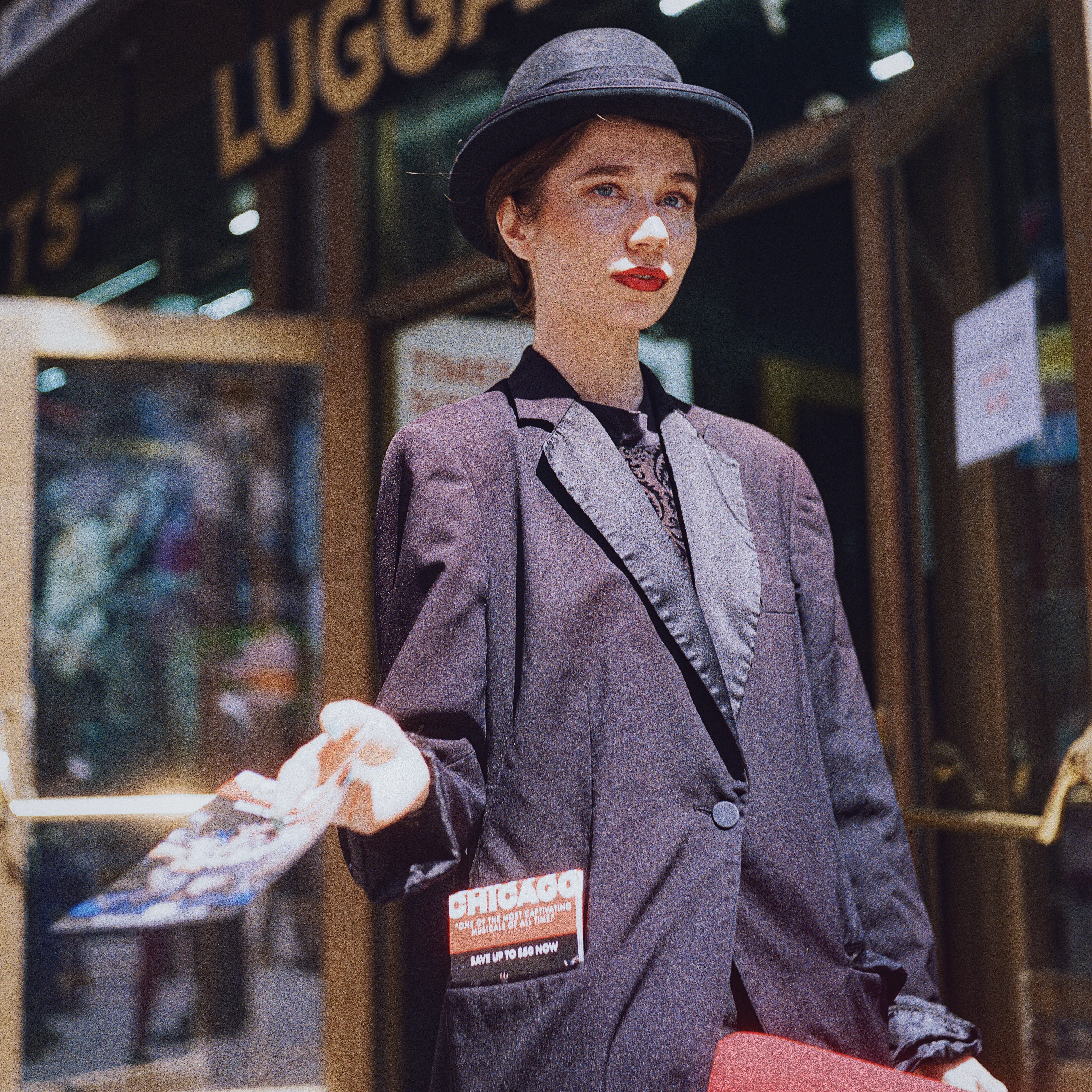
Times Square in the late afternoon is a living, breathing, completely ungovernable organism that’s been fed so many different kinds of stimulation for so long that it’s developed its own immune system against all of it. A place where the extraordinary’s been so thoroughly normalized that nothing that happens within its borders registers as unusual to anyone who spends more than five minutes inside it. I walked into the center of it and let the whole roaring, fluorescent, sweat-and-concrete-smelling mass of it close around me on all sides. The pavement underfoot was warm and slightly tacky from a full day of sun and foot traffic, the air thick and close, carrying the layered, composite smell of the square at peak hours. The salty grease smell of hot dog water and griddle fat from the vendor carts whose operators banged their long steel tongs against the chrome edges of the griddles in a continuous, rhythmic, faintly percussive clatter that cut through the general noise at irregular intervals, the sweet chemical drift of vape clouds exhaled by people moving through the crowd, the occasional sharp green smell of weed burning openly on the red metal chairs along the pedestrian plaza where figures sat low and loose-limbed in the slanted afternoon light, watching the square conduct its business around them with the detached, heavy-lidded tranquility of people who’ve opted entirely out of its commercial logic.
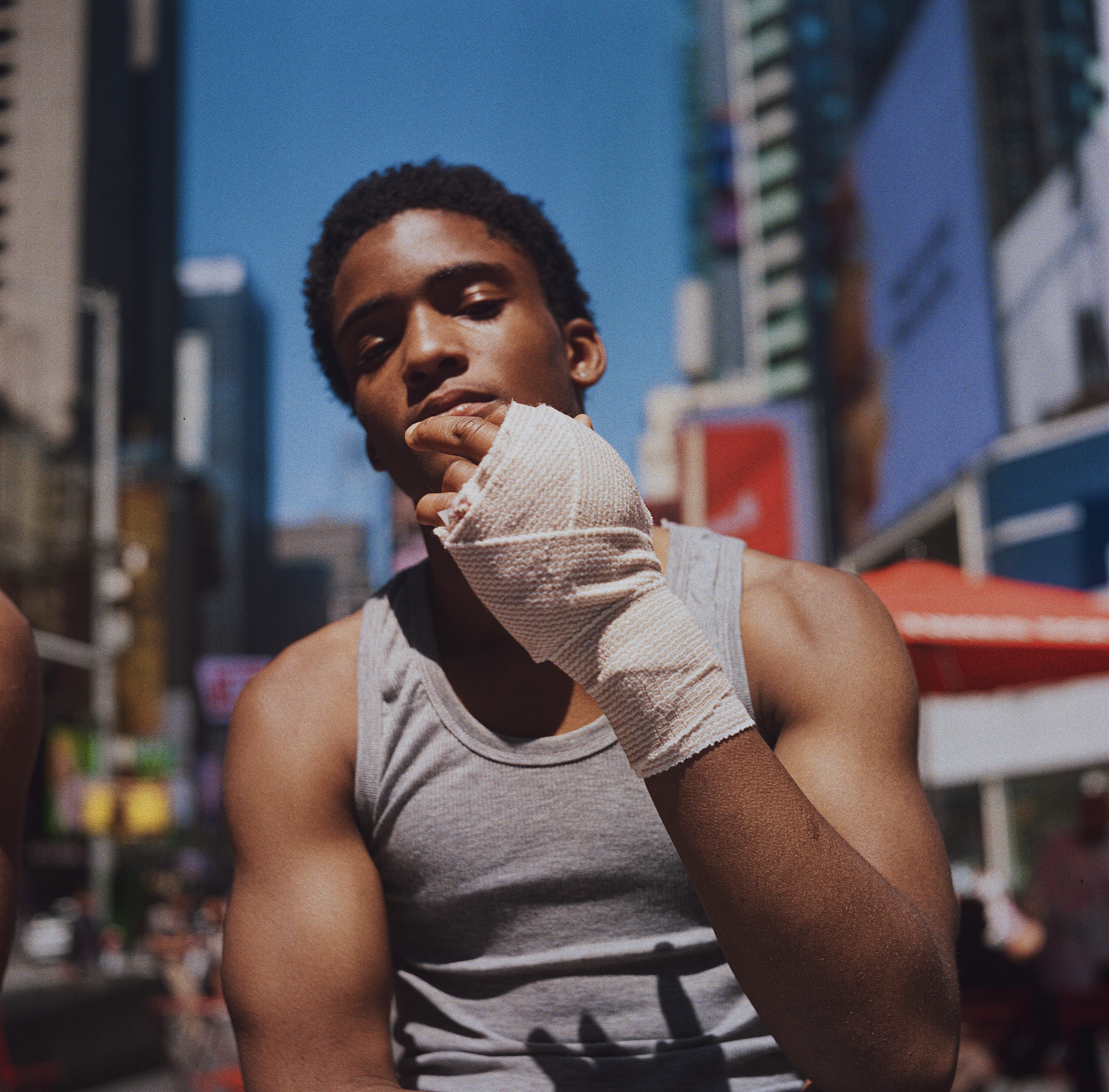
The dance crews were working the wide open sections of the plaza with the aggressive, choreographed showmanship of people who’ve refined their pitch down to a science. Flipping and spinning through the air above the heads of the tourists below them in clean, athletic arcs, their sneakers squeaking on the warm pavement as they landed. All while a second crew member moved through the gathered crowd in the same breath with a bucket and a scripted line delivered in rapid, rehearsed unison, TWENTYDOLLARSTWENTYDOLLARS, the words running together into a single blurred sound repeated at intervals. The tourists standing in the semicircle around them shifted their weight and reached for their phones to film it, trying to calculate how close they could stand to the spectacle without becoming financially implicated in it.
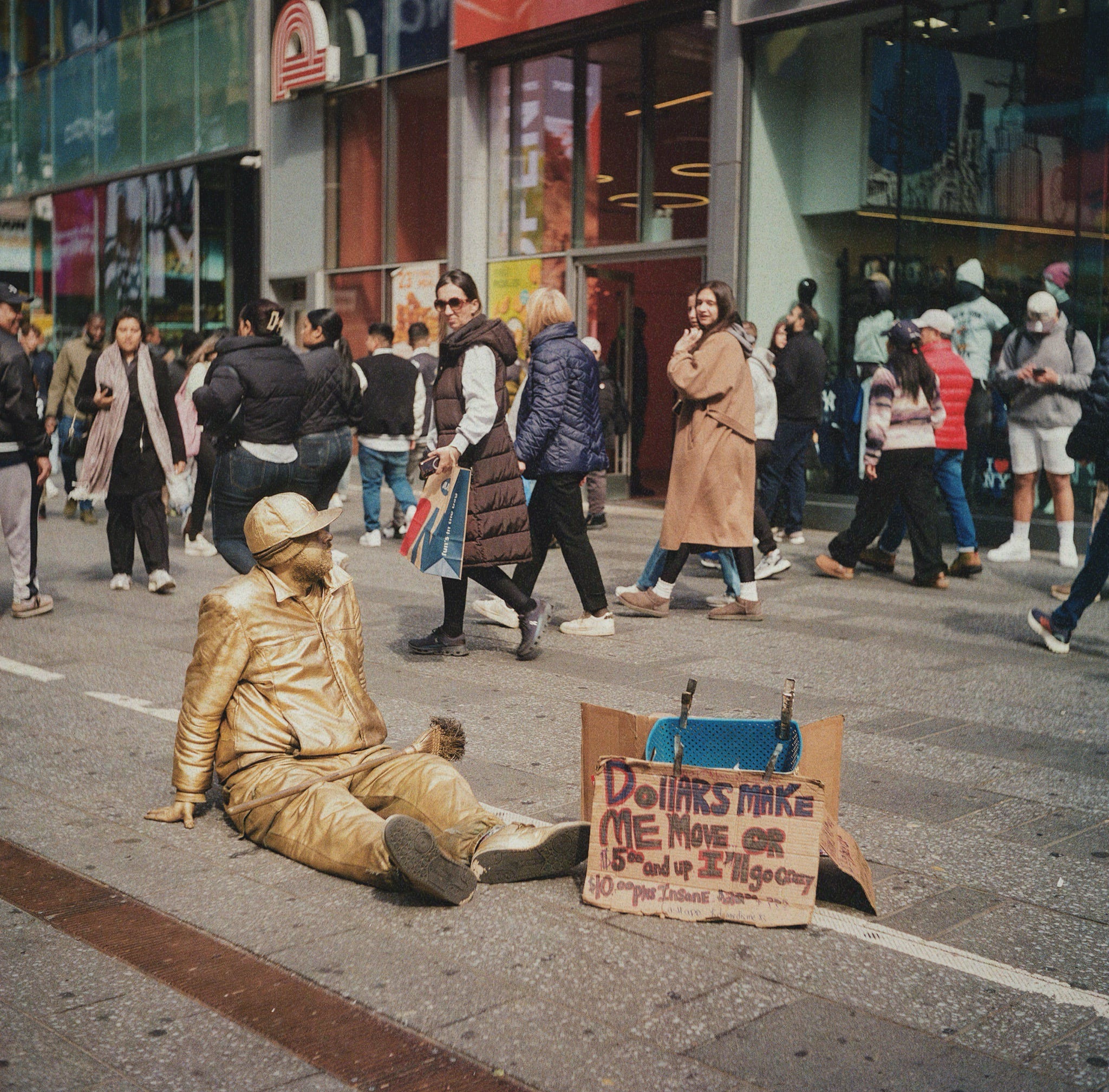
The mixtape men worked the moving crowd in the gaps between, materializing at your elbow from no particular direction with a CD case extended and the question delivered flat and fast without preamble, “you hate black people?”, because you didn’t stop, because you walked past without taking the case. The question was designed to catch in the throat and produce a half-second of stuttering social discomfort that was, in the economy of the square, worth exactly one mixtape’s worth of guilty attention.
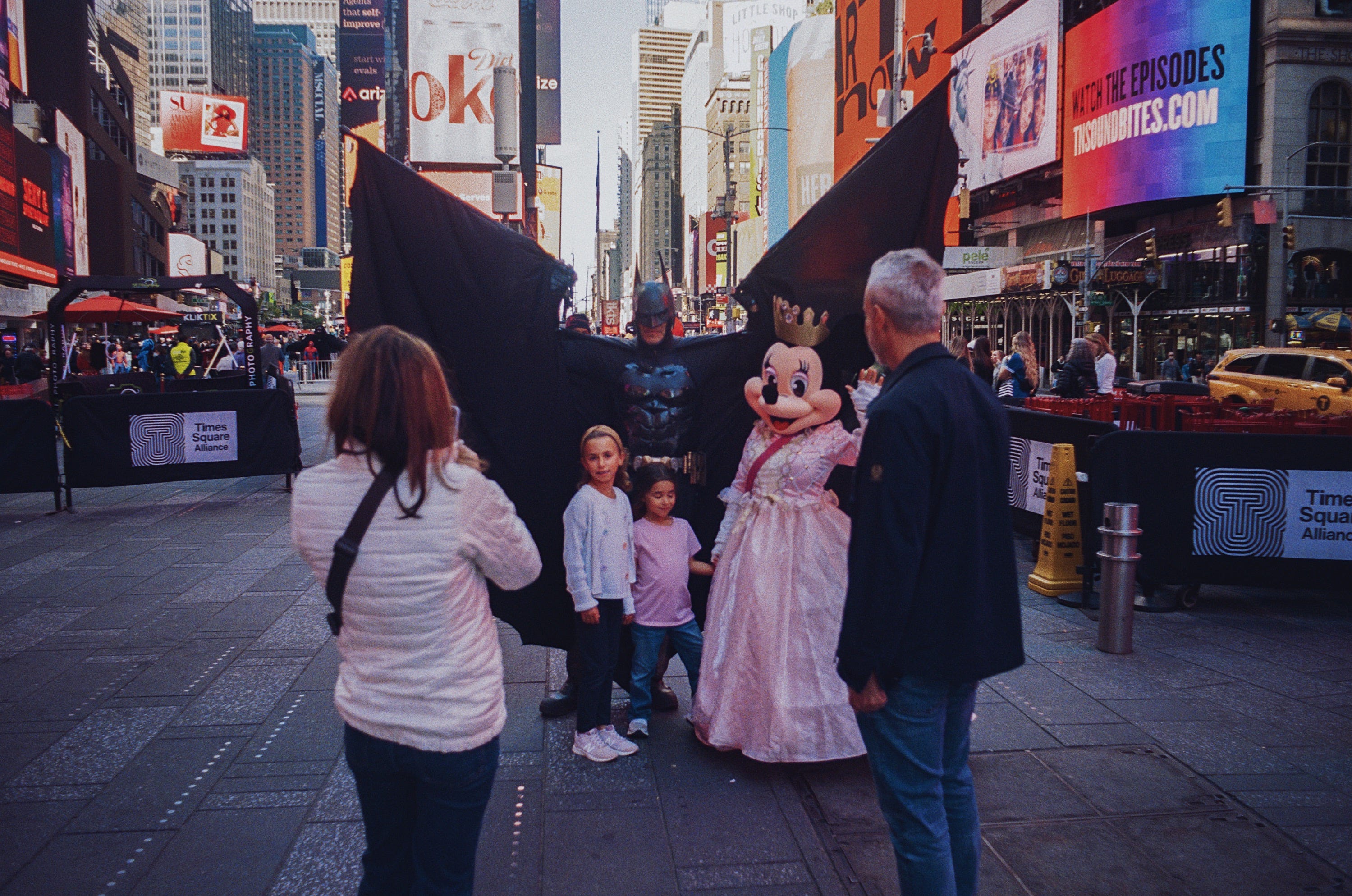
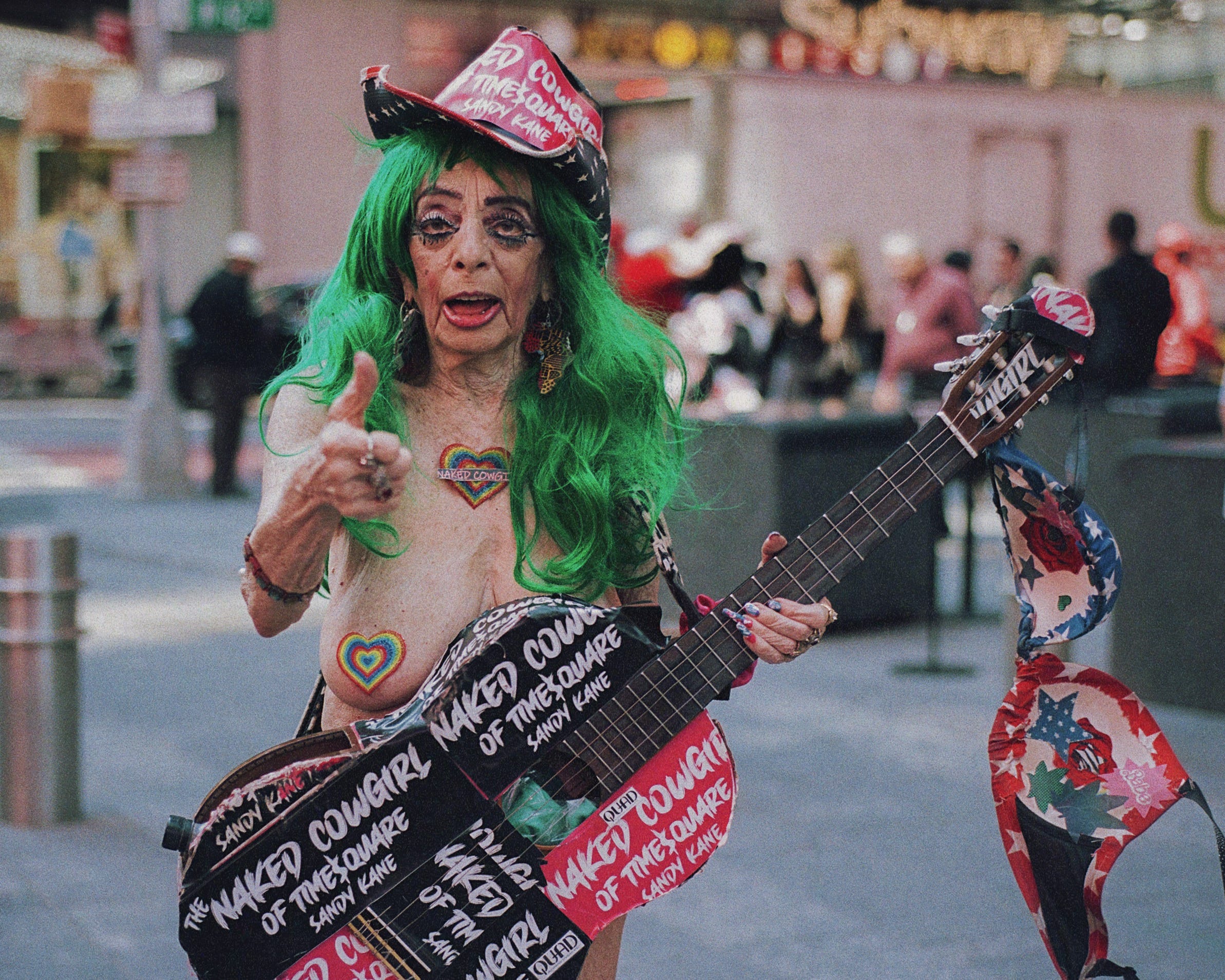
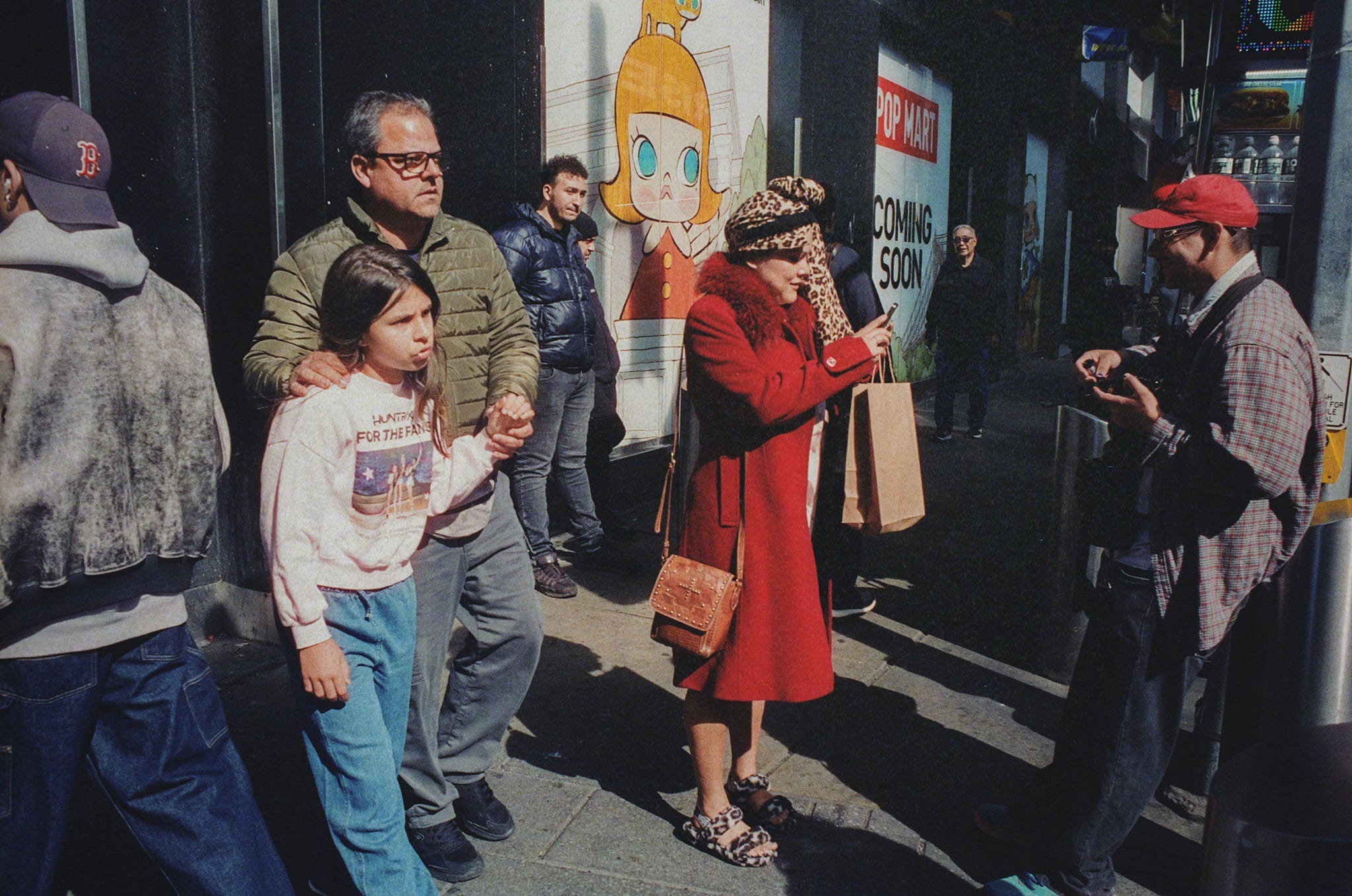
The costume figures were stationed at intervals across the plaza with the territorial awareness of people who’ve worked out, through long experience and occasional conflict, whose corner belongs to whom. The Batman near the north end of the plaza was genuinely impressive. The suit fitted and detailed, the cowl sitting correctly on the head, the whole thing carrying enough conviction that small children stopped in front of it with their mouths open before the parents had time to steer them away, at which point three Mickeys, two Minnies and a Spiderman with a visibly ill-fitting mask appeared from the surrounding crowd and surrounded the family in a tight, smiling, relentlessly cheerful cordon, each one angling for a photograph, the parents backing up slowly with their credit cards already out because there was simply no other resolution available to them. The Labubu costumes were new this season. Enormous, round-headed, wide-eyed figures in their dense plush suits standing a full head above the crowd around them, their blankly delighted expressions printed in fixed bright colors on the oversized heads that swiveled slowly as their wearers tracked the movement of children through the crowd below. The Naked Cowboy worked his stretch of plaza in his boots and his hat and his briefs holding his guitar with the brisk, businesslike efficiency of a man who understood long ago that his is a service industry and keeps regular hours accordingly. The guitar held out for the photograph and the arm around the tourist’s shoulder, the wide practiced grin, and beside him the Naked Cowgirl ran the same play with the same economy of motion, both of them operating with the serene, unflappable professionalism of people who’ve made their peace with every possible variety of human reaction to what they do and found none of it worth breaking stride for.
The photographers with their iPad rigs moved through the crowd at a slow, patient drift, their cameras mounted on the front of the tablets at chest height, scanning the flow of bodies moving through the square for the face that would stop long enough to be photographed. The image, already pulled up on the screen behind them and angled outward so the subject could see themselves rendered in the square’s electric light before being given the price, fifty, sixty dollars, cash or card, for the privilege of taking it home. The chess grandmasters sat behind their folding tables at the edges of the plaza with their boards already mid-game, the pieces arranged in positions of studied invitation, their eyes moving up from the board at measured intervals to make contact with anyone passing who looked like they might carry the combination of competitive confidence and free afternoon time that makes for a paying opponent, their expressions patient and faintly amused in the way of people who’re very good at something.
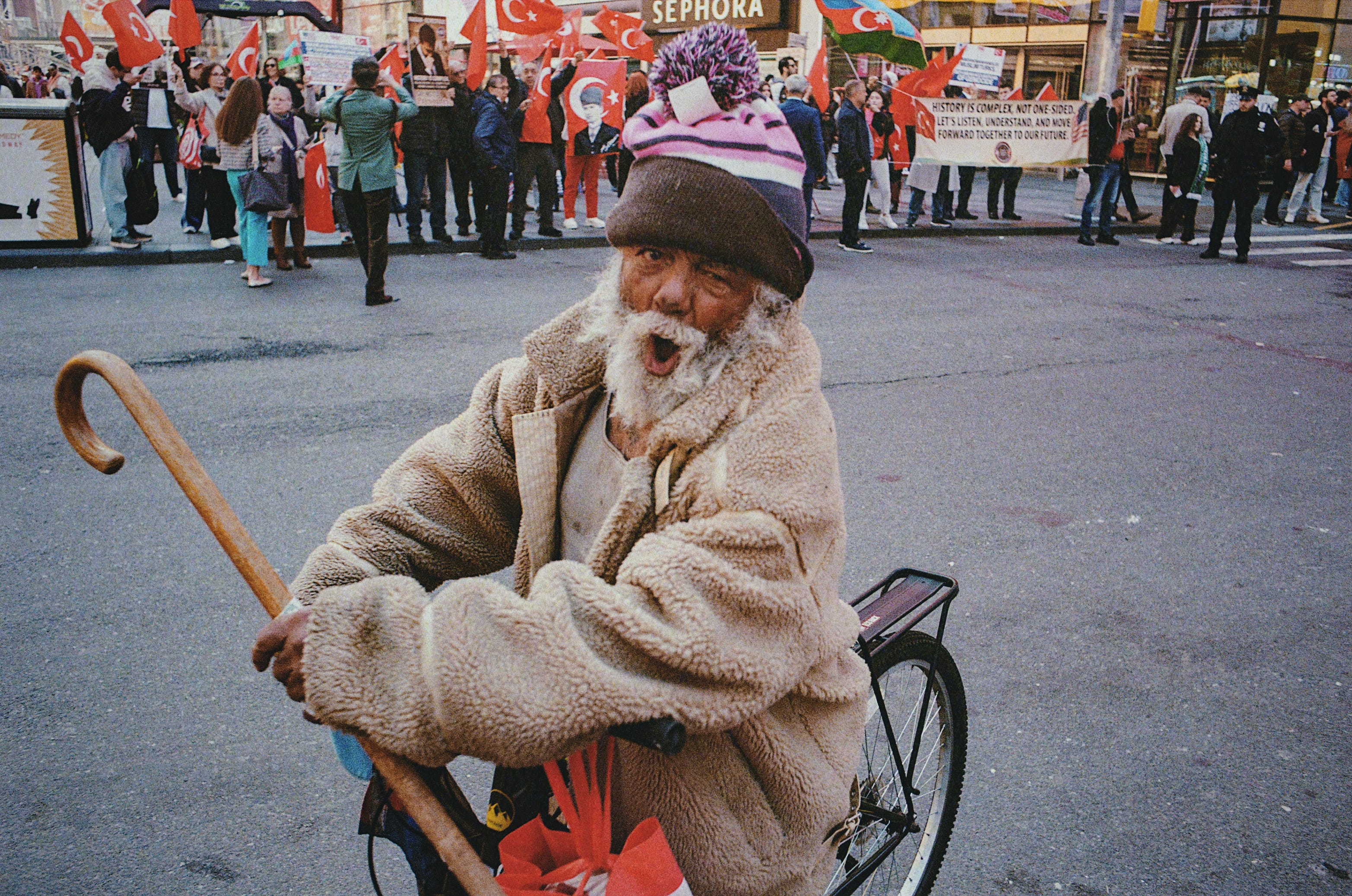
The TikTok groups occupied their chosen patches of open pavement running their choreography in tight rehearsal loops. The designated phone-holder stepping back to check the shot, adjusting the angle, running it again. The whole group resetting to starting positions. The noise, the crowd, the costumed figures, the chess tables, the weed smoke, the religious pamphlets being pressed into unwilling hands all around them simply not registering as relevant information collide amongst one another. The preachers moved through the gaps in the crowd with their printed materials held out at arm’s length, their voices raised above the ambient roar of the square in urgent, sustained addresses directed at no one in particular and everyone simultaneously. The words sharp-edged and declarative, swallowed almost immediately by the sheer volume of competing sound on all sides. Beside them men in MAGA hats sold Trump merchandise from folding tables stacked with hats and shirts and bumper stickers in red, white and gold. The lines for Raising Cane’s and the Olive Garden above it snaked around the corner and doubled back on themselves in long, patient, shuffling queues of people who had decided that this afternoon in Times Square was the afternoon they were going to wait however long it took.
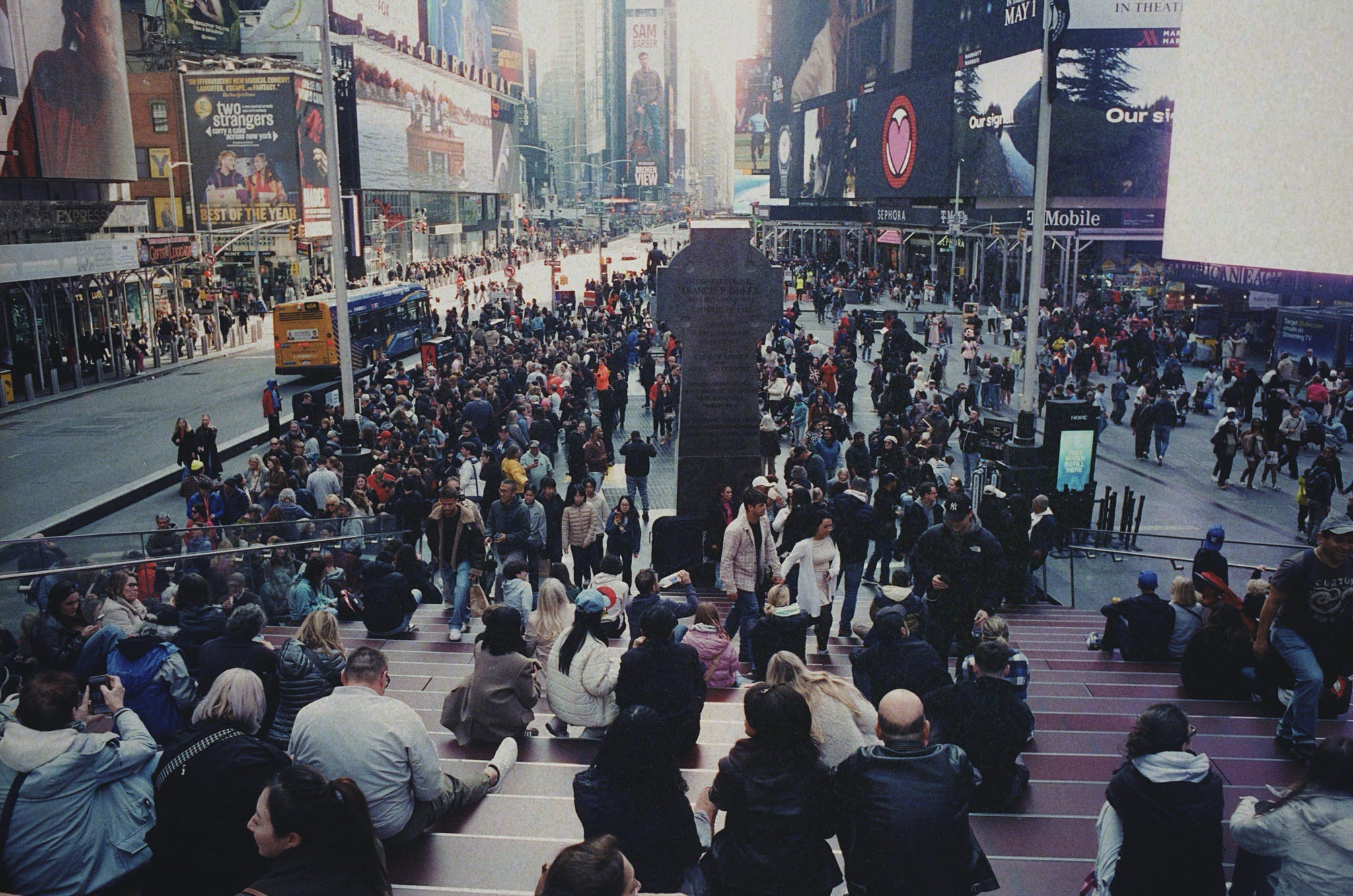
Above all of it the screens ran their continuous, overlapping cycle of advertisements in colors so saturated and bright that even in the full light of late afternoon they pushed back against the sun. Deep pulsing reds and cold surgical blues covering every available surface of every building face surrounding the square from the second floor to the roofline. A new face or product or show or slogan refreshing every few seconds across dozens of surfaces simultaneously, the light from them falling down onto the crowd below in a shifting, restless wash of color that moved across upturned faces and bare shoulders.
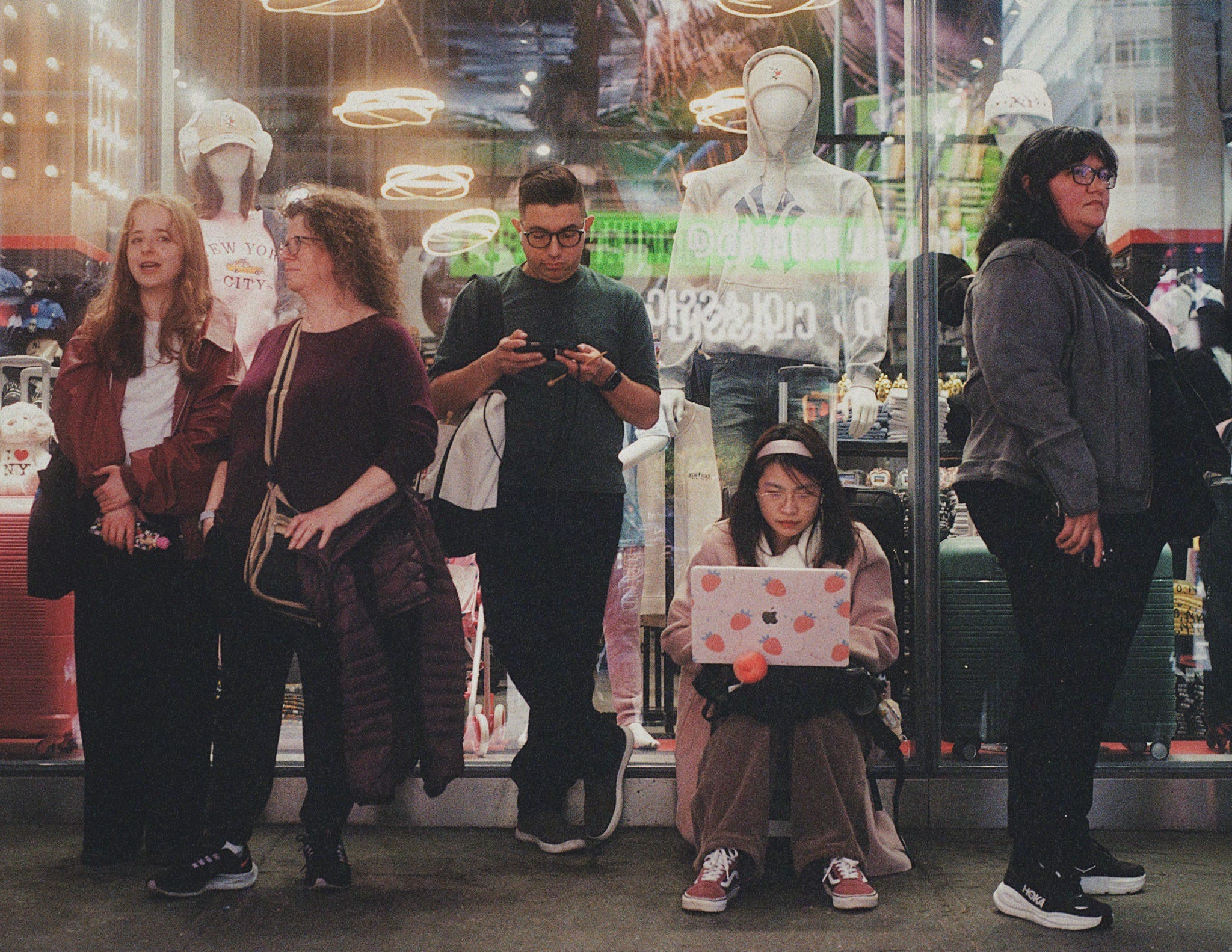
On the broad red stairs rising above the north end of the plaza, tourists sat packed shoulder to shoulder on every step in a dense, colorful, tightly compressed mass, their faces turned outward over the flood of people below them with the wide, slightly overwhelmed expressions of people watching something they were told was unmissable and are still in the process of deciding whether that’s true. I moved through all of it slowly, the cameras working, my body turning with the crowd’s current, invisible again inside the one place in the city so comprehensively saturated with spectacle that one more person pointing a lens at it disappears entirely into the general noise of the thing.
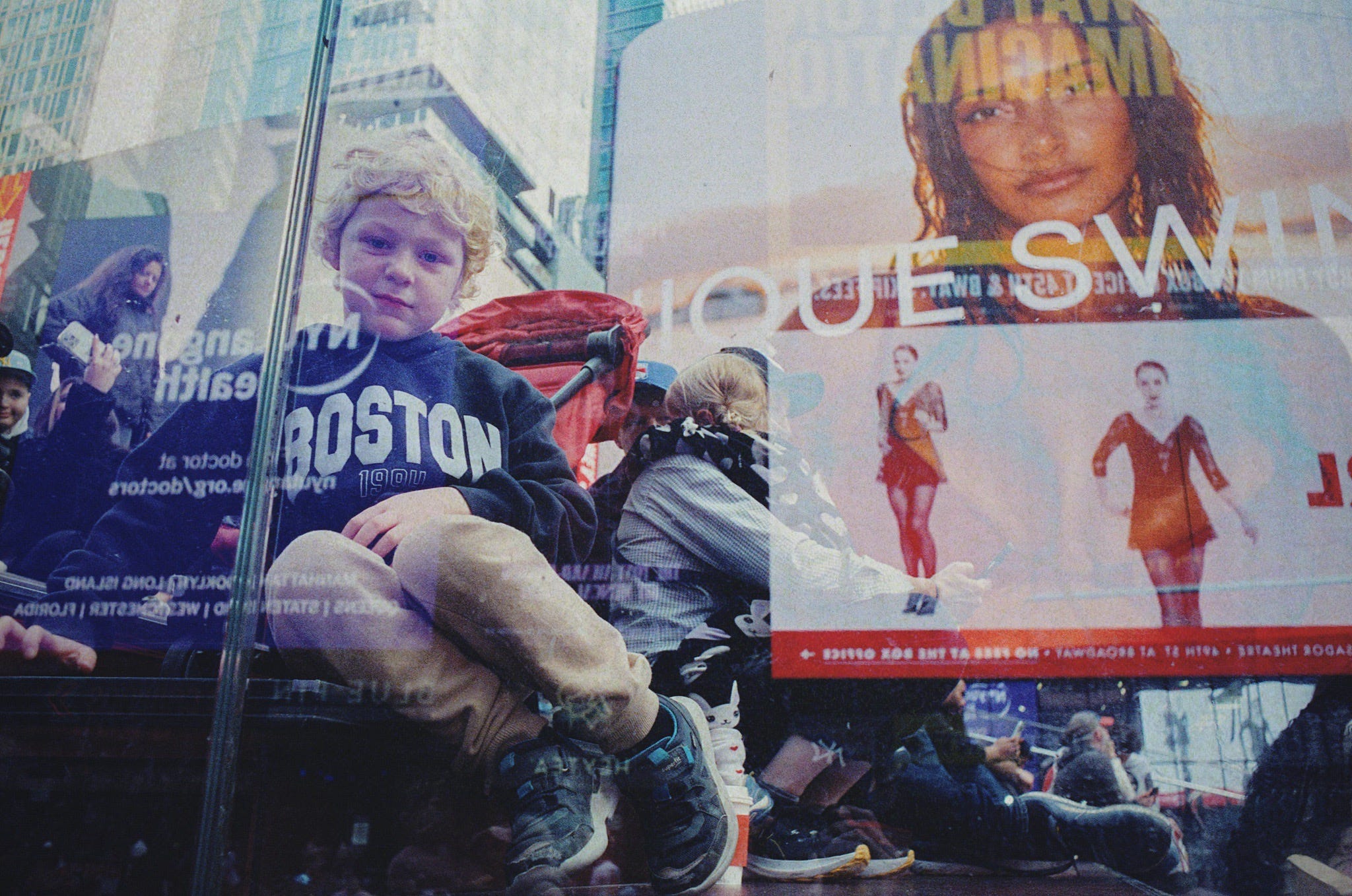
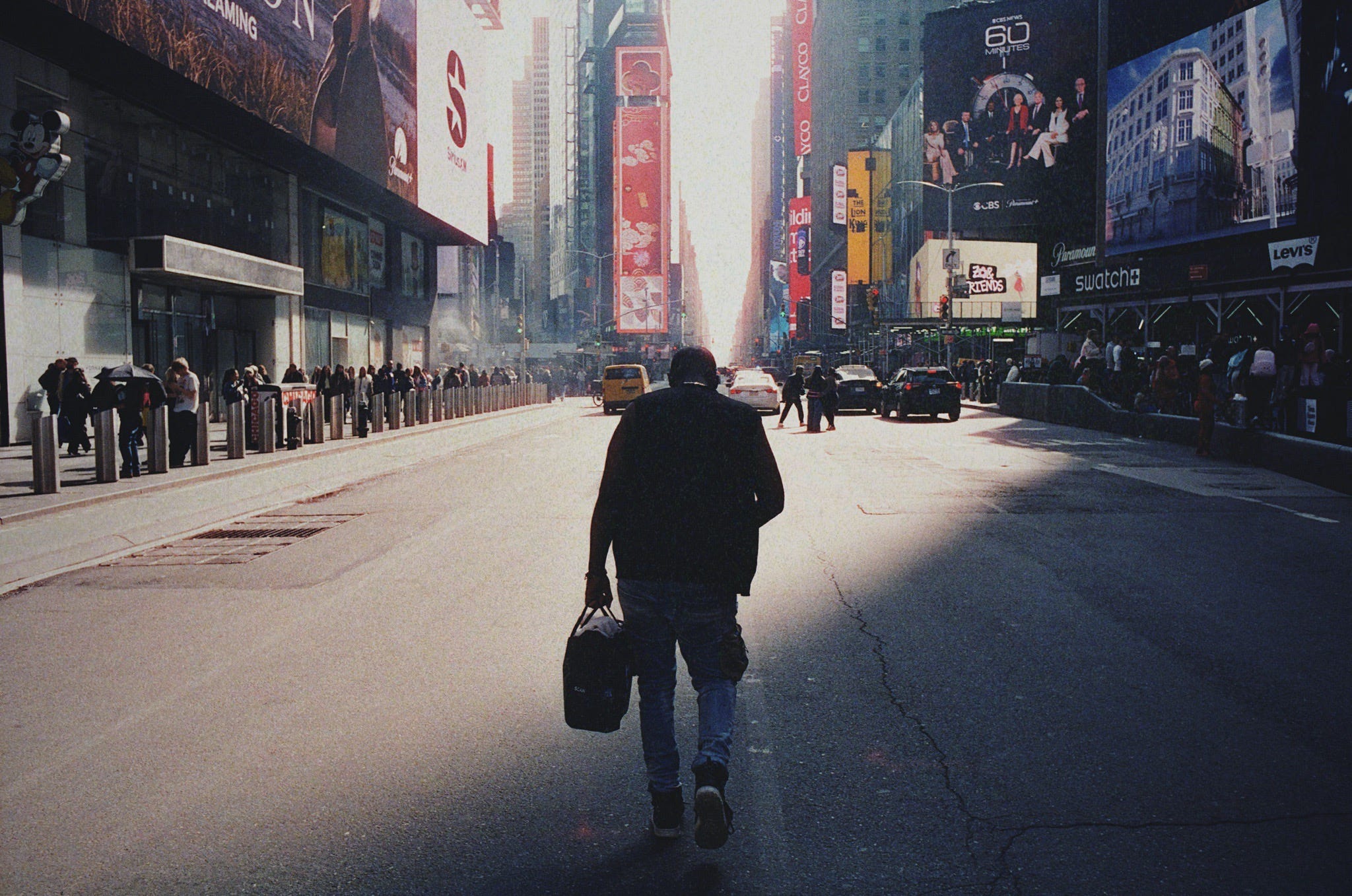
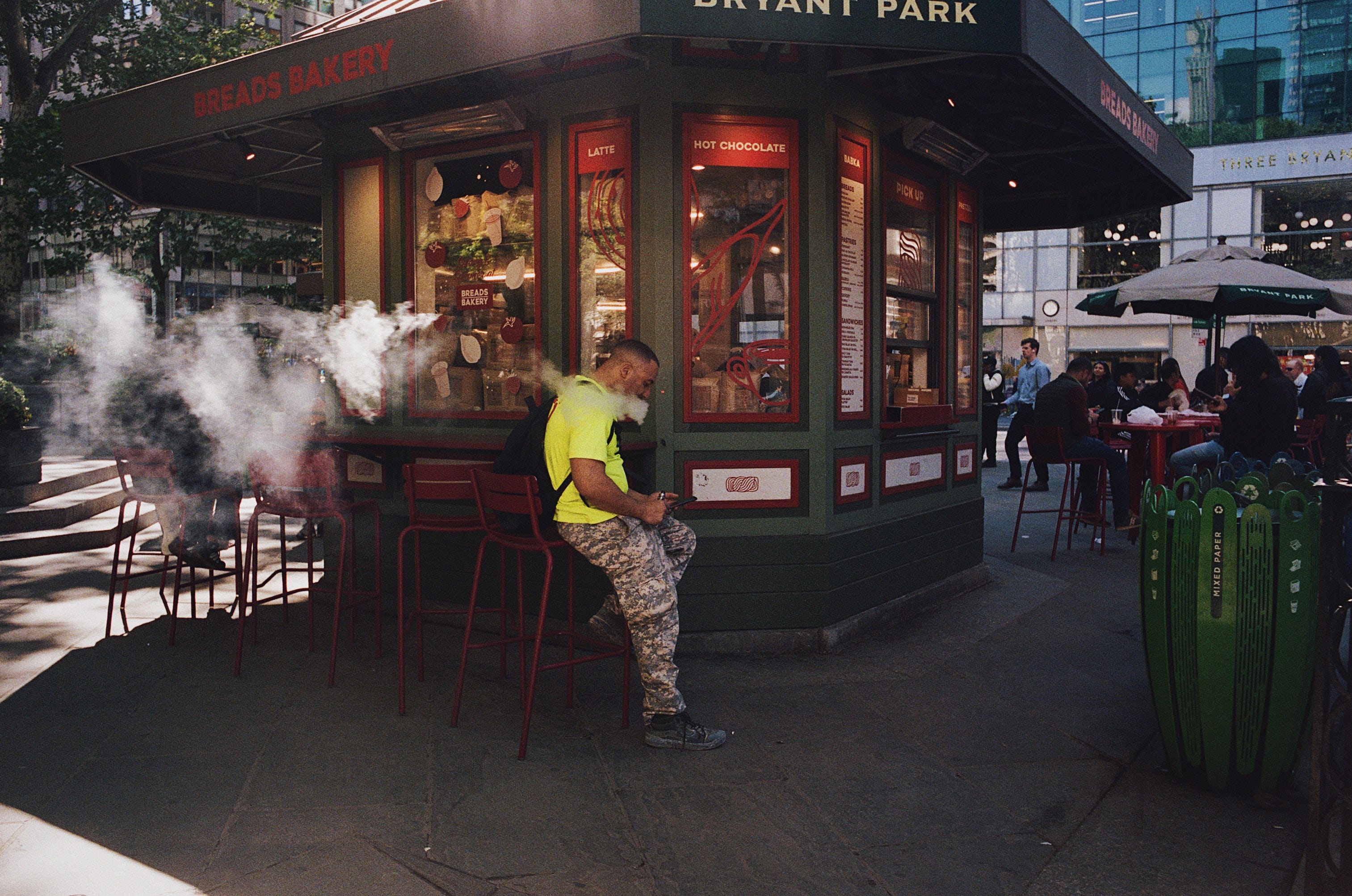
Now officially overstimulated, I made my way to Bryant Park. The sun was still sitting high and generous in the sky, it was barely quarter to four, early still by the standards of a day that had started in Brooklyn that morning. The park had filled with the late-lunch crowd that occupies it in the hours between two and five. A loose, demographically mixed, pleasantly purposeless congregation of people who’ve either finished their workday early or are pretending to have done so.
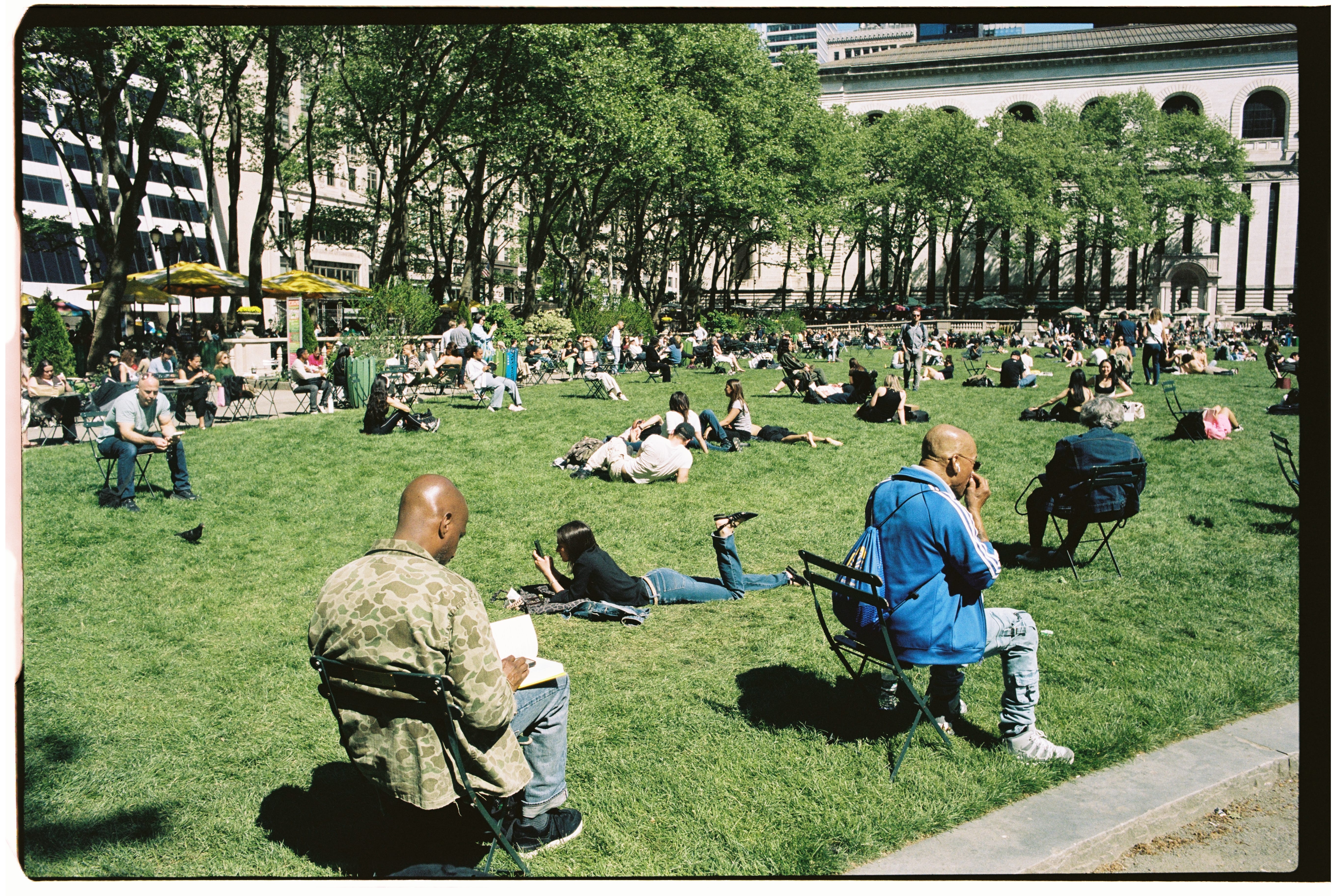
The lawn at the center of the park was covered in a dense, overlapping scatter of bodies in various configurations of repose. Couples lying on their sides facing each other in the thick green grass, their shoes off and set beside them in neat pairs. Families arranged around spread blankets with the contents of paper bags distributed across the grass. Solitary figures flat on their backs with one arm draped across their eyes to block the sun, their chests rising and falling slowly, their bodies giving themselves over to the warm weight of the afternoon with a completeness that the rest of the city outside the park’s iron fencing seemed to make structurally impossible. The heavy canopy of the trees and lindens that ran the full perimeter of the park, their trunks thick and smooth-barked in mottled patches of cream and olive, the upper branches meeting overhead in a dense interlocking ceiling of broad, flat, five-pointed leaves that broke the sunlight into a shifting, coin-sized mosaic of bright and shadow across the paths beneath them, shade the readers enjoying their books while snacking on their entree of choice.
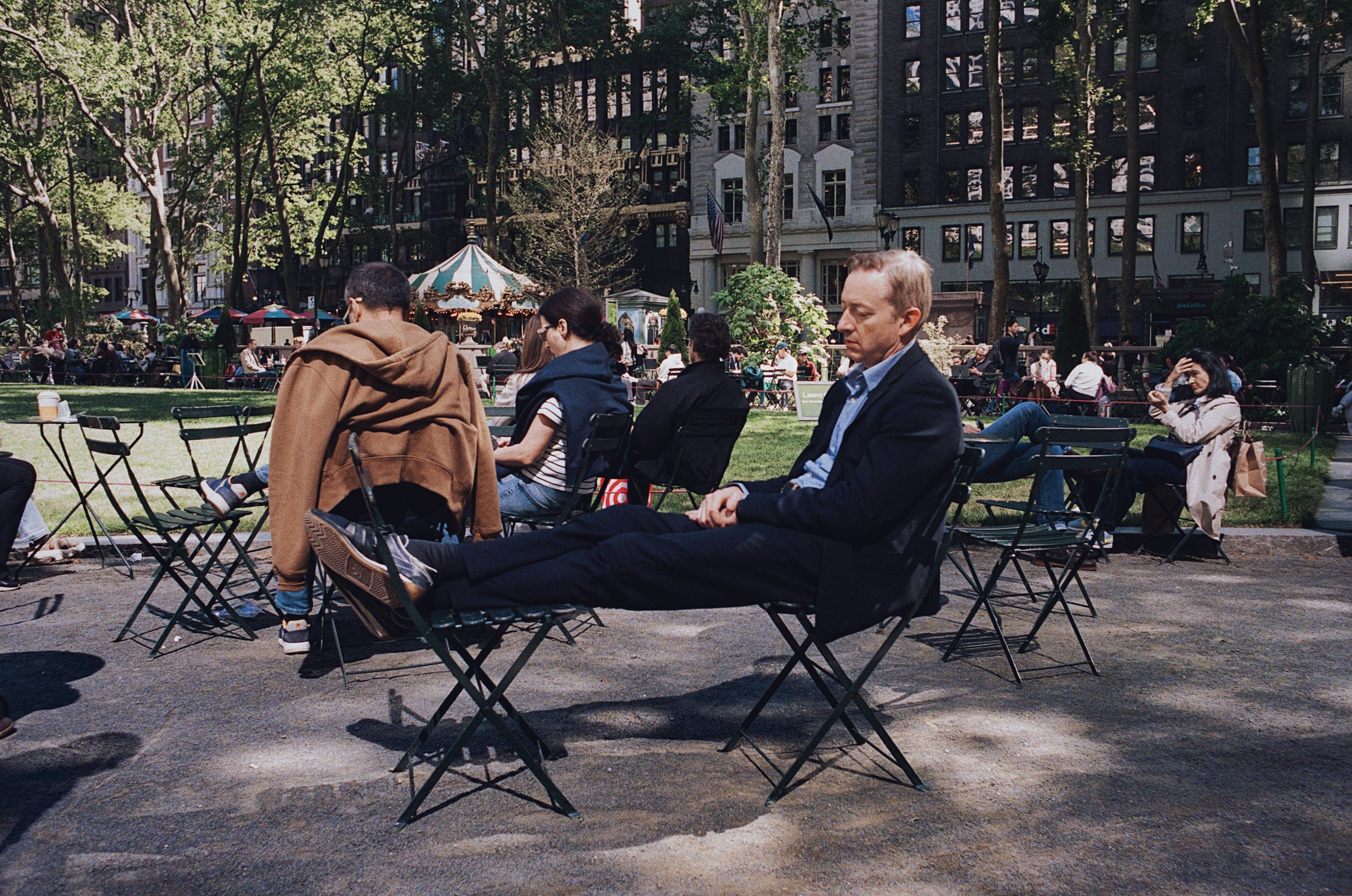
I circled the park twice, moving along the outer path under the trees and then back in across the lawn, the cameras still hanging from my neck and torso. The Rolleiflex’s advance lever reached its limit and locked. I walked back out through the park’s iron gate onto 42nd Street with the spent rolls of film in my bag and the cameras empty around my neck. I turned east toward the subway, my feet carrying the full accumulated mileage of the day in a deep, satisfying ache that ran from the soles up through the calves and into the lower back. The depression that had been sitting on my desk that morning under all those unanswered pieces of paper felt, from here, like something that had happened in a different season entirely. The city had done what the city does when you let it. I descended into the subway and headed back to Brooklyn with three cameras and nothing left to shoot and a day’s worth of exposed film.
I don’t like sitting on exposed film for long. I like to get them to the lab while the day is still close enough to remember clearly. Or I’m just an impatient fuck. The only thing that ever keeps me from doing it immediately is money, which’s been the organizing variable of my entire life. It’s the thing everything else arranges itself around, the fixed constraint inside which all the rest of the decisions get made. I’ve never been rich. I have been, at various intervals, semi-lucky, which is a different and considerably less reliable condition, and the distance between those two states has shaped the way I move through the world in ways I’ve long since stopped noticing because they’ve become simply the way things are.
For example, nothing in my closet cost more than fifty dollars. I wear everything until the seams give out. I haven’t, in recent memory, spent more than two hundred dollars on any single thing, and the mental arithmetic that runs automatically whenever money is about to leave my account, the quick, practiced, entirely unconscious calculation of what’s left and what’s coming and what can wait, is a reflex so deeply ingrained by now that it operates below the level of conscious thought.
I had a hundred and fifty dollars in my account when I came off the subway, which by my standards on a day like this qualifies as flush. There are two things that money has always gone to without deliberation or regret. The work itself, or whatever feeds the work, and a pack of cigarettes. Film, gear when something breaks or when the right piece presents itself at the right price, journals and books, or whatever else I find that I genuinely need to keep developing as a photographer. These are the expenses I’ve never once thought twice about. Everything else is negotiable. These are not.
I made my way to Nice Film Club to drop the rolls off. Now… I want to be direct about something here, because the last time I mentioned a brand in print, I apparently gave a portion of my readership the impression that any product that appears in my writing is there because someone paid me to put it there, which reflects a fundamental misunderstanding of how I operate and one I have very little patience for. I’m an ambassador for Nice Film Club. I’m also an ambassador for VSCO. Neither of those facts means that every mention of either company in anything I write is a paid placement, and the inability to distinguish between a writer discussing something they actually use and a writer shilling something they were handed is a failure of reading comprehension I’m not especially interested in accommodating. The threshold for my tolerance of that variety of bad faith is low and has always been low. I don’t talk about things I don’t use. I don’t recommend things I haven’t tried. There’s already a sufficient volume of manufactured enthusiasm in the world trying to separate people from their money without my adding to it, and I have no interest in being another instrument of that noise. I use Nice Film Club because they’re genuinely one of the best labs I’ve worked with in this city. Their work is consistent and careful, and they handle film the way film deserves to be handled. The people who work there are people I actually like, which in the context of where I choose to spend my time and my money isn’t a small thing.
I came in off the street and laid the rolls out on the counter. All the spent canisters from the Canon, the Nikon, and the Rolleiflex. I rushed the order because I meant what I said about not sitting on film. Johnny was there, and Marley and Oscar and Jackson and John. I sat in the back back on a empty bench and chatted about life and photography for awhile. I picked up a three pack of Fujifilm 400 on the way out, which brought the balance in my account down to a number I won’t specify but which was, by the logic of the day, entirely worth it. Then I hopped back on the L and rode it home to Brooklyn through the long underground dark, the new film in my bag and the spent rolls already in the lab’s hands. The day sitting complete and fully used behind me, every frame of it latent and waiting in its chemistry for whatever it was going to turn out to be.
I dragged myself up the stairs onto our block, my feet carrying the accumulated weight of every mile since Brooklyn that morning, and I knew before I saw anything. The smell hit first, the thick, resinous, deeply wrong smell of structural wood burning, not the clean outdoor smell of a backyard fire or a grill. Hanging in a dense, low haze across the long corridor of our block that Sophie and I call Chicago for the way the wind tunnels down it in the colder months were the signs of a fire. I looked up into the evening sky and the plume was already enormous, a wide, roiling column of black and dark grey smoke rising from somewhere very close, climbing fast and thick into the low cloudy ceiling above the neighborhood and spreading outward at its top in a heavy, dark-bellied mass that turned the already overcast light of early evening a shade dimmer. Two months ago, exactly, March 8th, the morning after I’d covered the Jake Lang counter protest, still running on almost no sleep, a three-alarm fire had torn through three apartment buildings on the same street I live on and I had covered that too, standing in the cold pre-dawn dark with the trucks and the hoses and the orange light of it reflecting off the wet pavement.
My legs found whatever was left in them and I went down the block at a full sprint, one hand clamped across the three cameras swinging at my chest to keep them from crashing into each other, the other arm pumping. I sprinted block after block, the plume growing wider and more present above the rooftops ahead of me. The smell thickened with each stride until it was coating the back of the throat and sitting heavy in the lungs, and then I saw it. Through the park that Sophie and I walk every evening, the familiar path under the trees now lit from the upper right corner in the pulsing, irregular red and white strobing of multiple emergency vehicles, the light bouncing off the smoke-filled air above the buildings in a bright, agitated scatter that turned the whole northeast corner of the park into a shifting, colorless glare. As I ran through I was already pulling the new rolls of film from my bag, loading the cameras without breaking stride, slamming each roll home and advancing the first frame by feel.
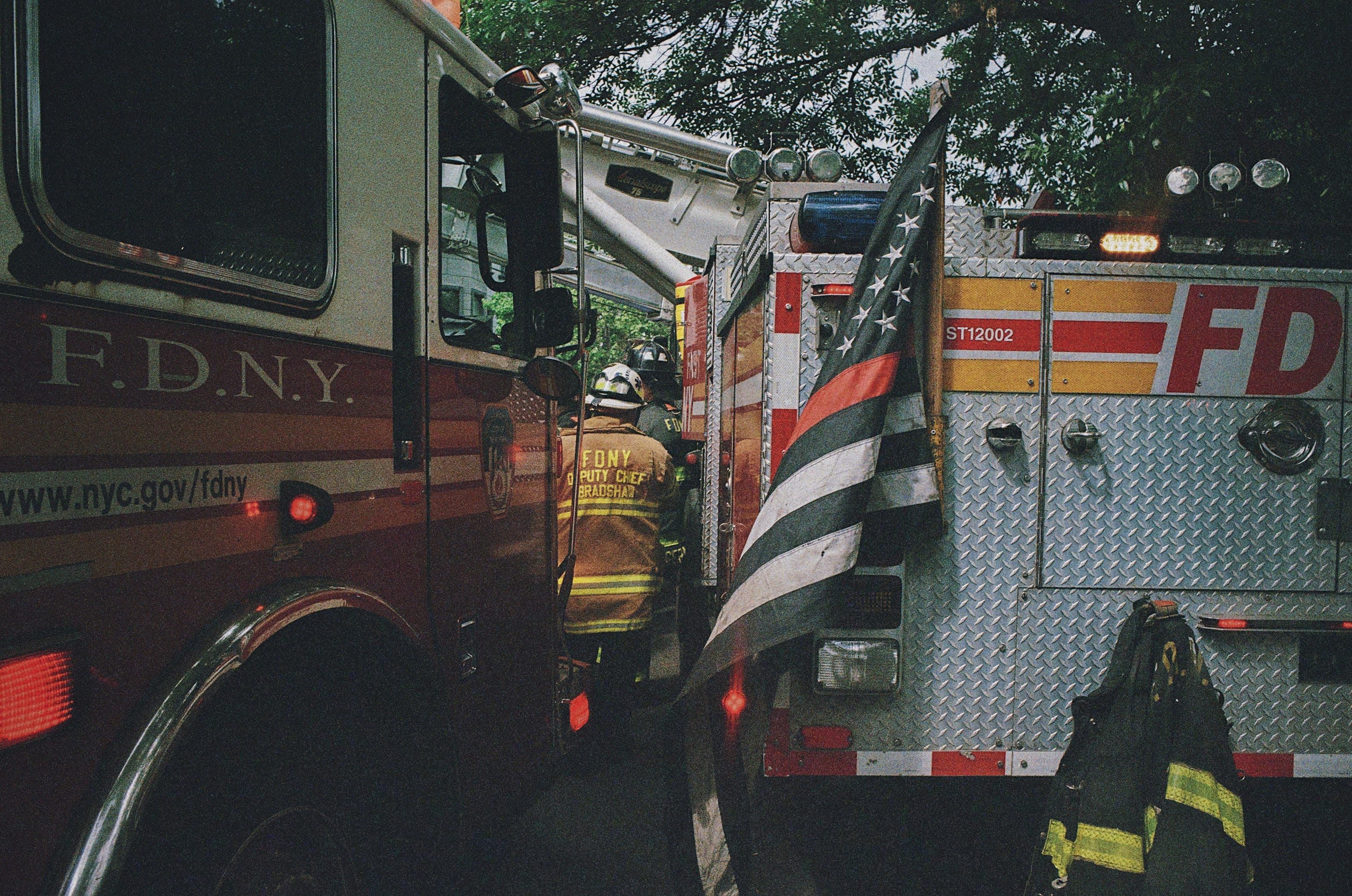
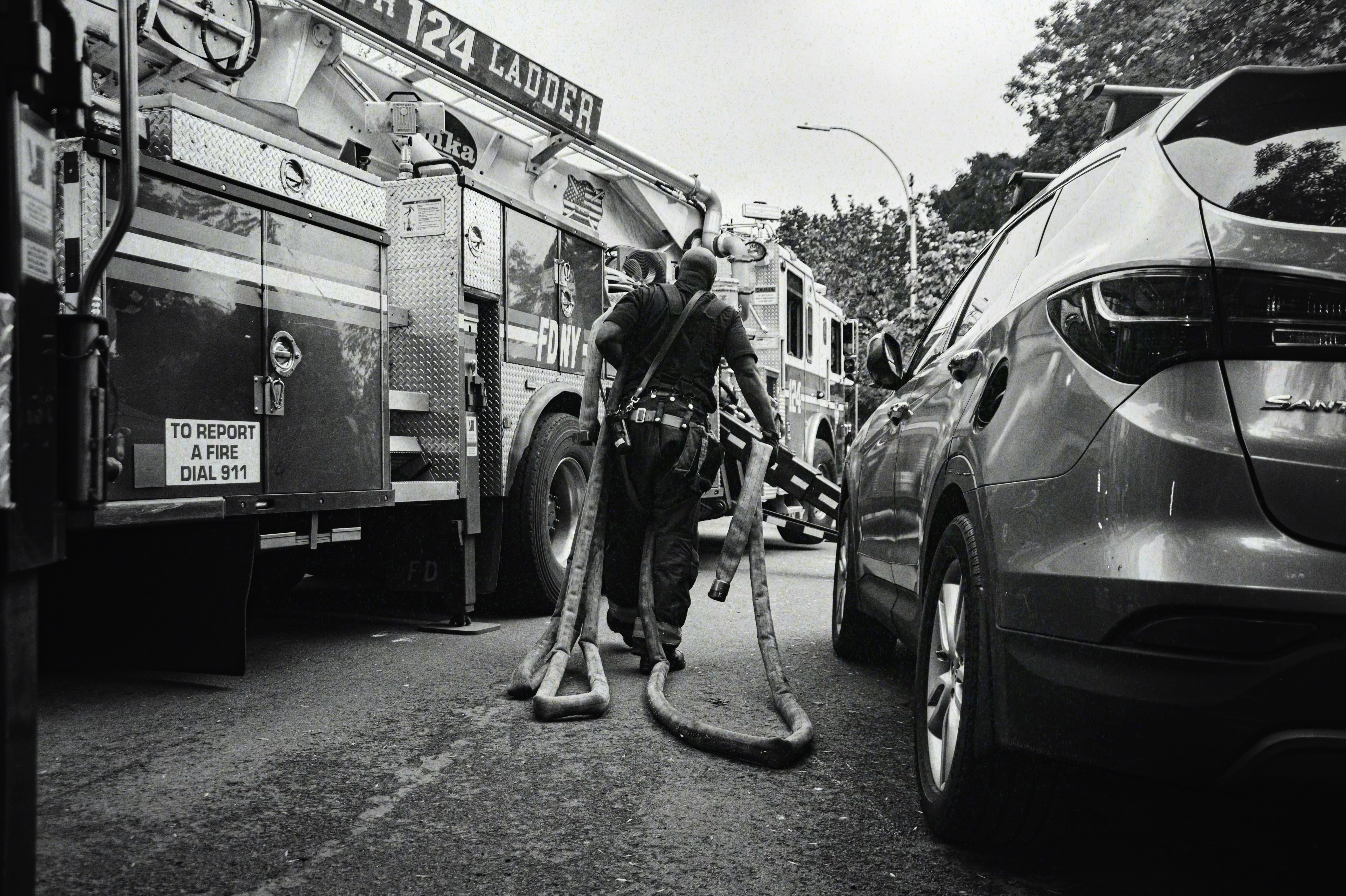
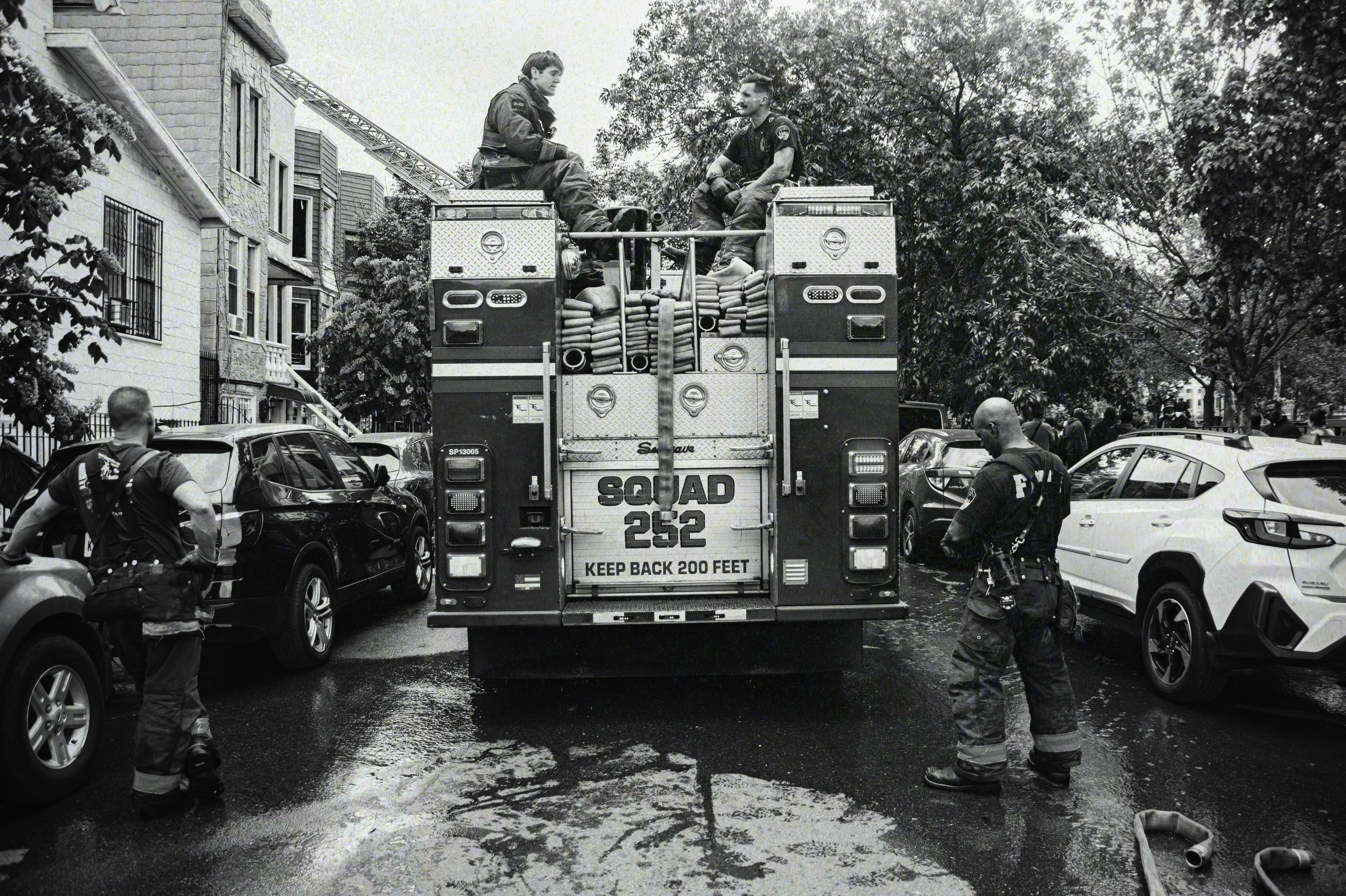
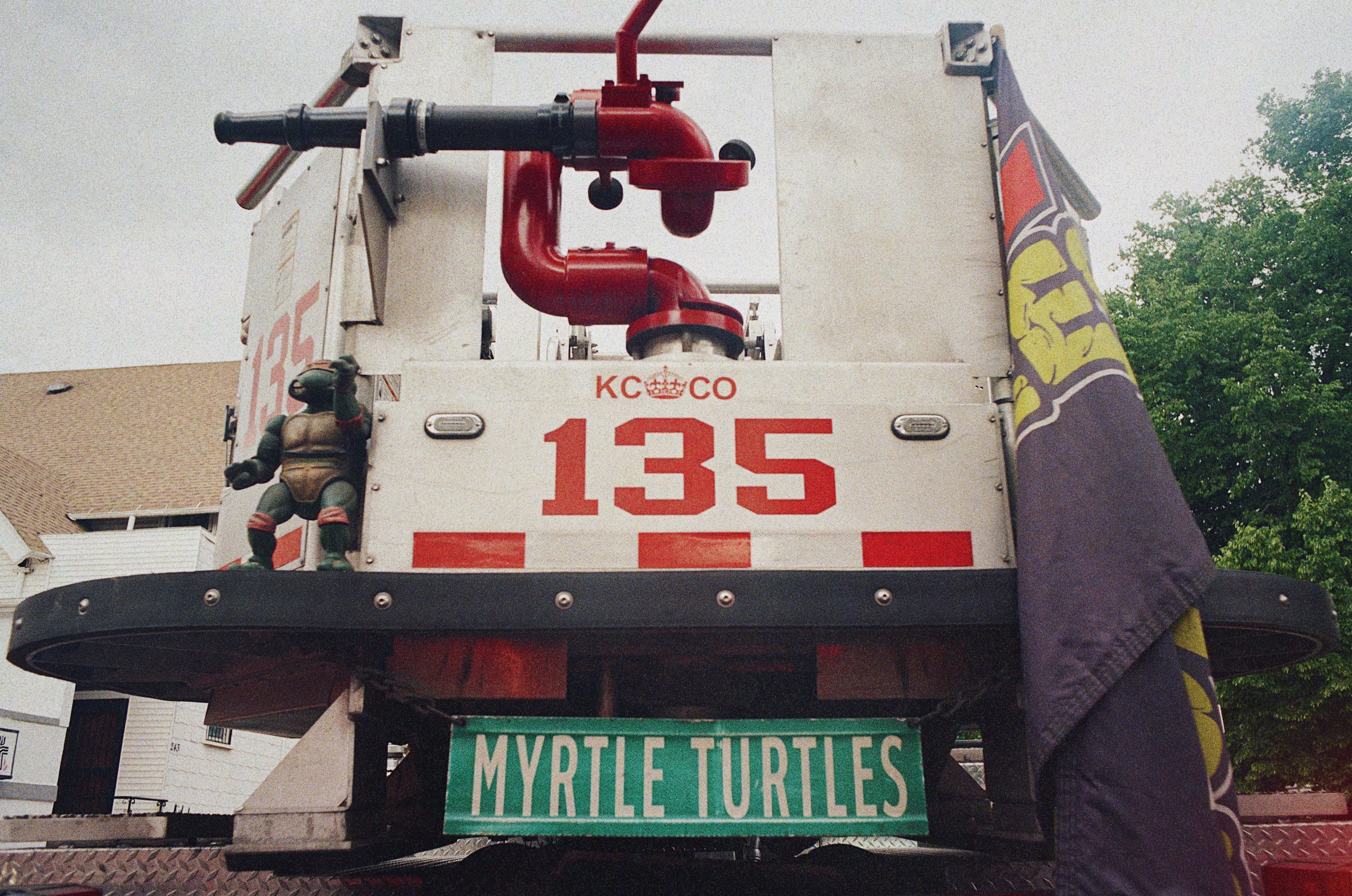
Eight fire trucks were staged around the corner, maybe more, different companies from different parts of the surrounding area, their broad red and white flanks filling the width of the street from curb to curb, the amber warning lights on their roofs sweeping slow rotations through the smoke-thickened air above them while their engines ran at a low, continuous diesel vibration that you felt in the chest. The fire itself had been partially knocked down by the time I arrived, but it hadn’t given up. It gasped and pulsed in the upper floors of the buildings, the windows on the affected floors dark and glassless now, the frames charred and ragged at their edges. From inside the smoke still poured in dense waves, white and grey at its edges where it first hit the outside air, then dark and oily at its center where the combustion was still finding oxygen to feed on.
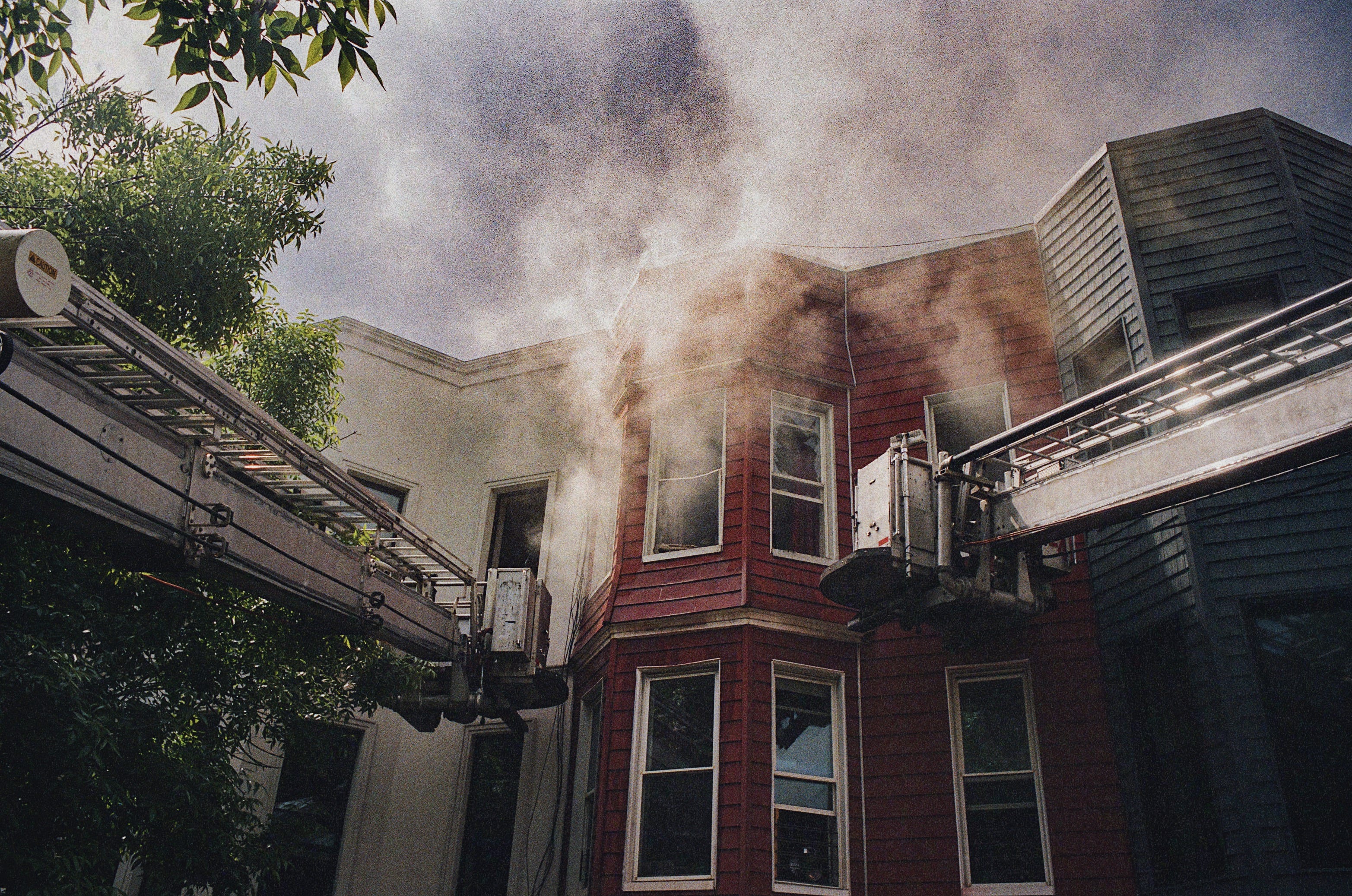
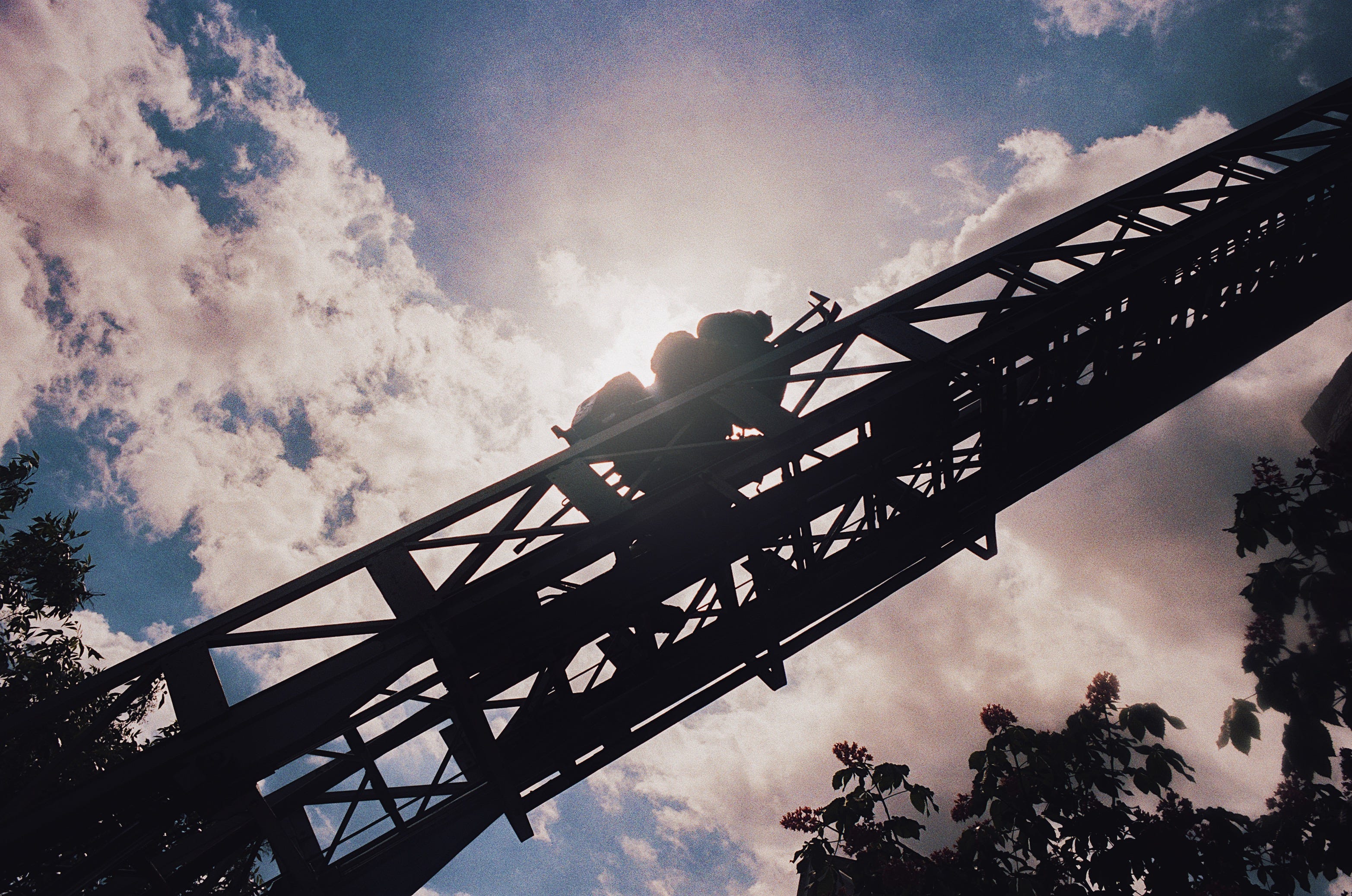
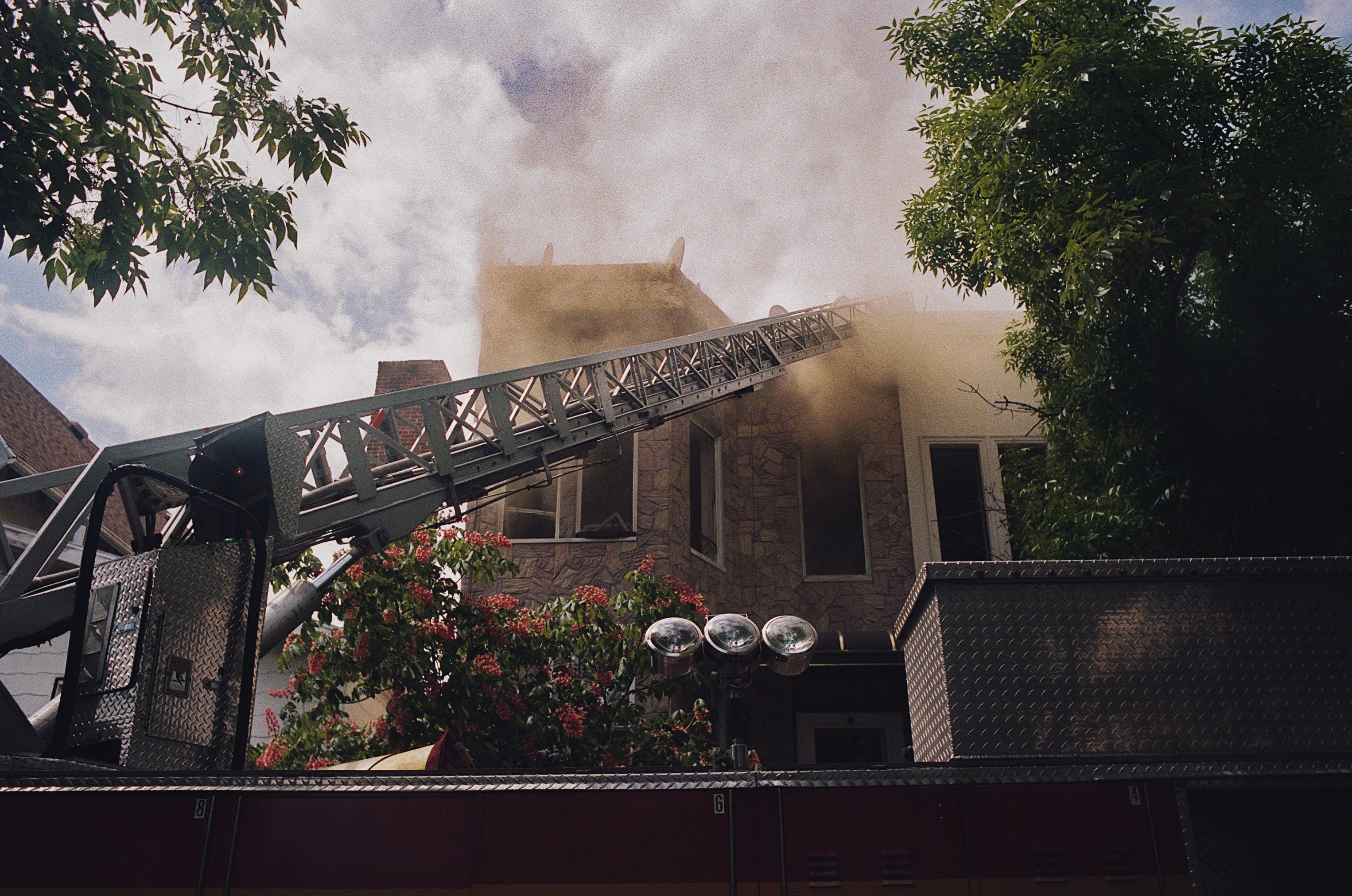
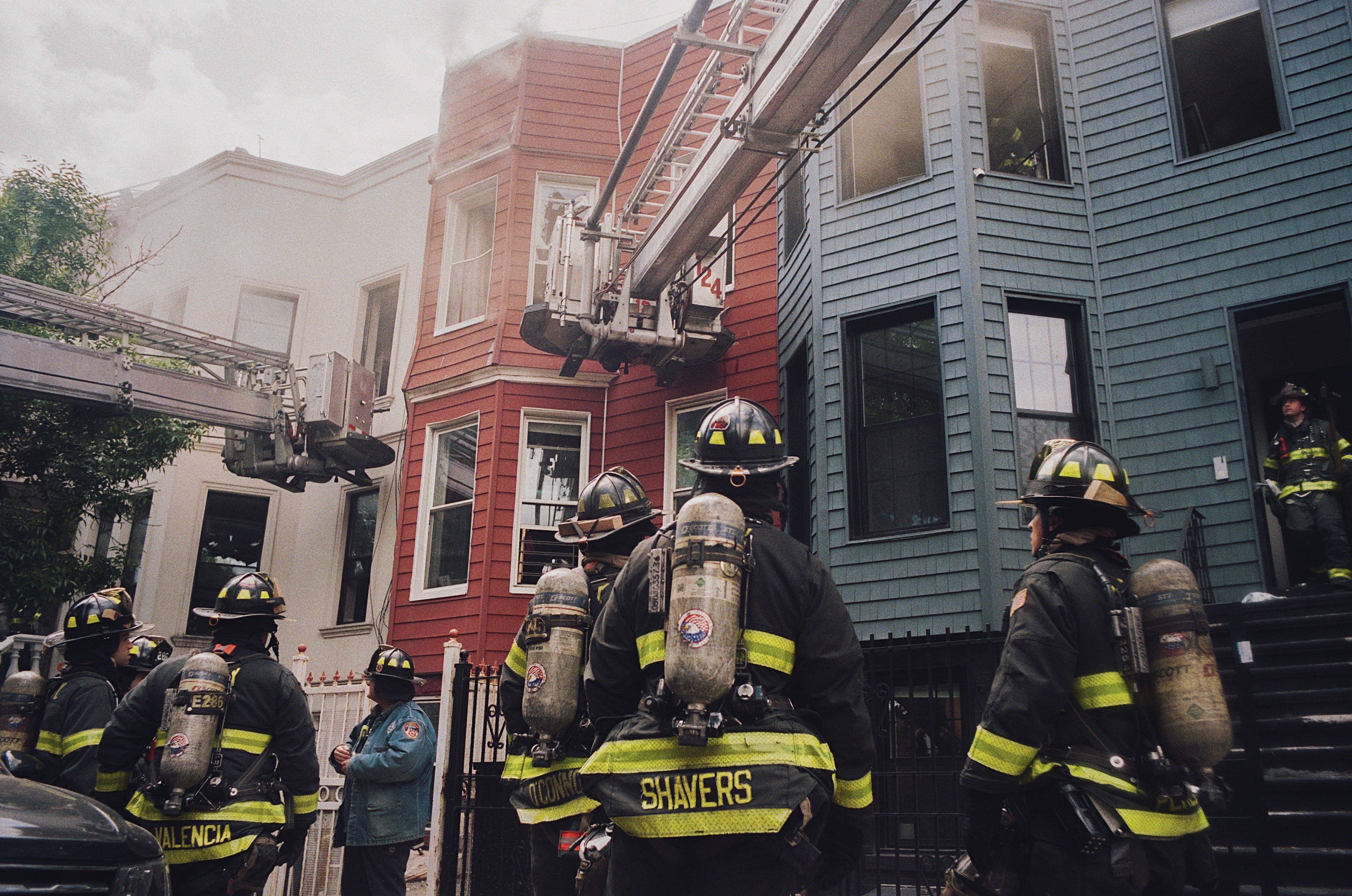
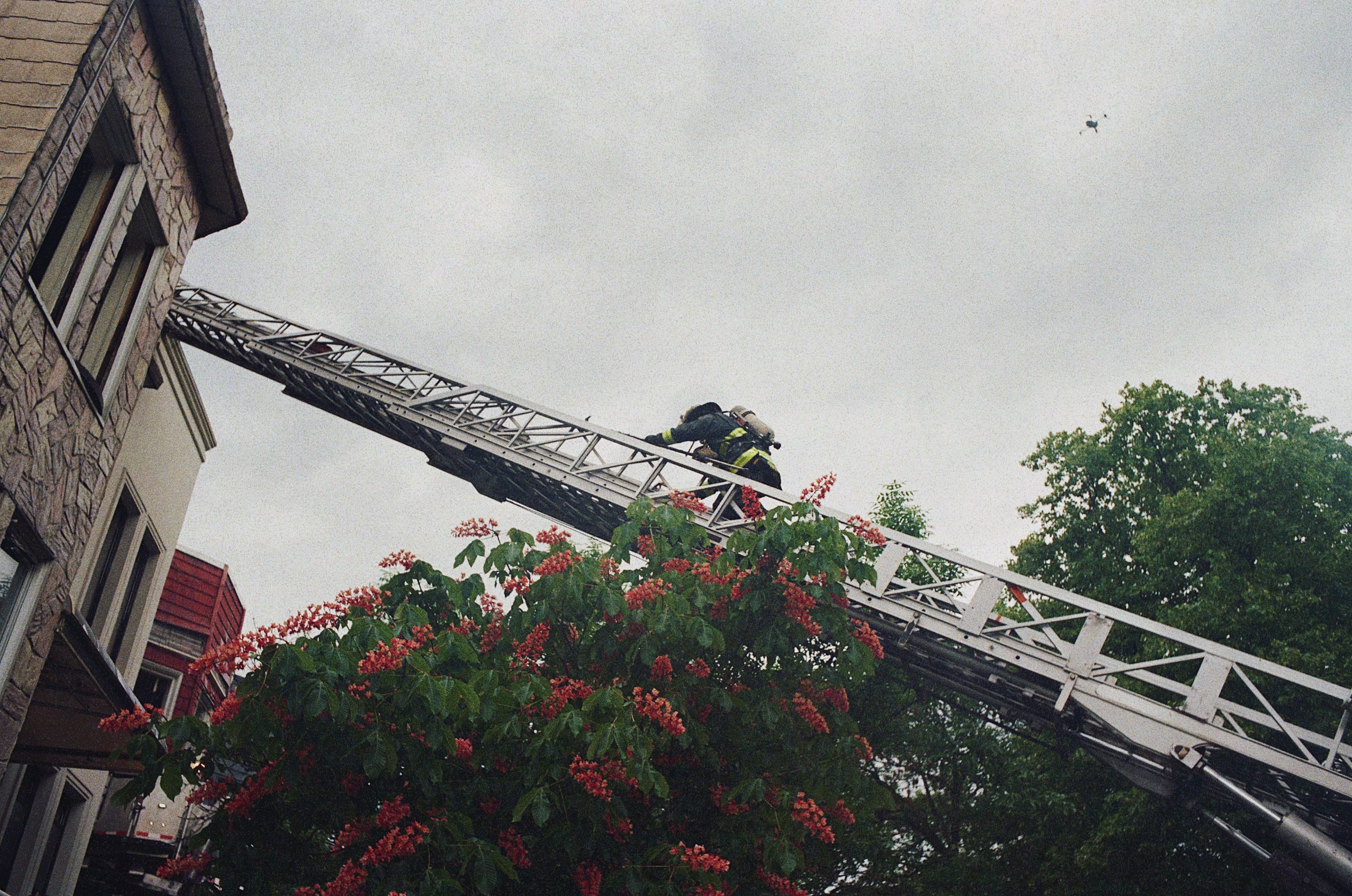
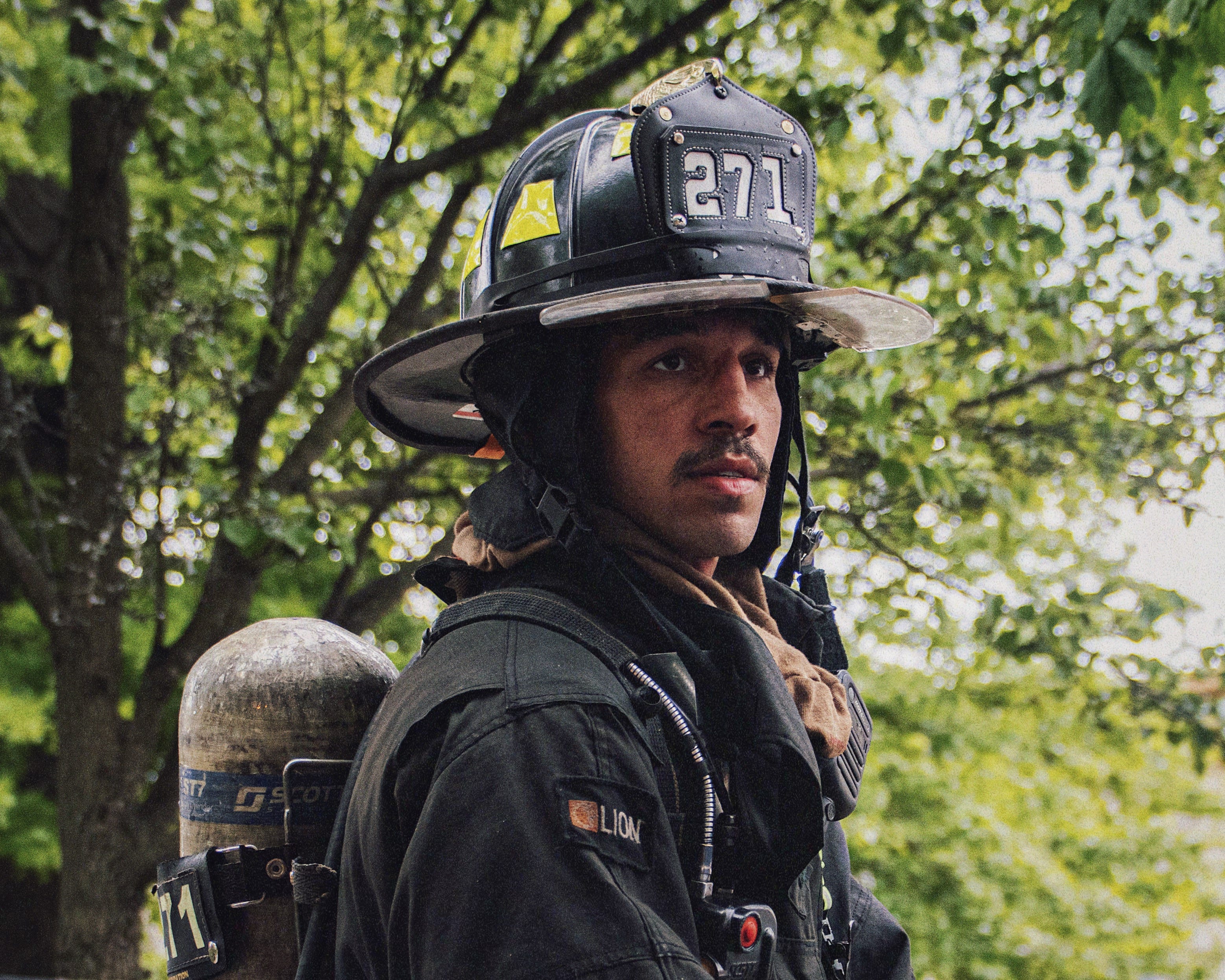
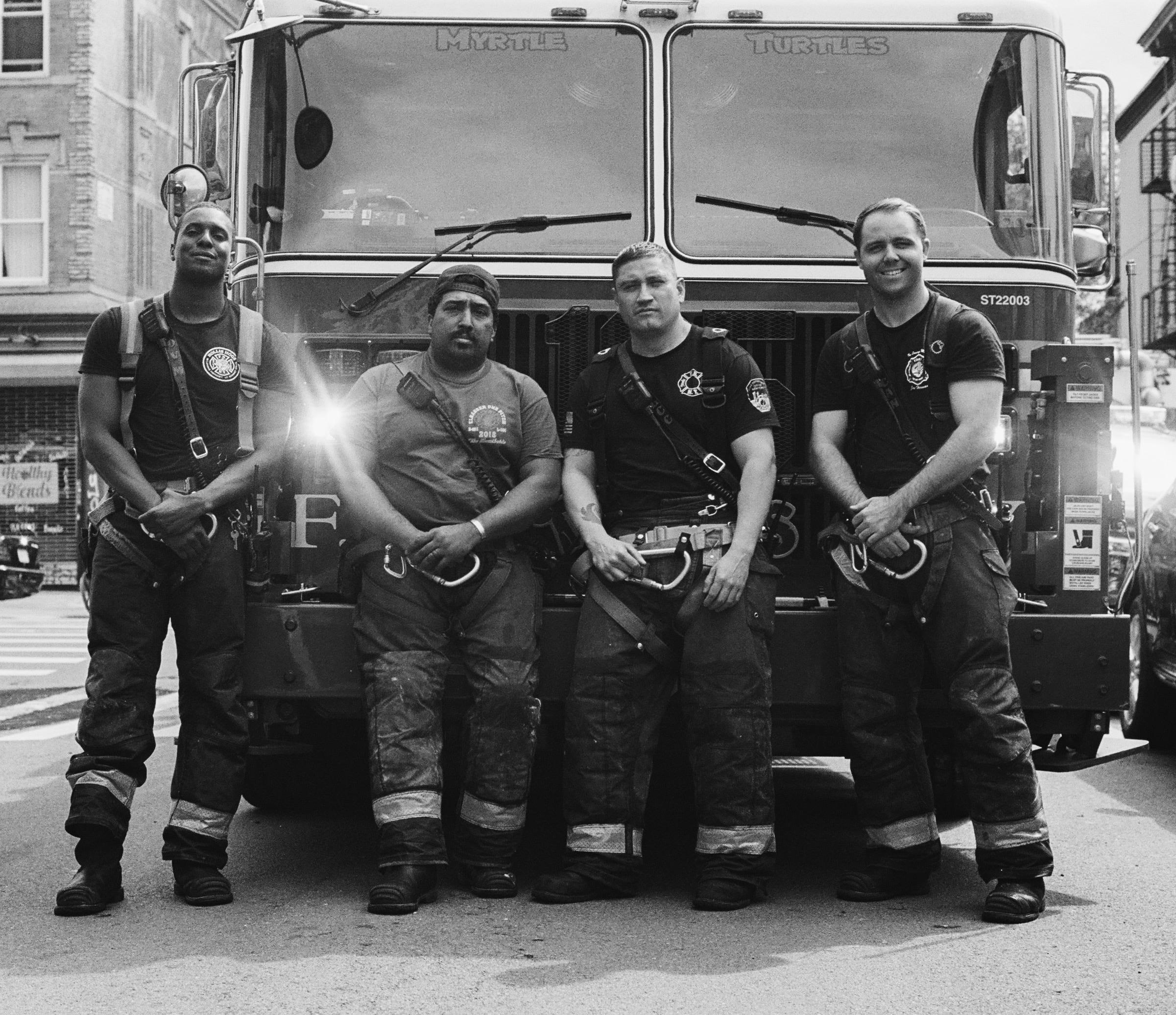
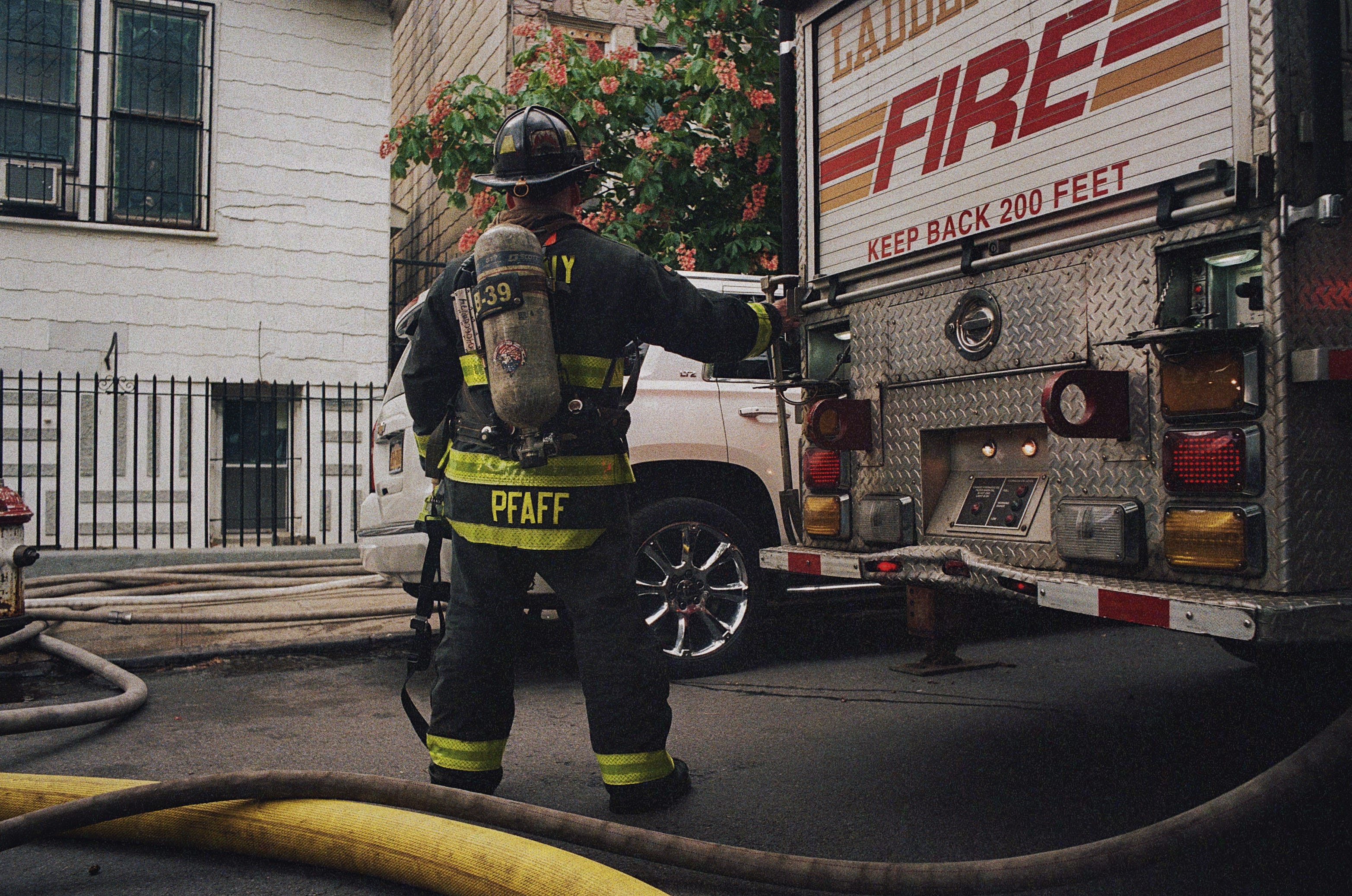
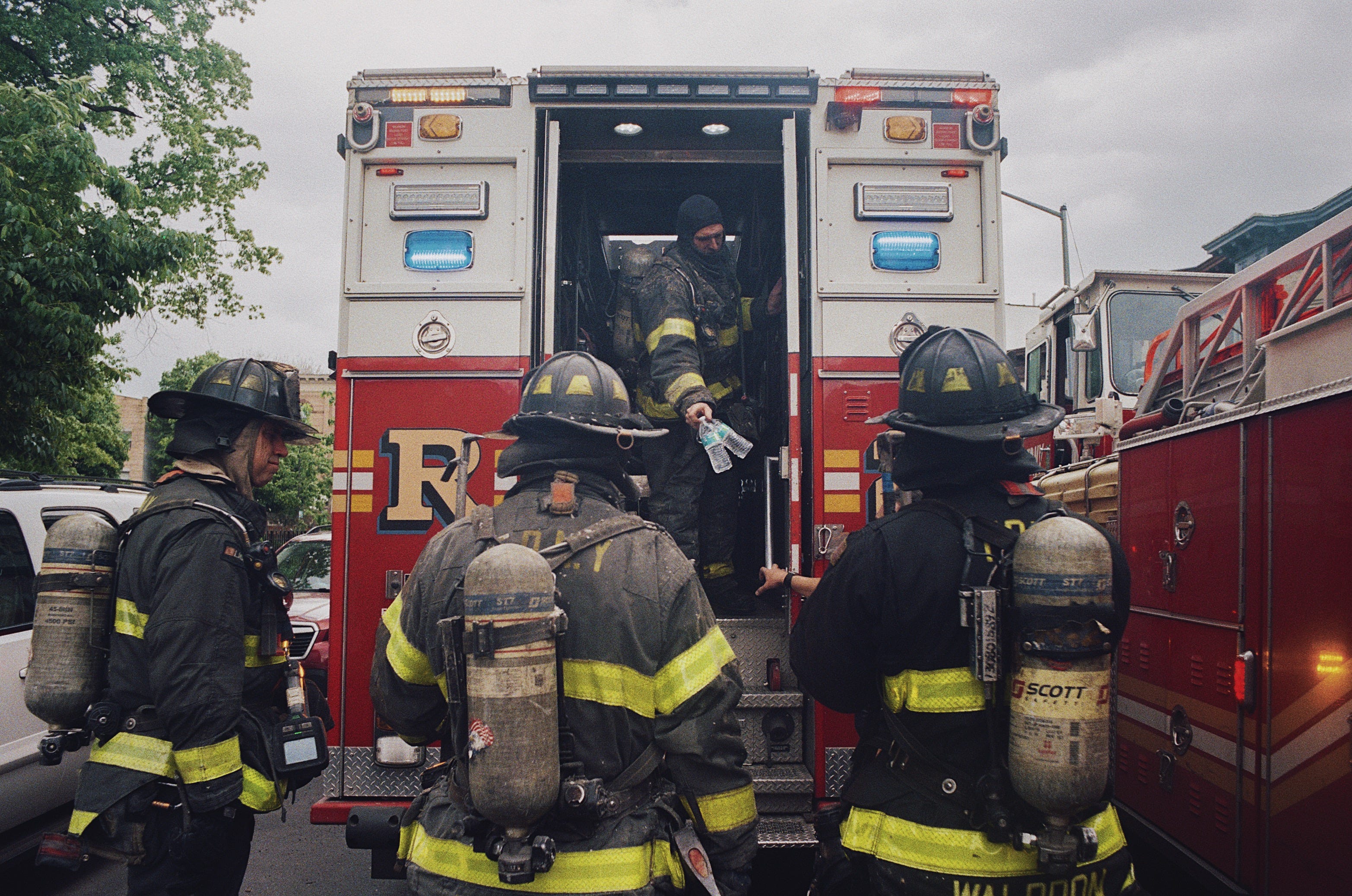
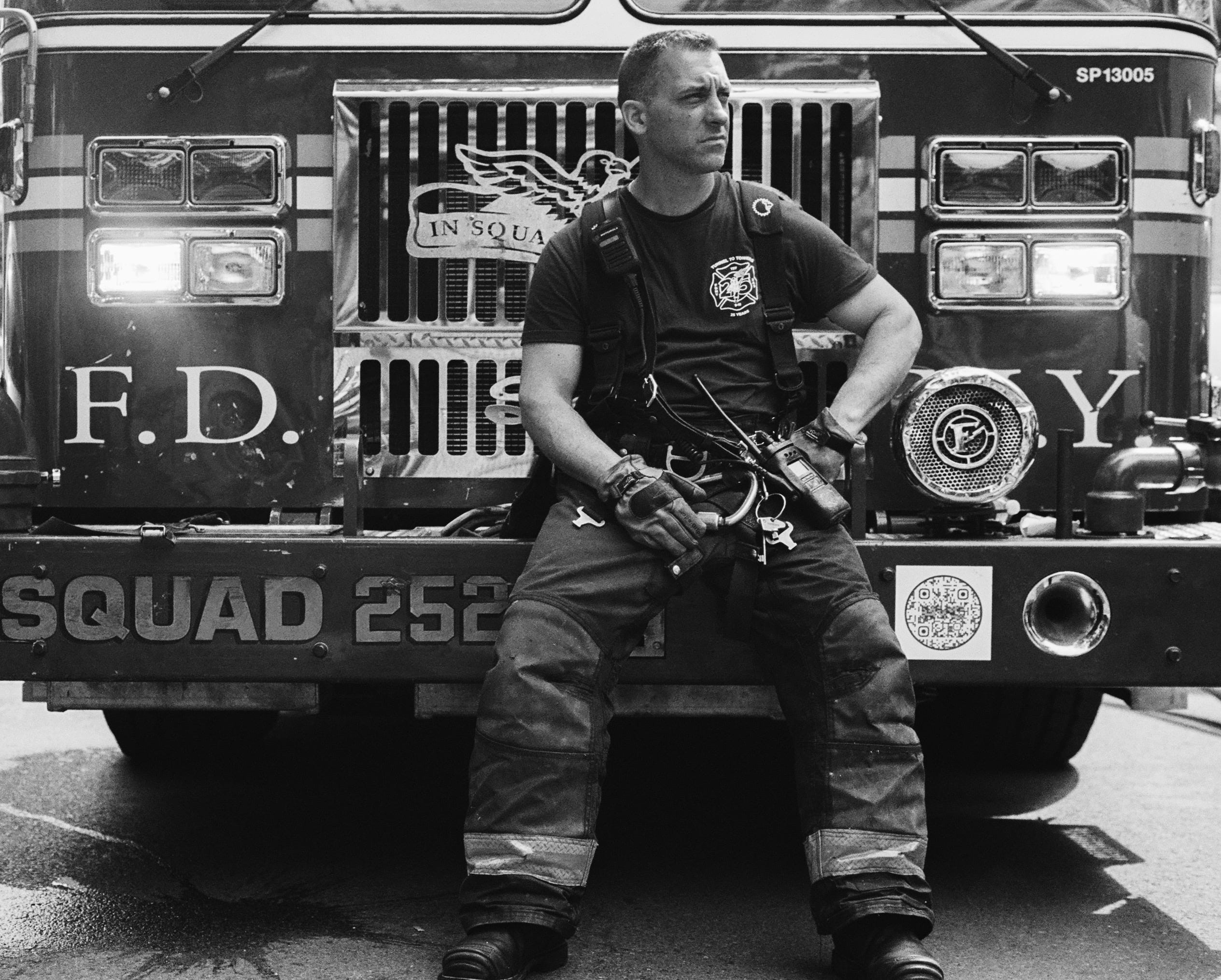
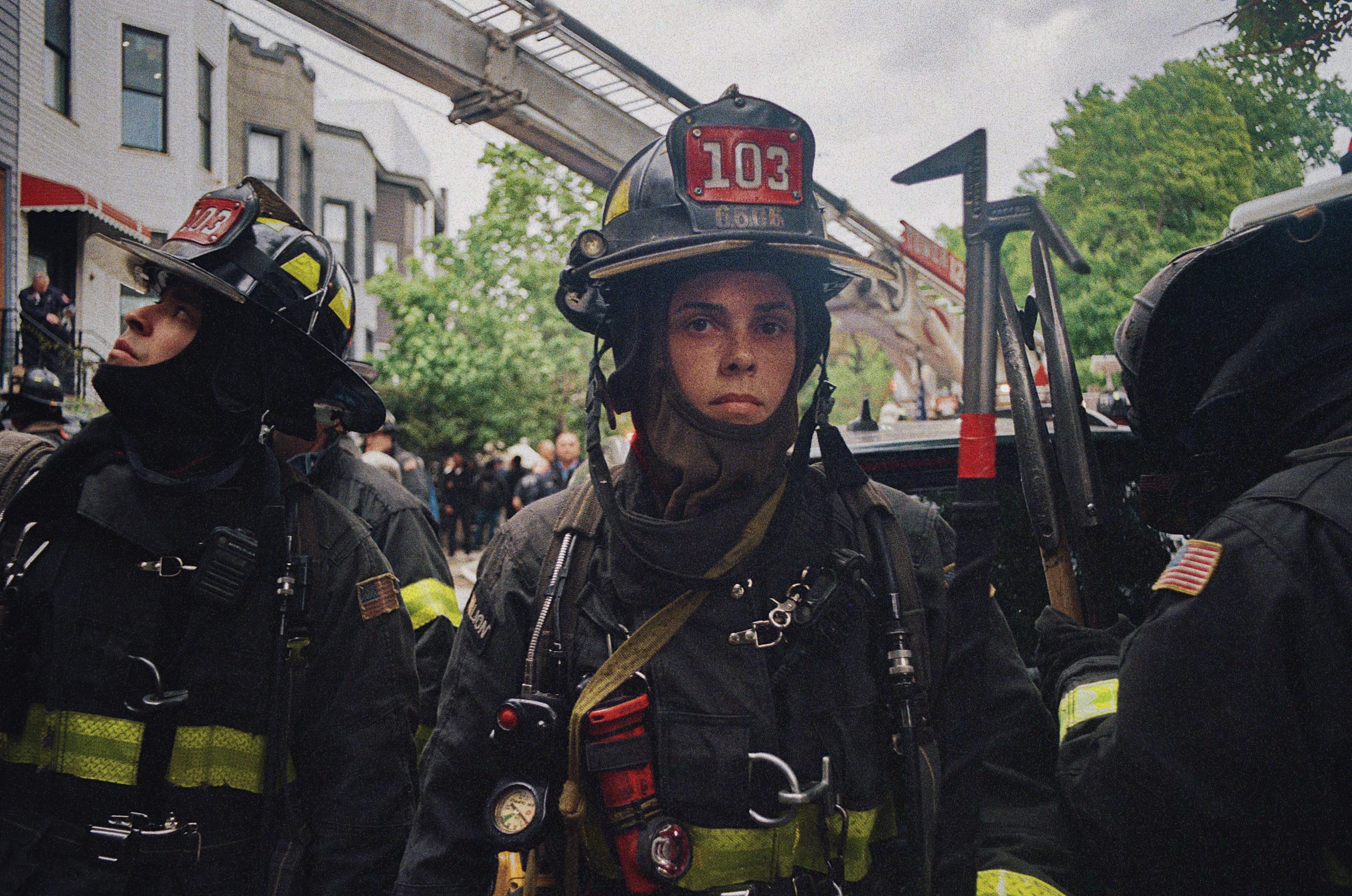
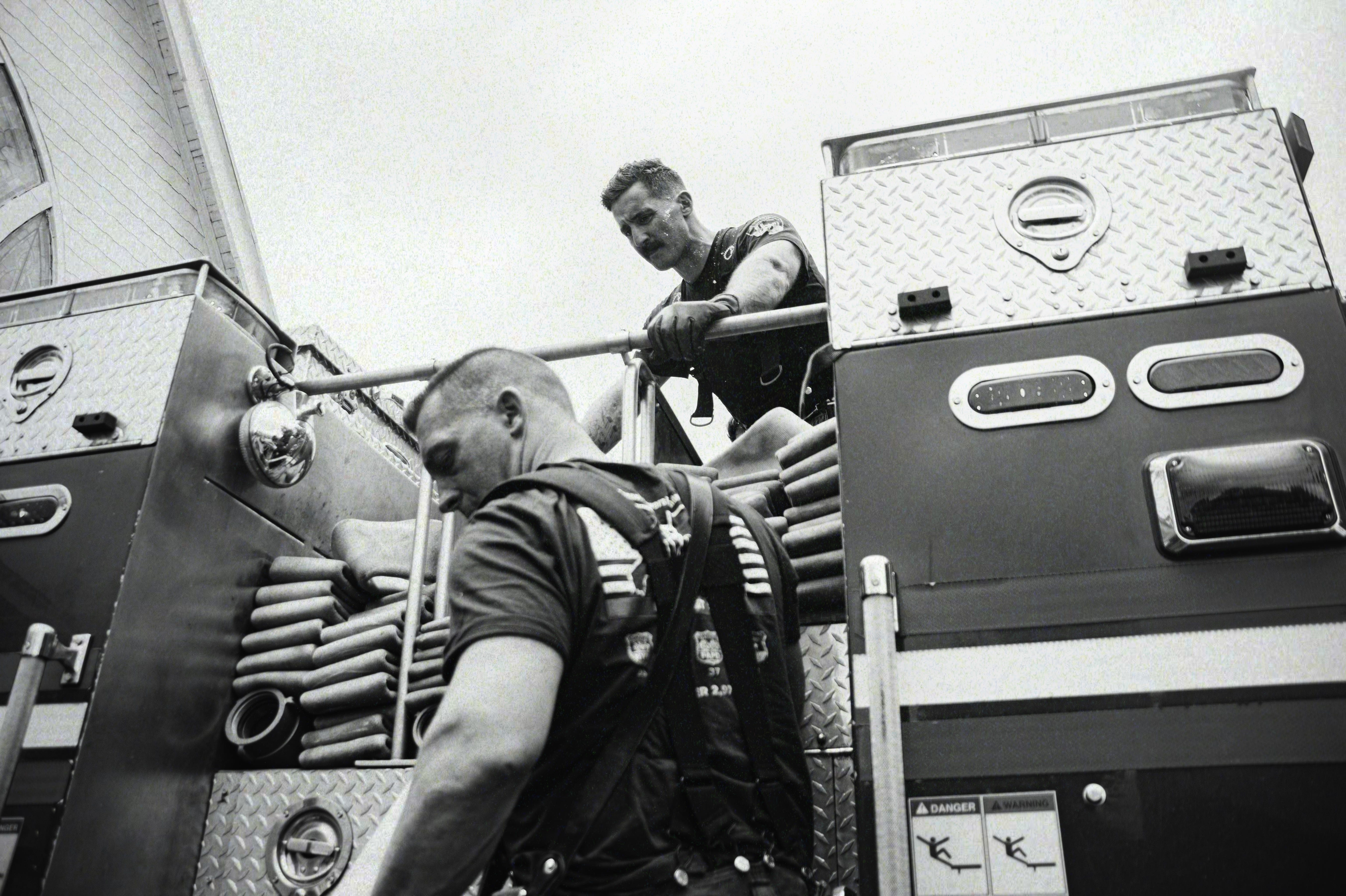
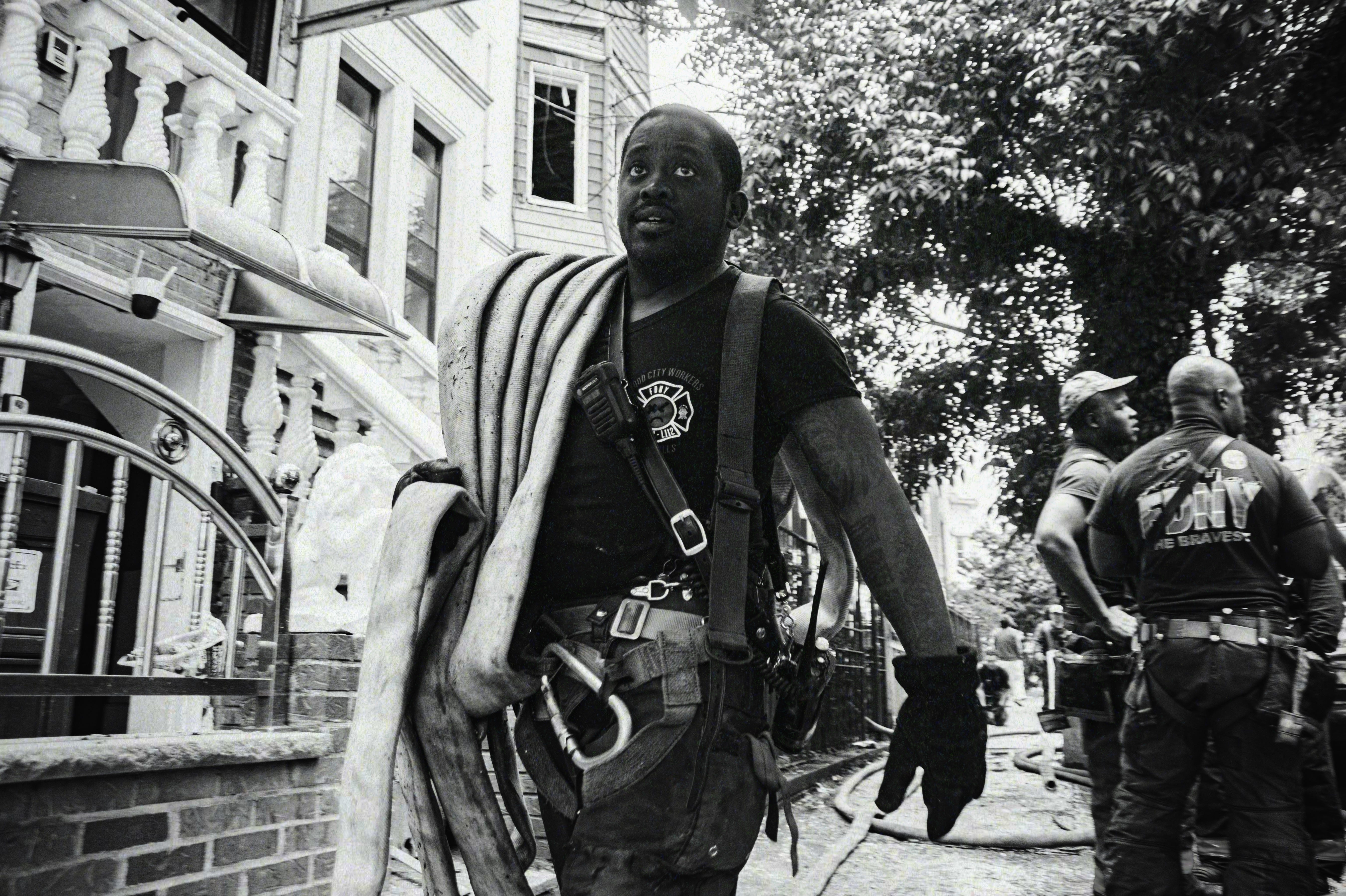
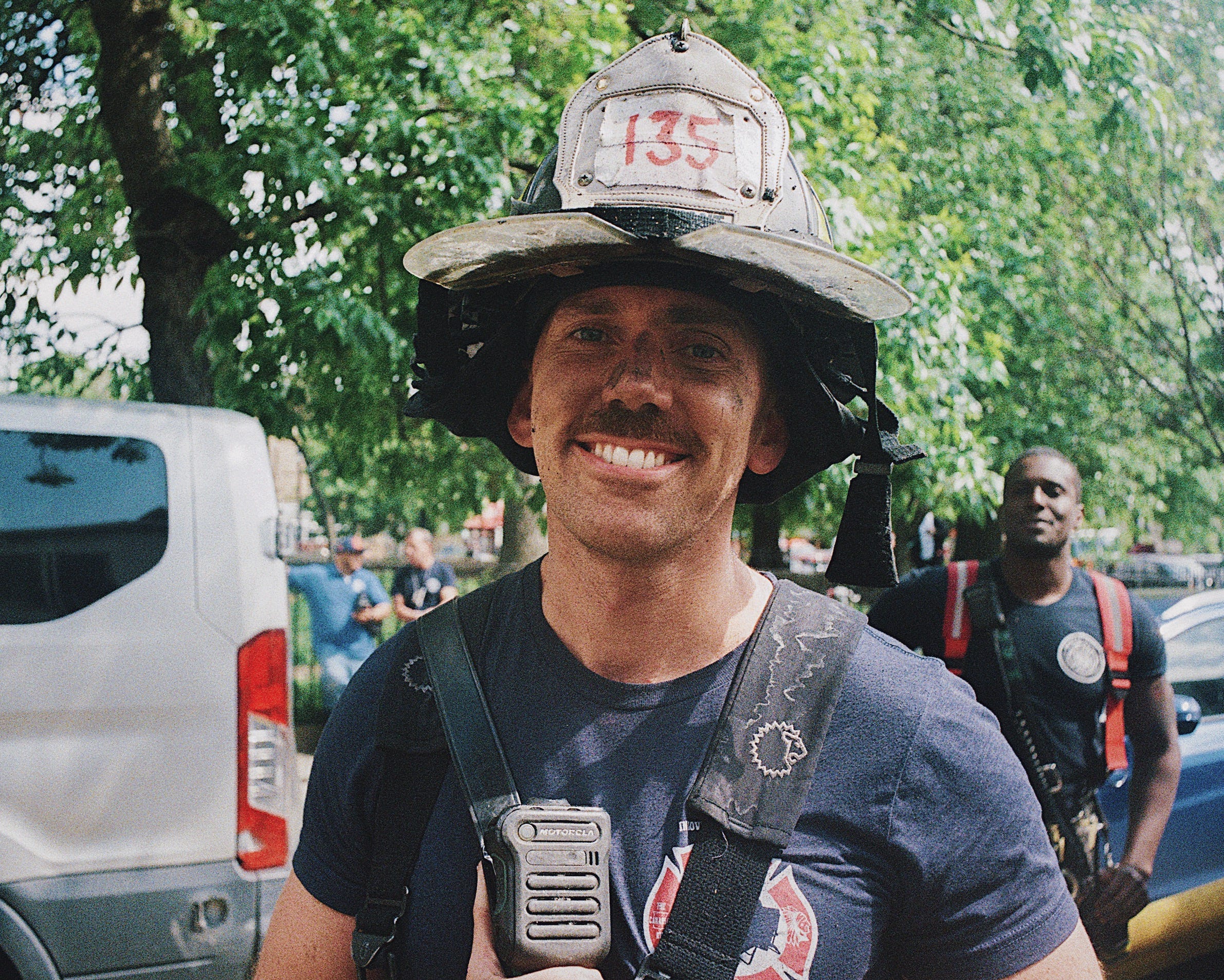
I recognized faces among the FDNY members working the scene, figures from the March coverage like Captian Cook and Freddy, their features familiar even under the grime and the low brim of their helmets. They recognized me in the same moment, calling out in the easy, high-spirited way of people whose relationship to the chaos surrounding them is entirely professional, for whom this particular Friday afternoon was simply the job presenting itself in one of its more demanding forms. They were working in relay teams, rotating fresh units in against the structure while the crews that had been inside came out and stood on the sidewalk with their helmets pushed back and their faces dark with soot, the ash-coated yellow and black of their turnout coats stiff with dried moisture, their eyes carrying a settled calm. As each rotation came through, the outgoing and incoming crews exchanged handshakes and the occasional brief, backslapping embrace.
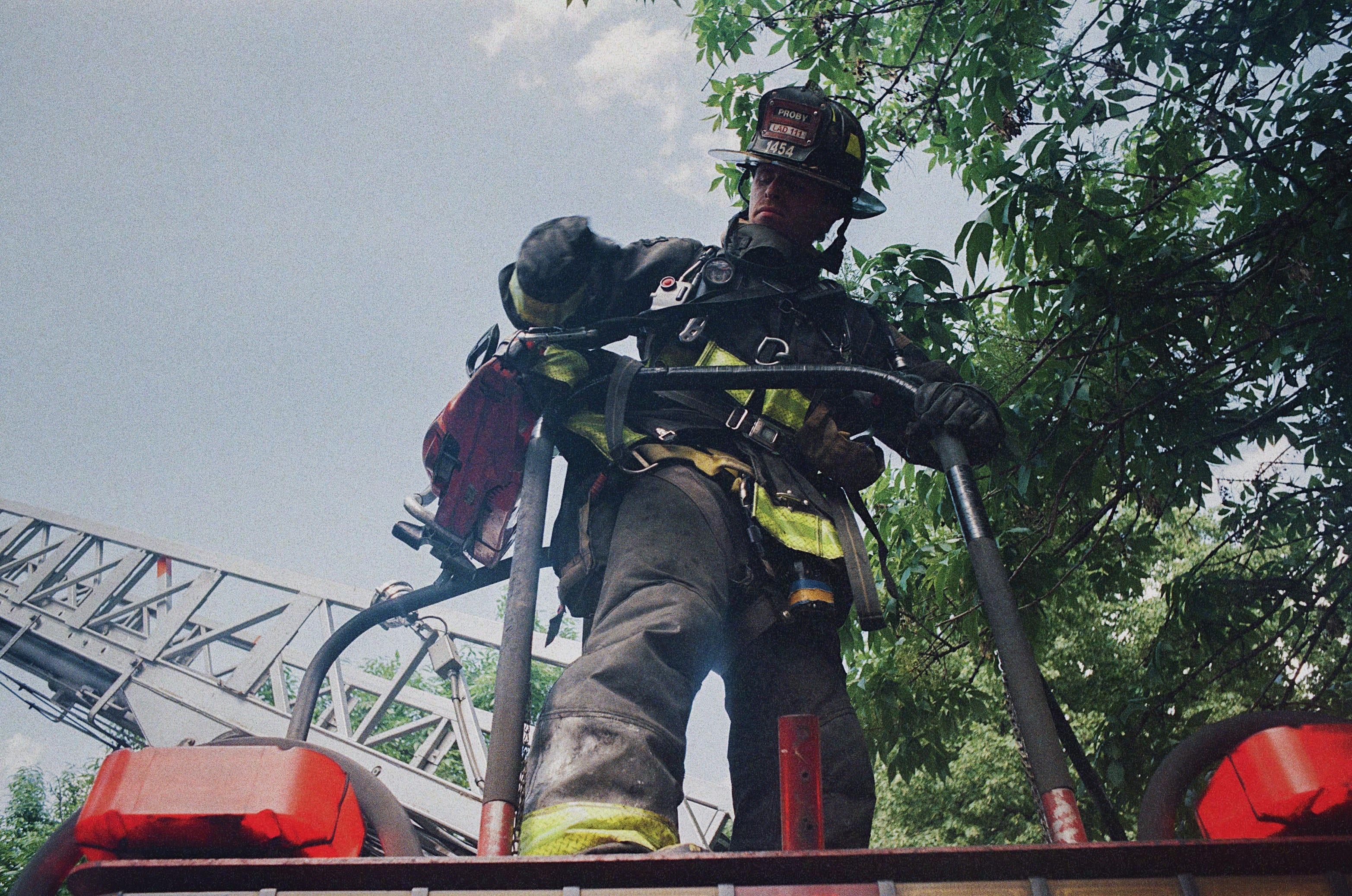
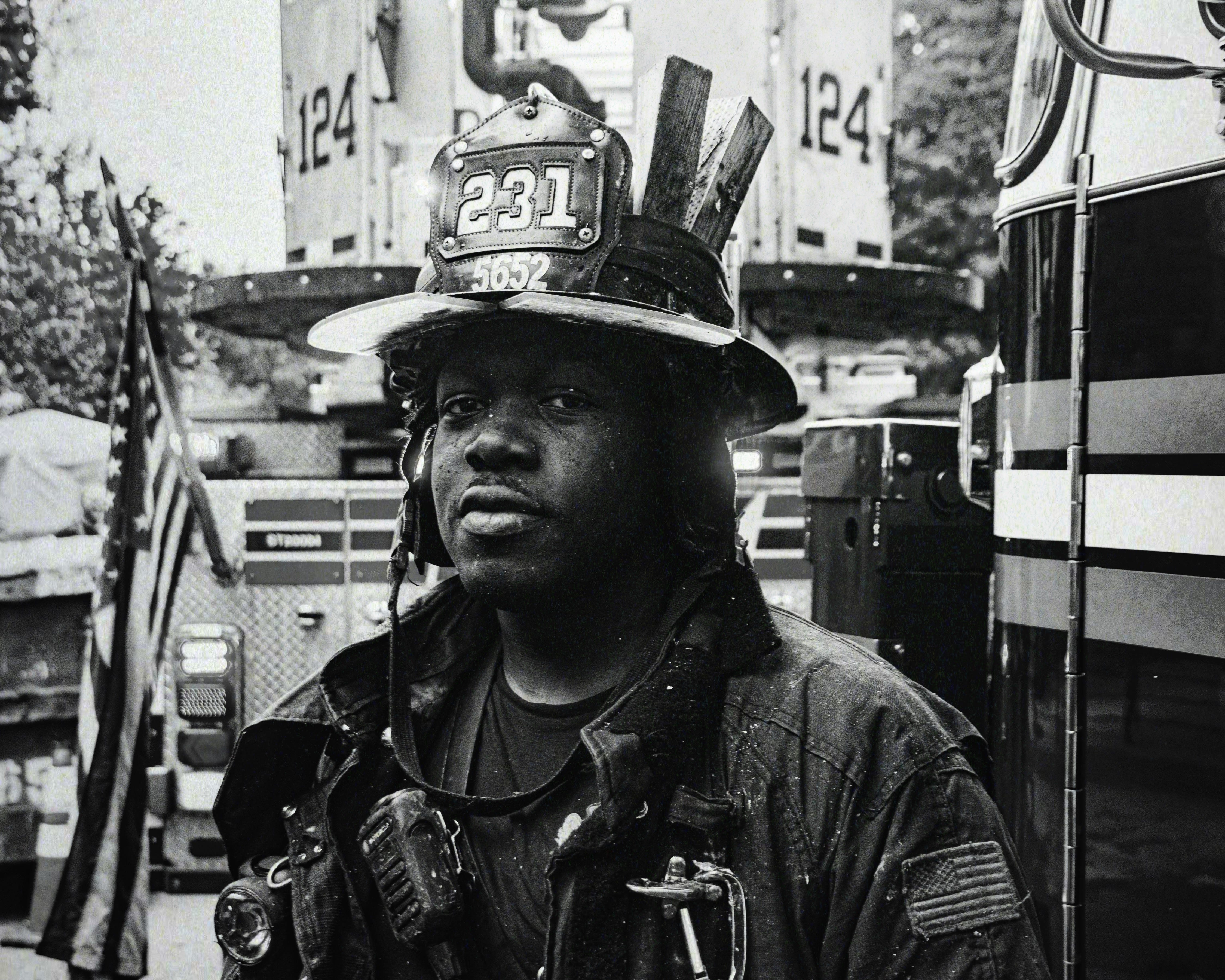
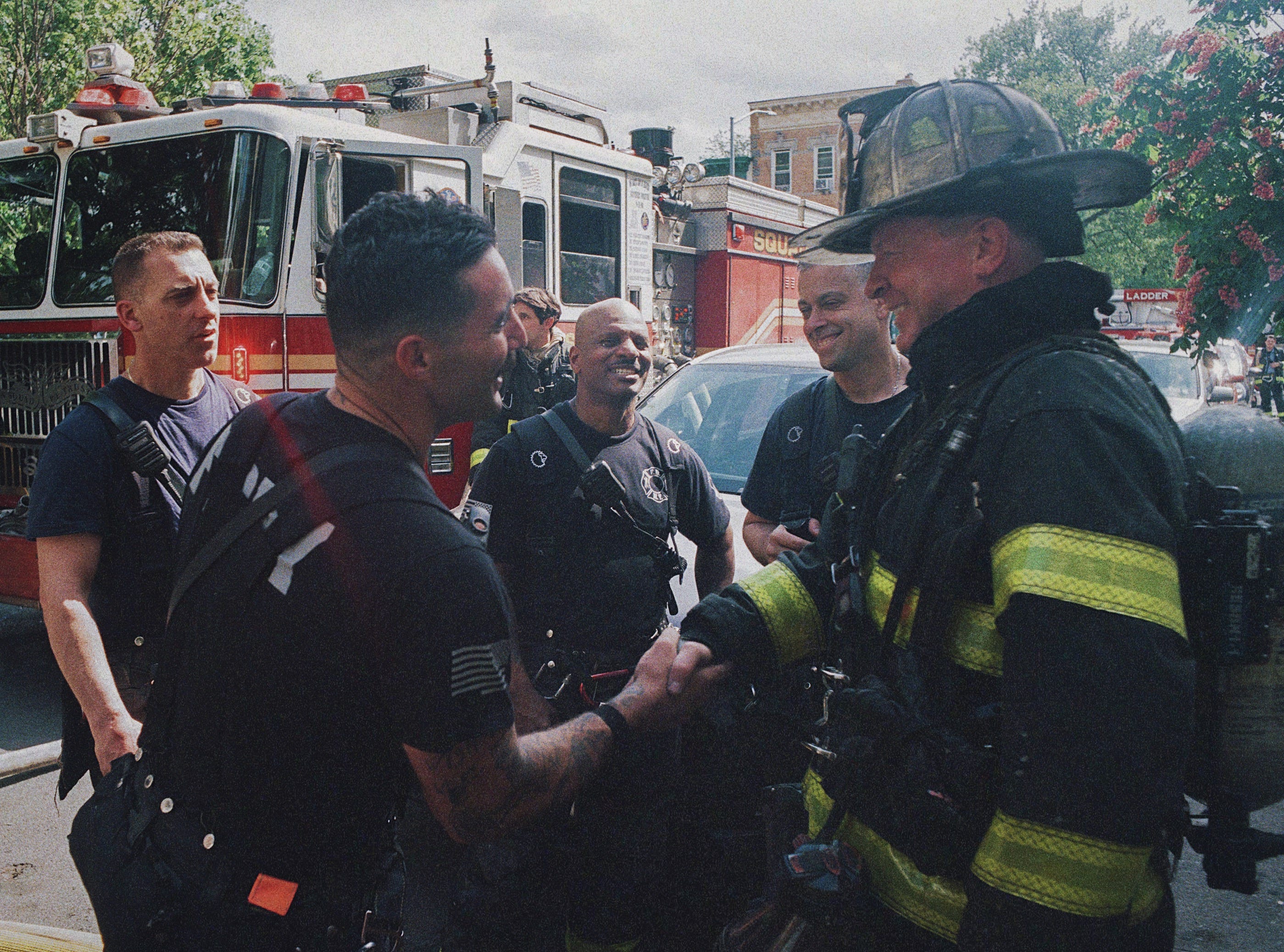
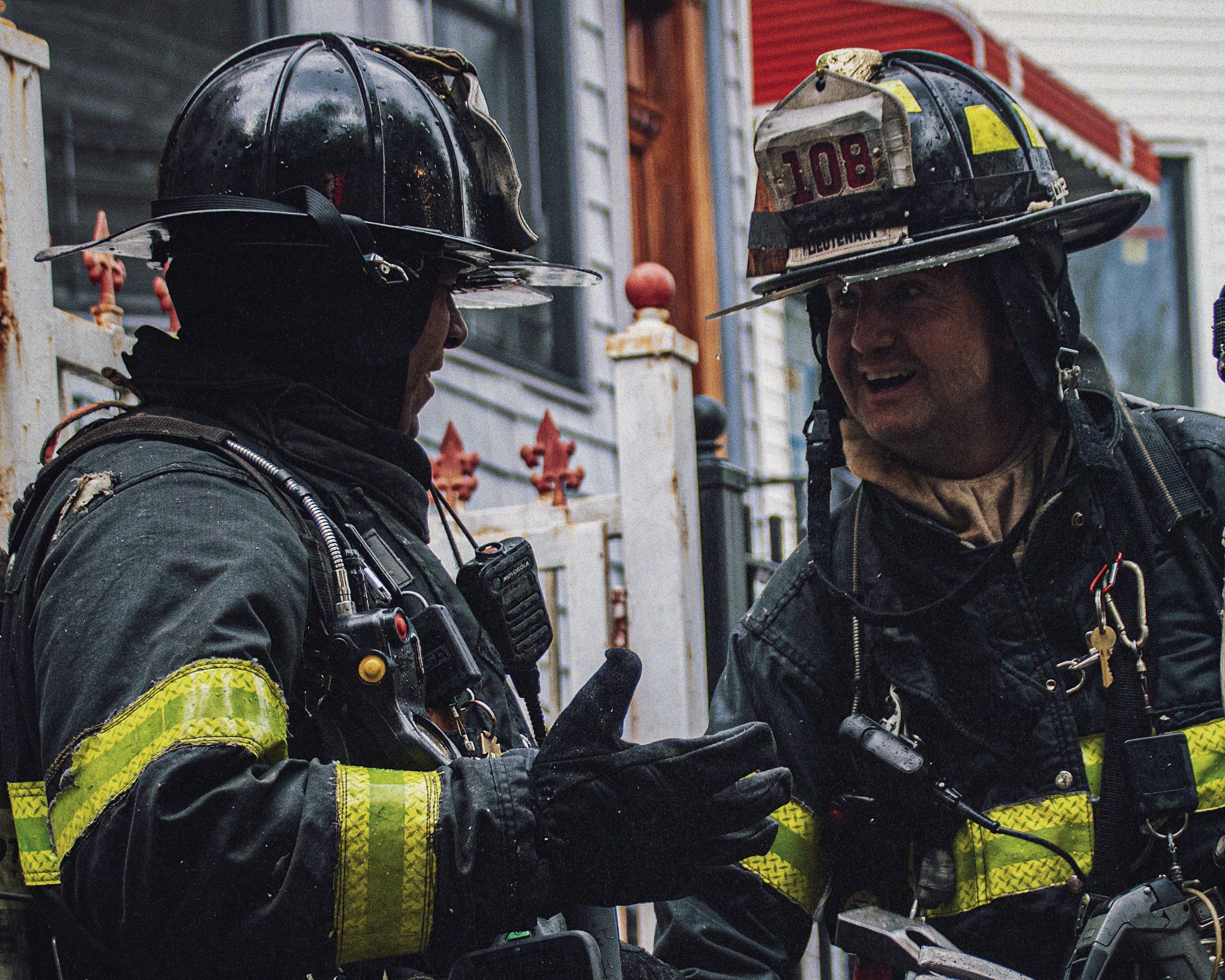
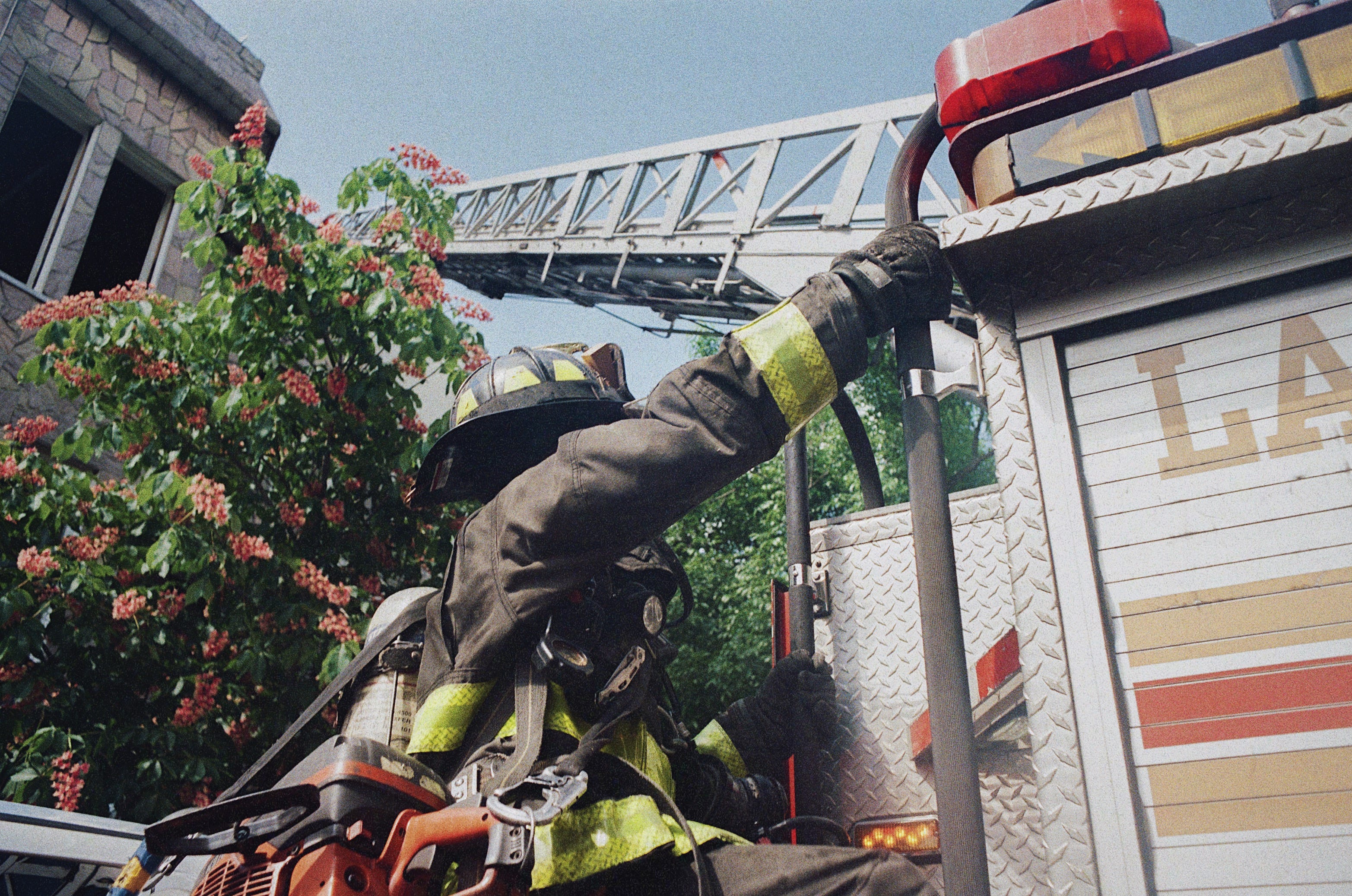
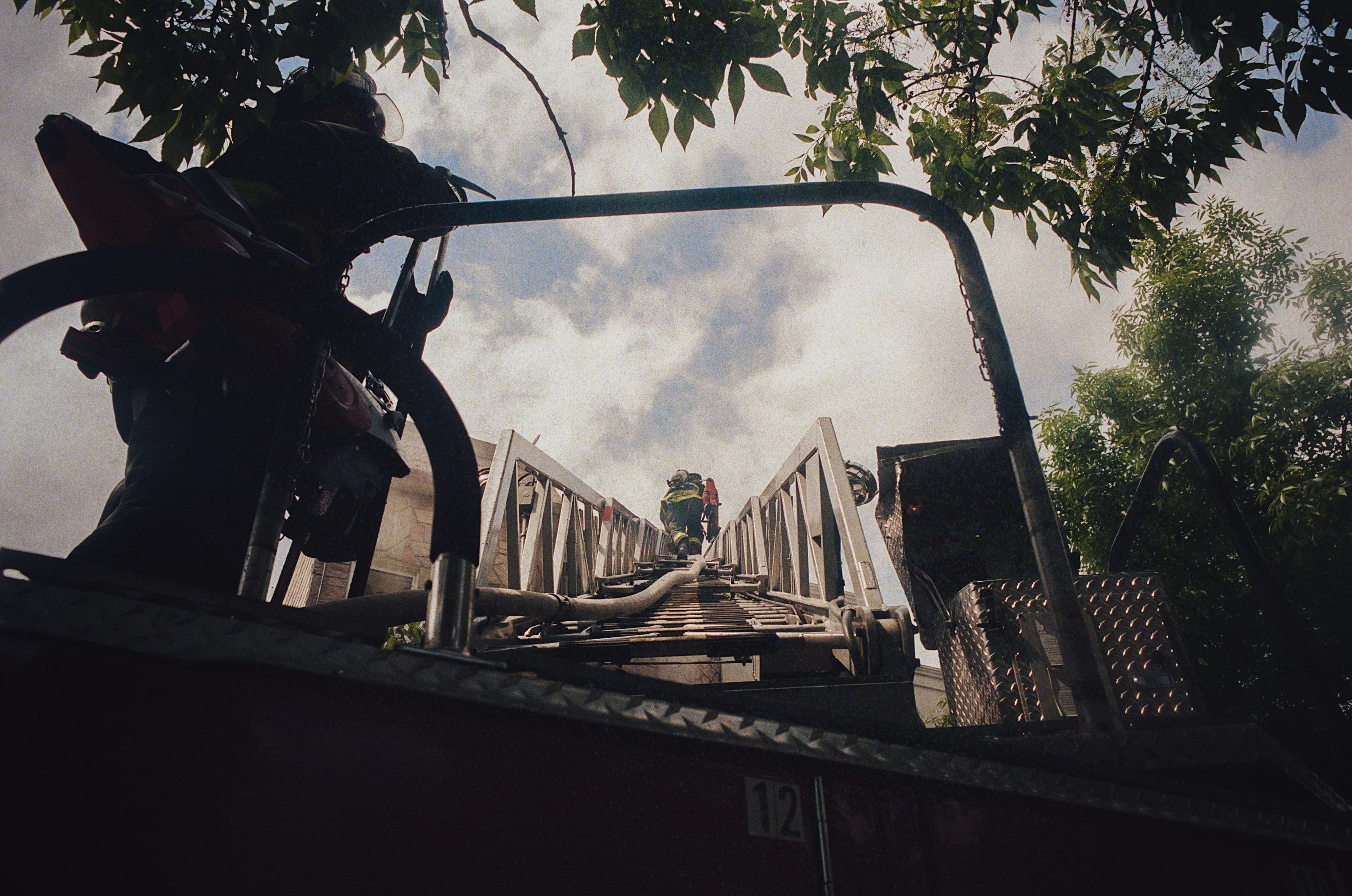
Behind the forward lines the command post held its position. The Battalion Chief stationed at the center of it with radios and incoming information moving through him in a continuous stream, his voice low and even as he pushed communication back out to the units working the structure. The whole operation running through him. The members waiting for their next rotation stood in loose clusters at the staging line with their helmets on and their faces upturned toward the building’s upper floors. Their eyes locked onto the dark open windows, the smoke still pushing out of them with the steady concentration.
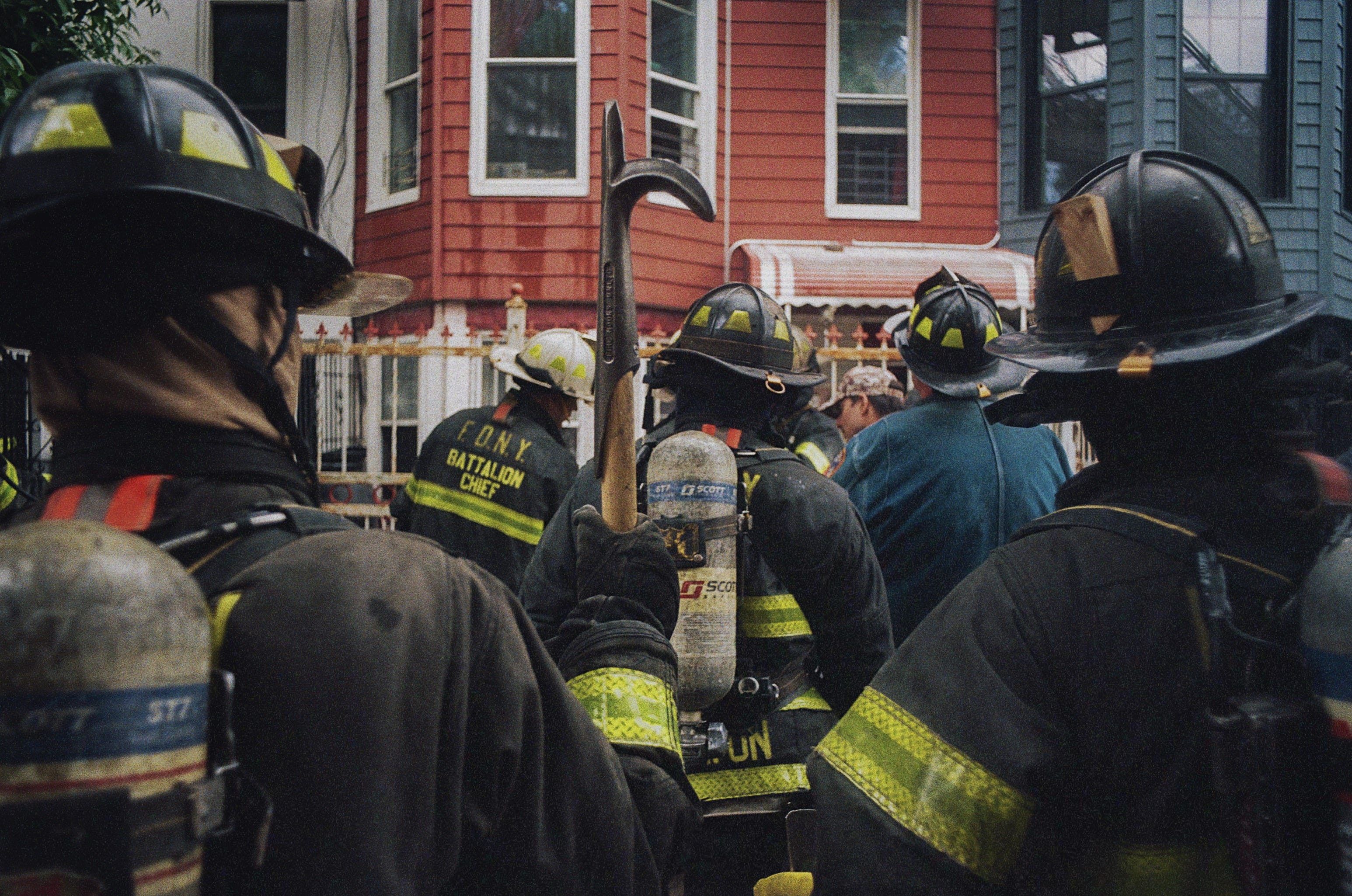
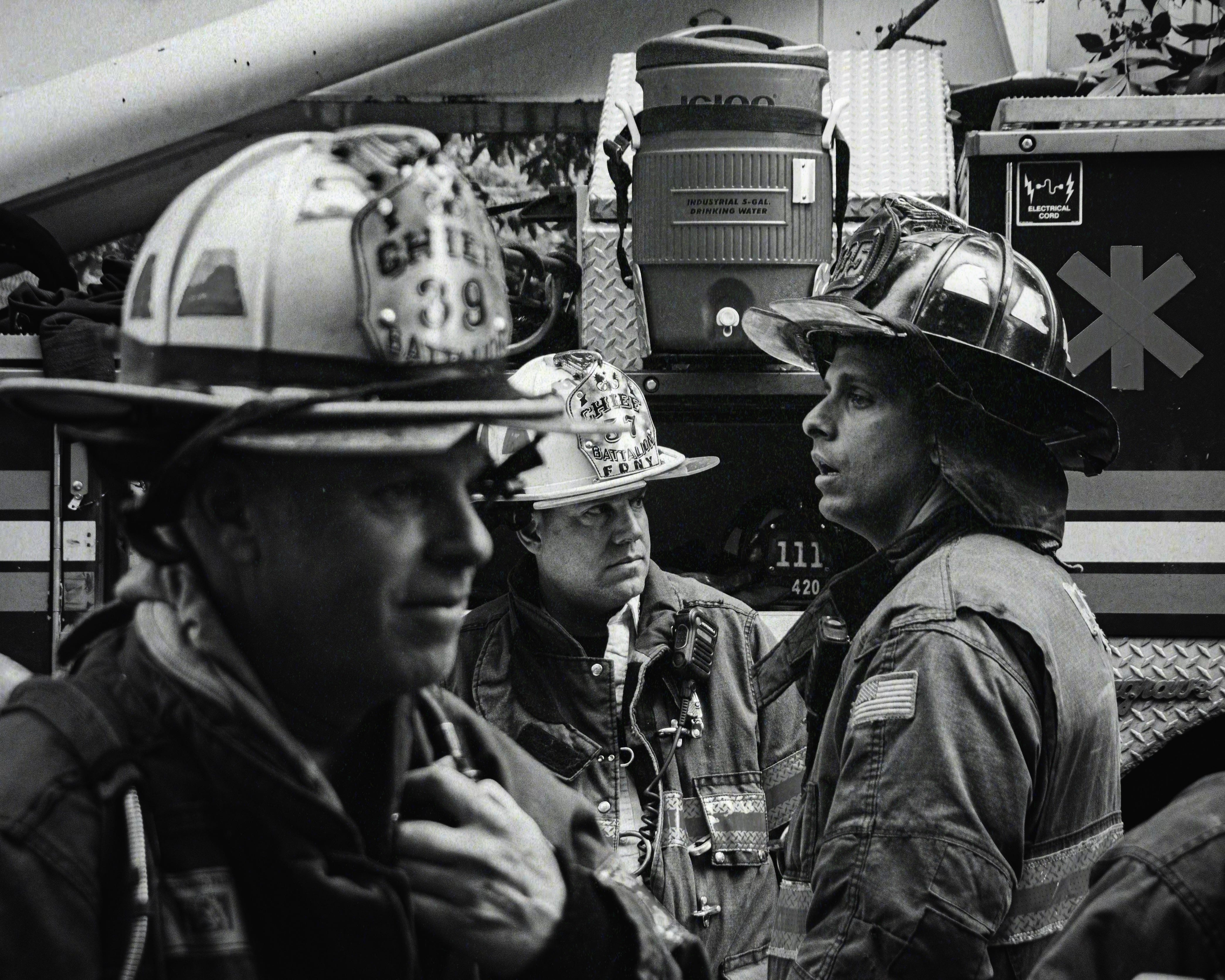
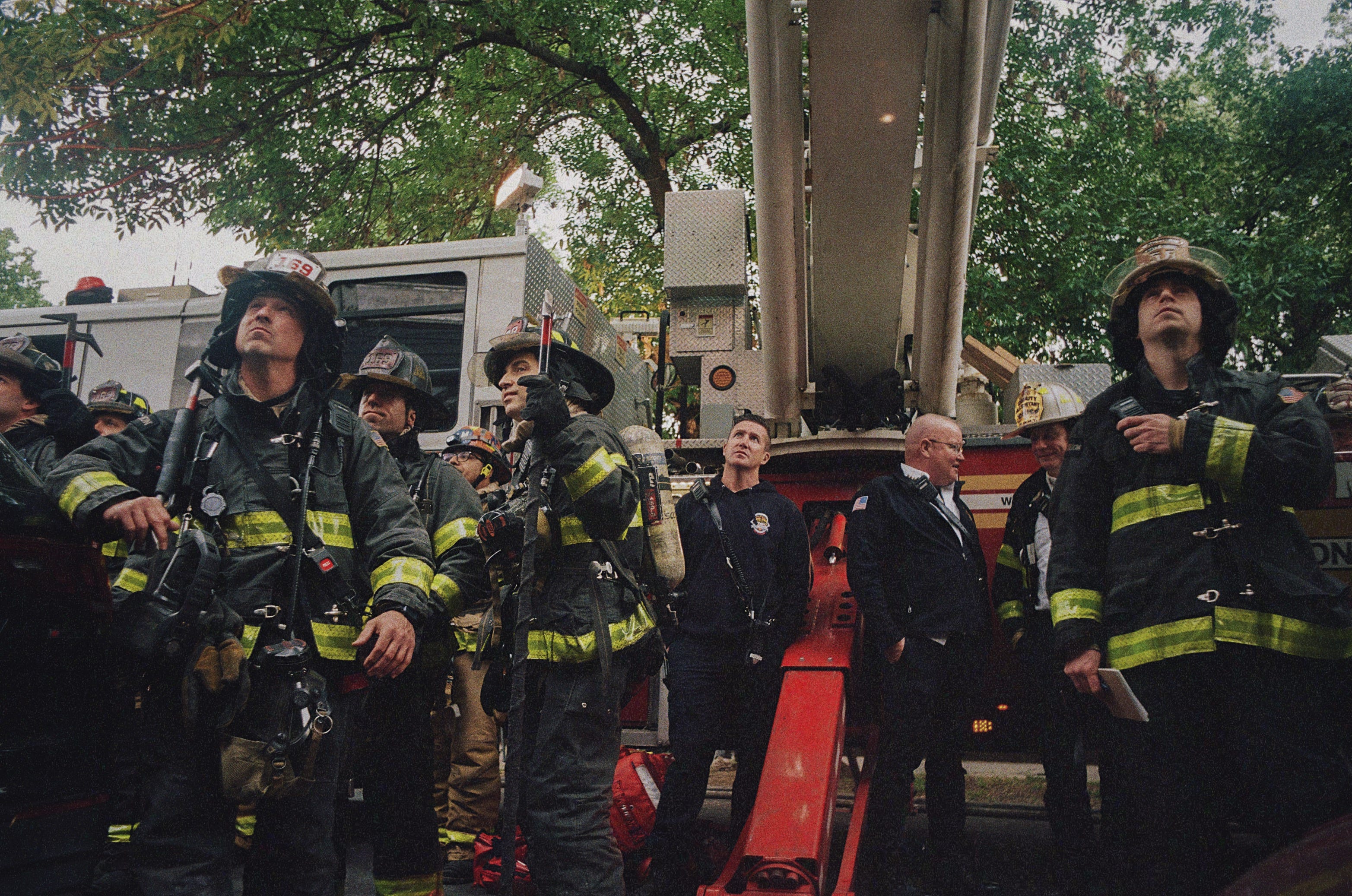
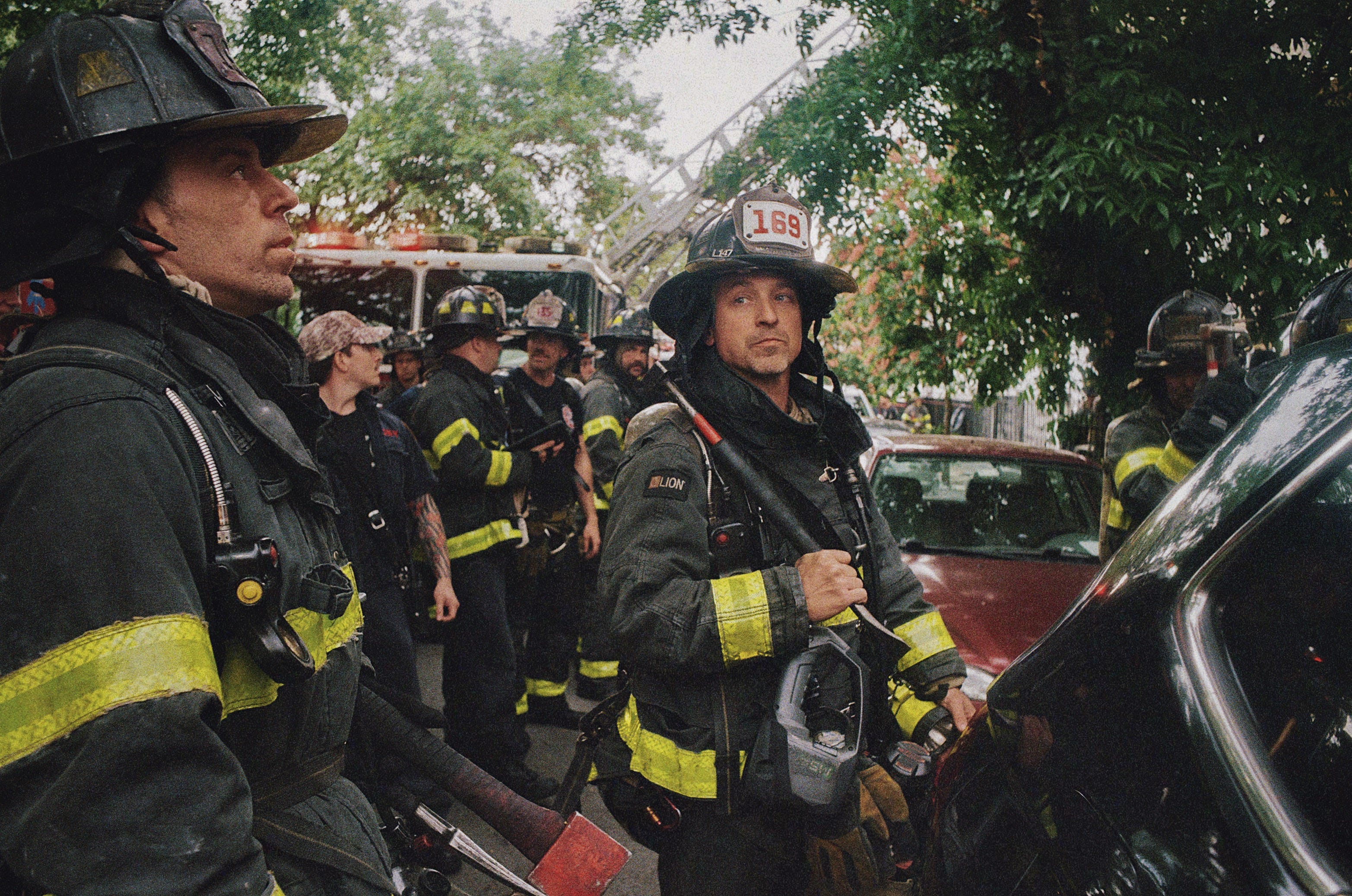
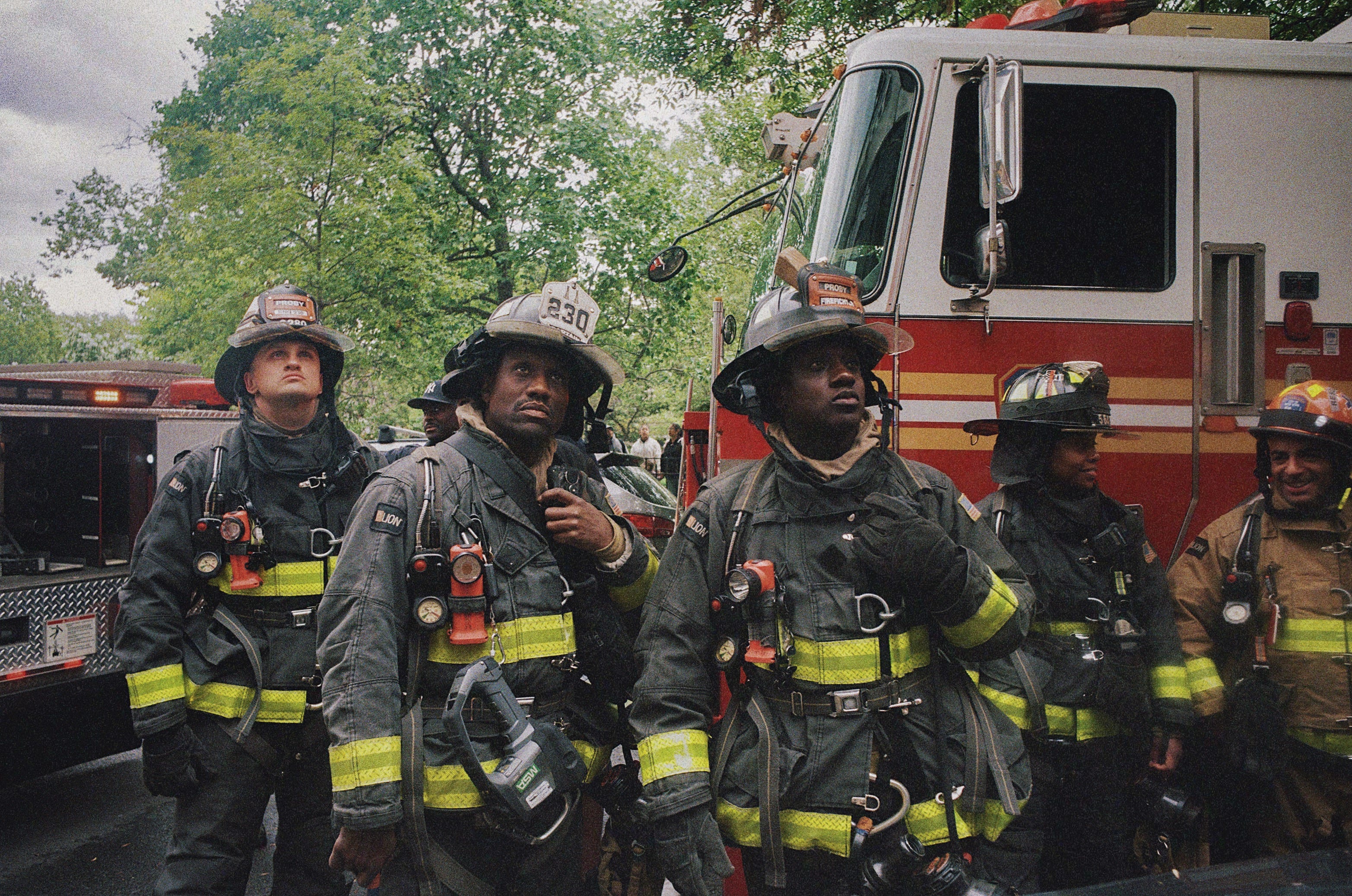
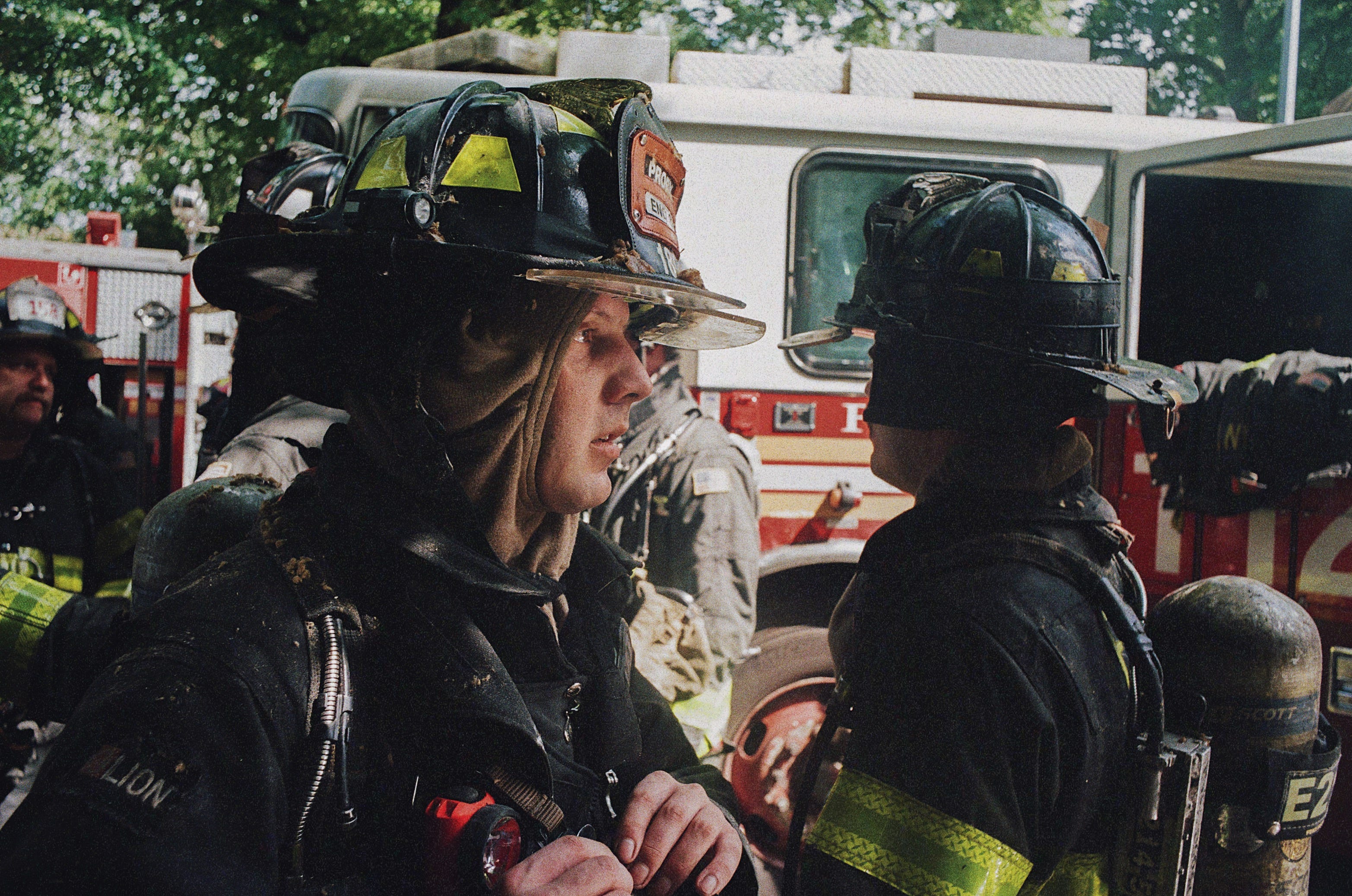
The three new rolls of film were gone almost before I fully registered shooting them. Frame after frame coming off in the compression of the scene. The cameras were finding their subjects faster than conscious thought could direct them. The Chief at the command post, the soot-dark faces of the outgoing crews lit by the strobing light cutting through the smoke above the truck rooftops, the handshakes at the rotation line, all of it moving through the viewfinder in quick succession, the advance lever pulling between frames with rapid rhythm that means the roll is burning down fast. The money I’d spent on those three packs at Nice Film Club left my mind completely and didn’t return. There are days when the cost of film makes itself felt as a genuine weight, and then there’re days when the weight simply isn’t there. This was the second kind without question.
I sprinted back across the park and hit my apartment door breathing hard, the three cameras pressing into my ribs. I rushed through the hallway into the apartment where Sophie was on the couch with her late lunch in front of her, entirely unprepared for the velocity at which I was moving through the space. I laid the cameras on the dining room table without slowing down, went directly into the office for the digital body, came back through the hallway, leaned down and kissed her on the way past, and was back out the door across the park in a minute tops. She’s used to this. This is the life.
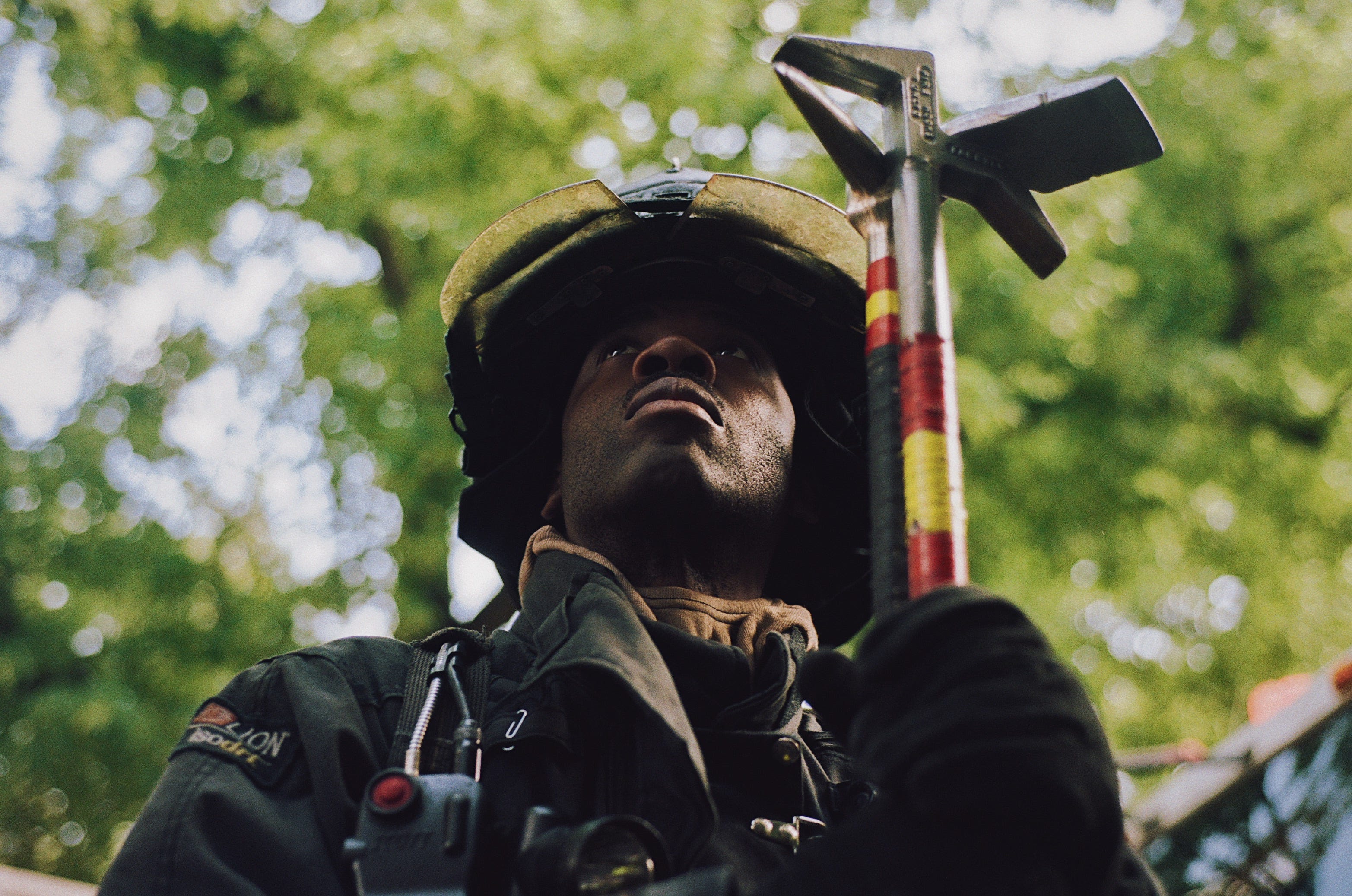
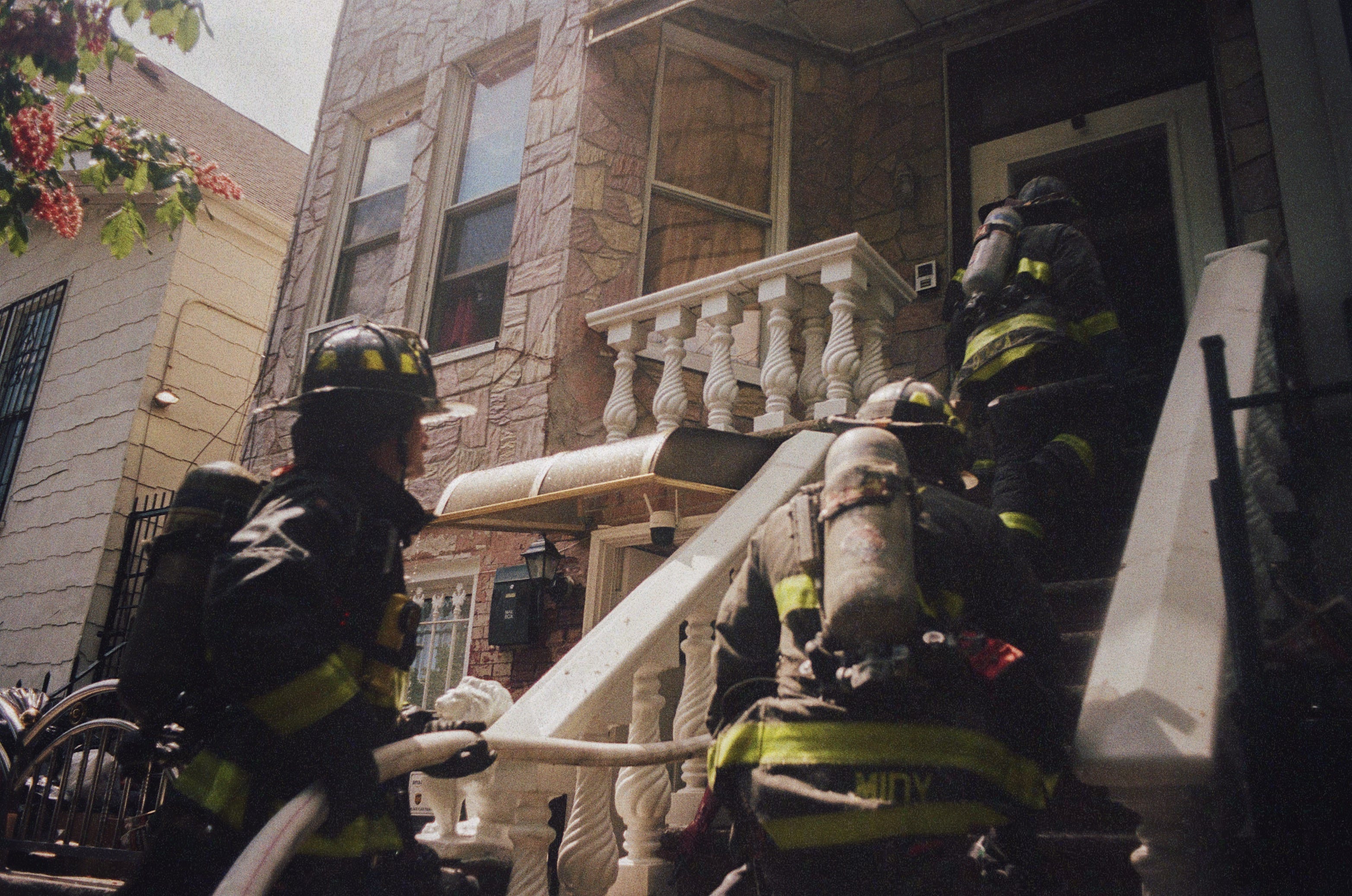
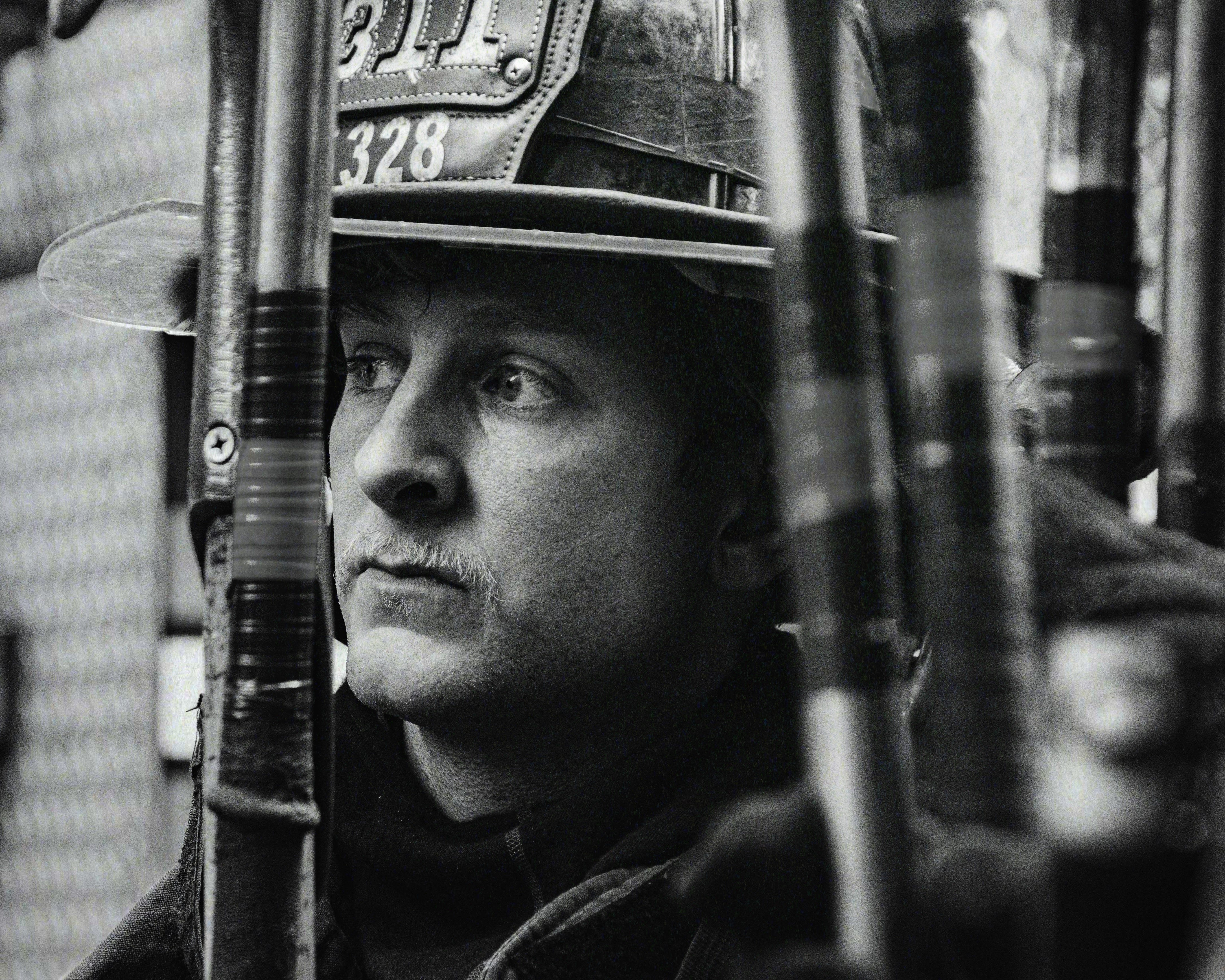
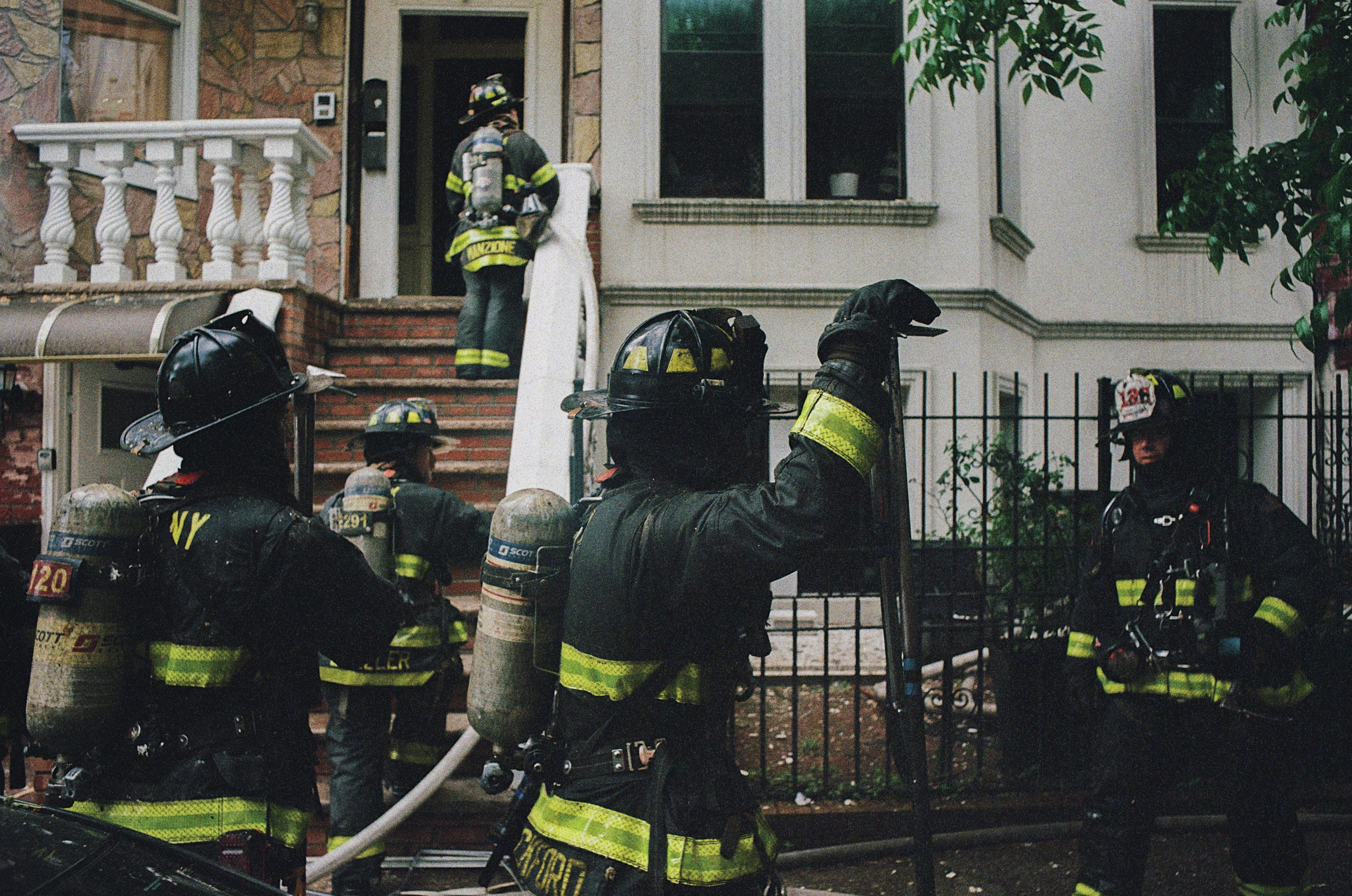
Coming back around the corner with the digital camera the dynamic shifted. The press photographers and the news media crews had gathered behind the truck line in a tight, jostling pack, their long lenses pointed over the tops of the vehicles at the building’s upper floors, their access ending firmly at the outer perimeter of the scene the way press access at these things almost always does. The shot available to them, a clean, wide, documenting image of the trucks, smoke, and building facade, everything outside the tape. The trucks all lined up concealing the firefighters behind them. I walked past them through the tape among the units. Nobody stopped me, because the faces I knew from March were already nodding me through, and the ones who didn’t know me were reading the body language of the ones who did. I worked the scene from inside it, among the rotating crews and along the staging line at the edges of the command post getting pelted with large splashes of hose water overhead while stepping through debris and soot. I shot until the last truck had wound its hoses back onto its reels and pulled away from the curb. The block went quiet again, the strobing lights gone and the street returning to its ordinary evening self except for the three buildings sitting dark and gutted, their upper floors now just blackened frames against the overcast sky. The investigators moving through the ground-floor debris.
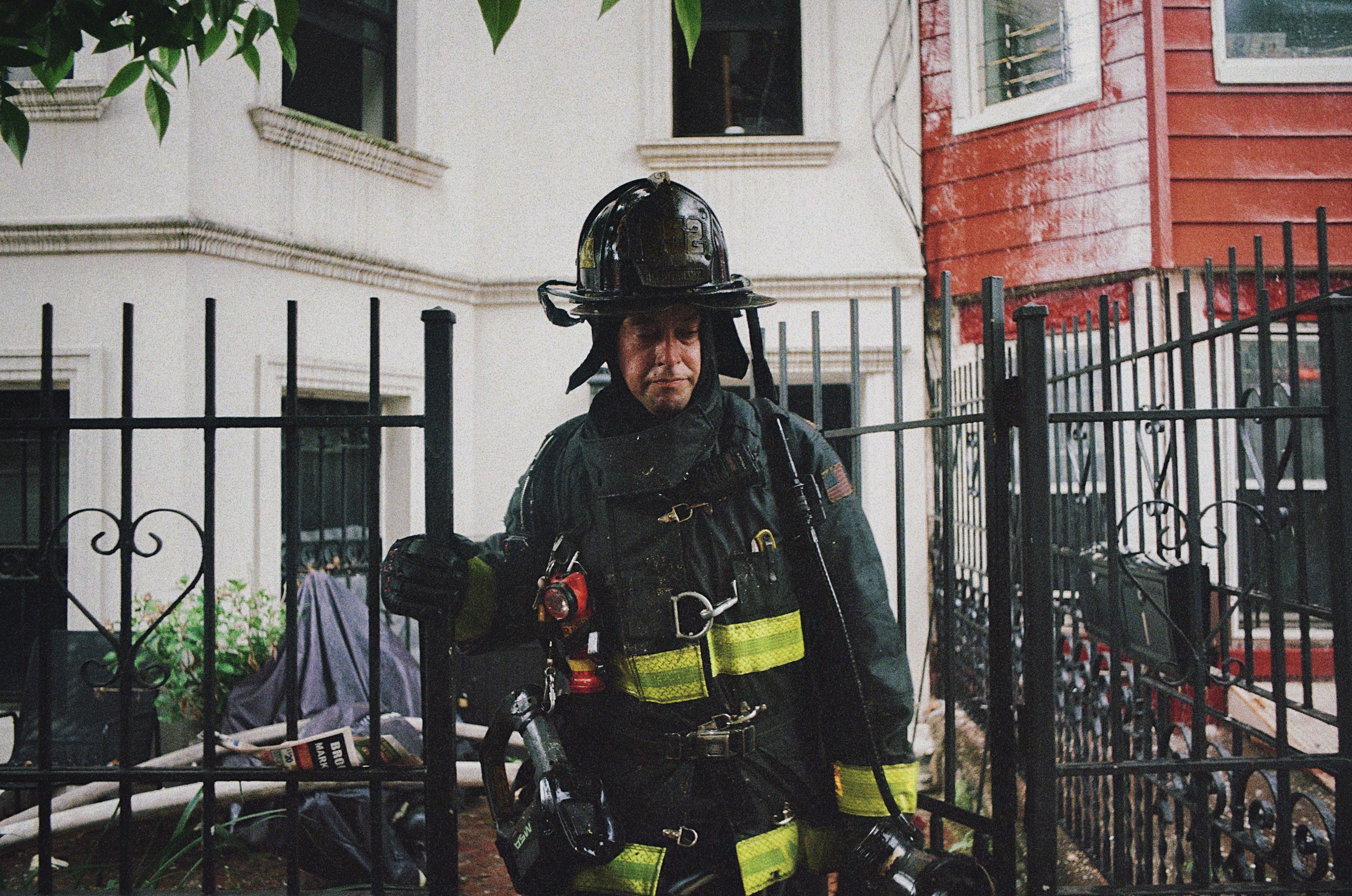
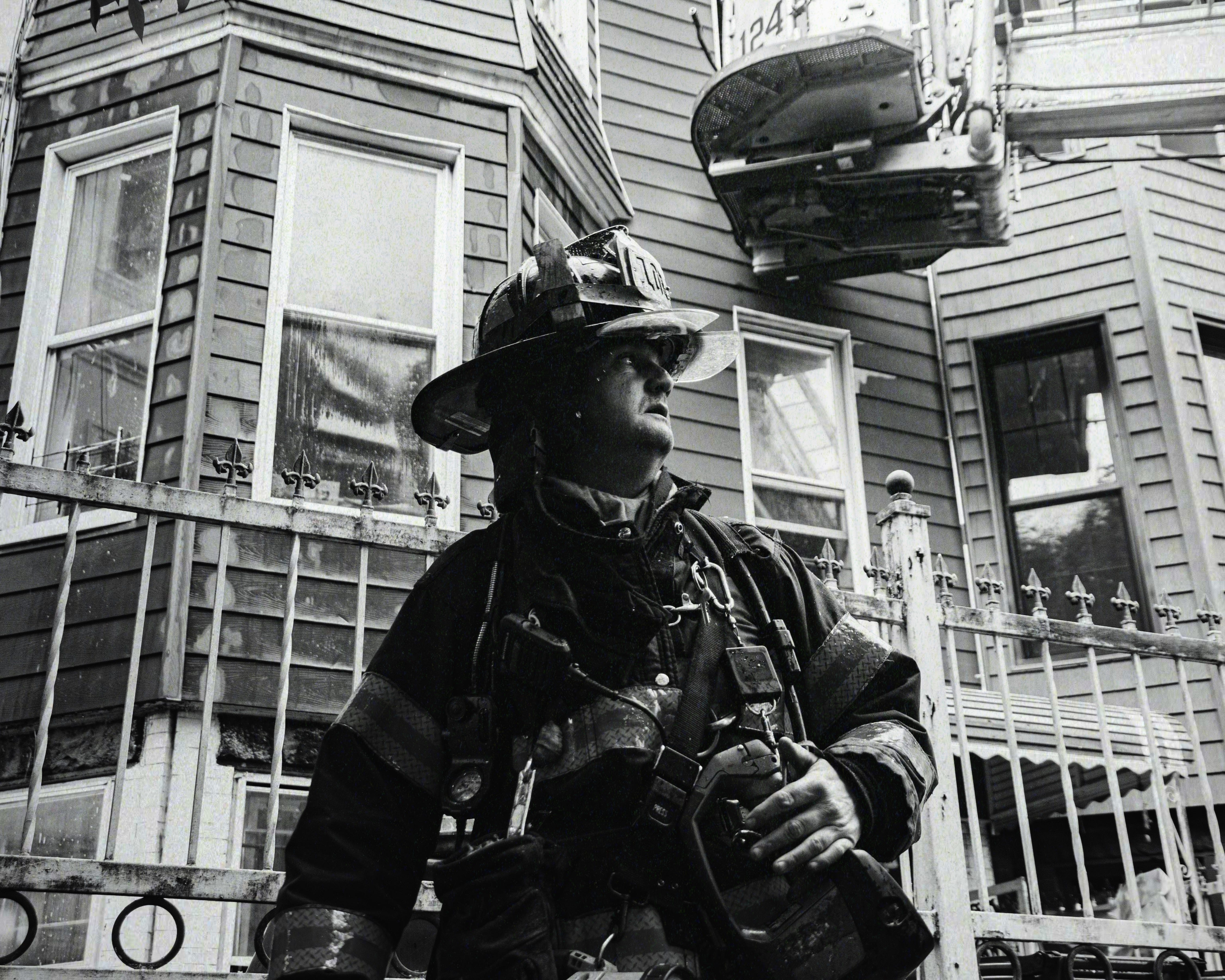
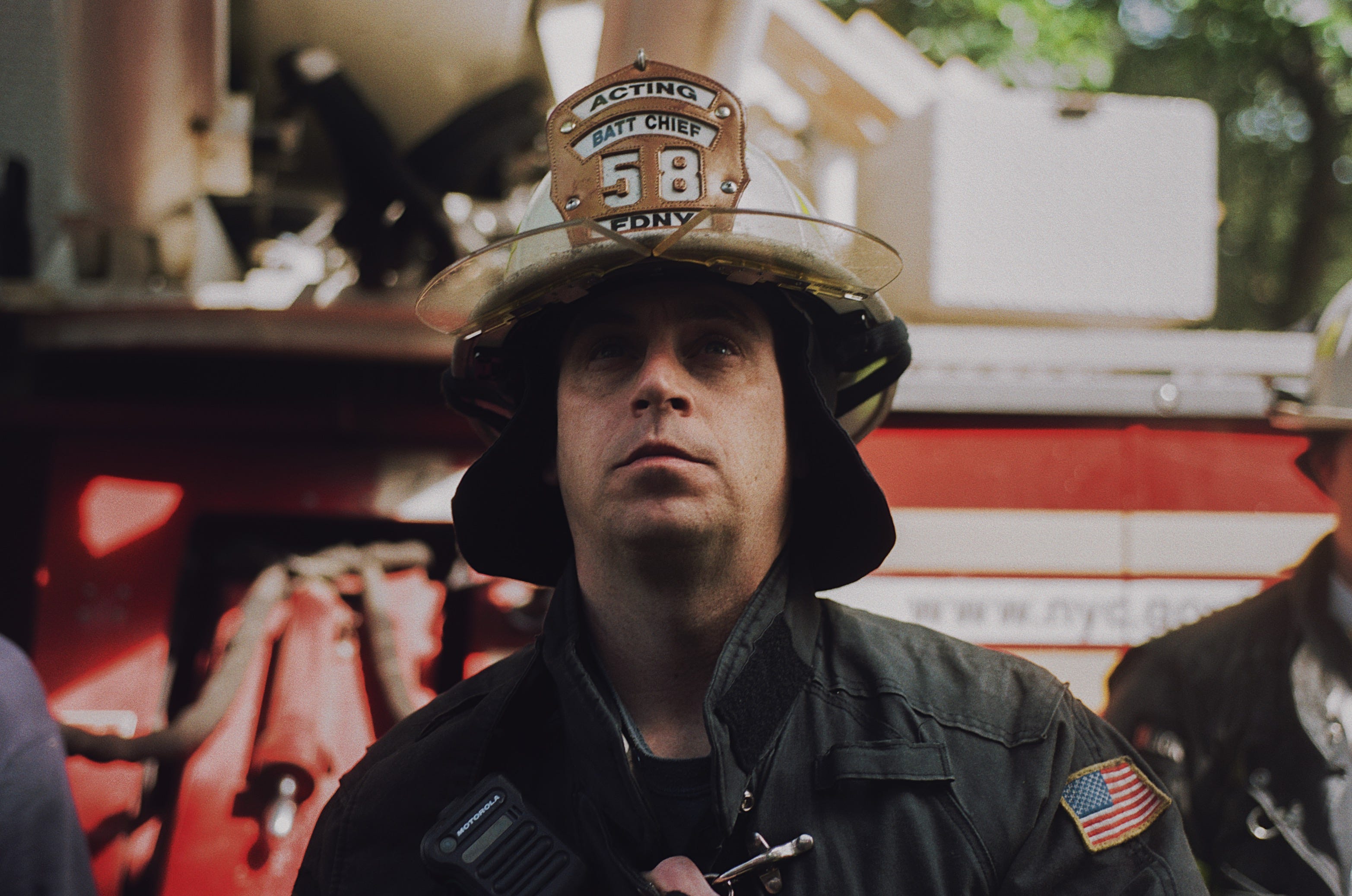
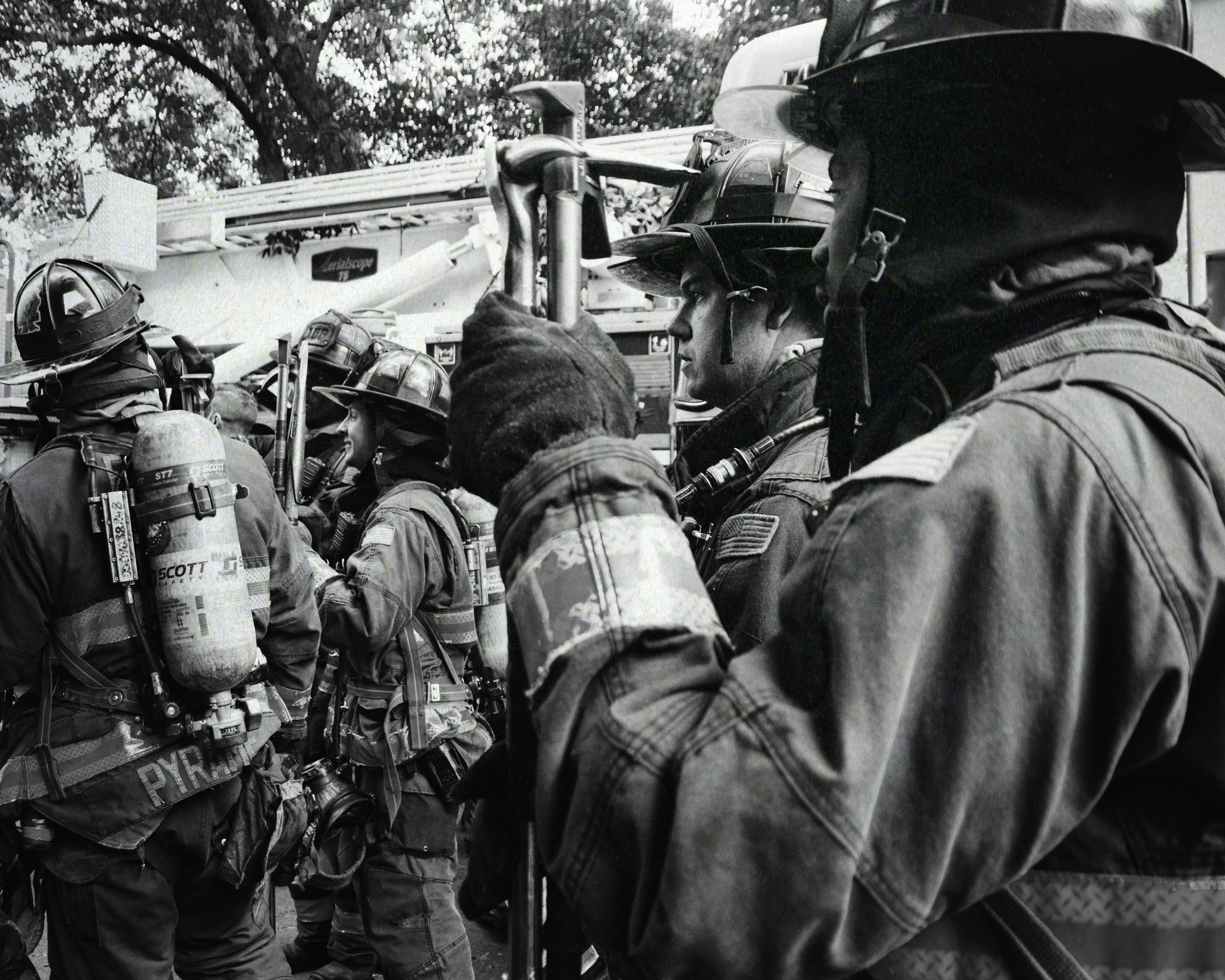
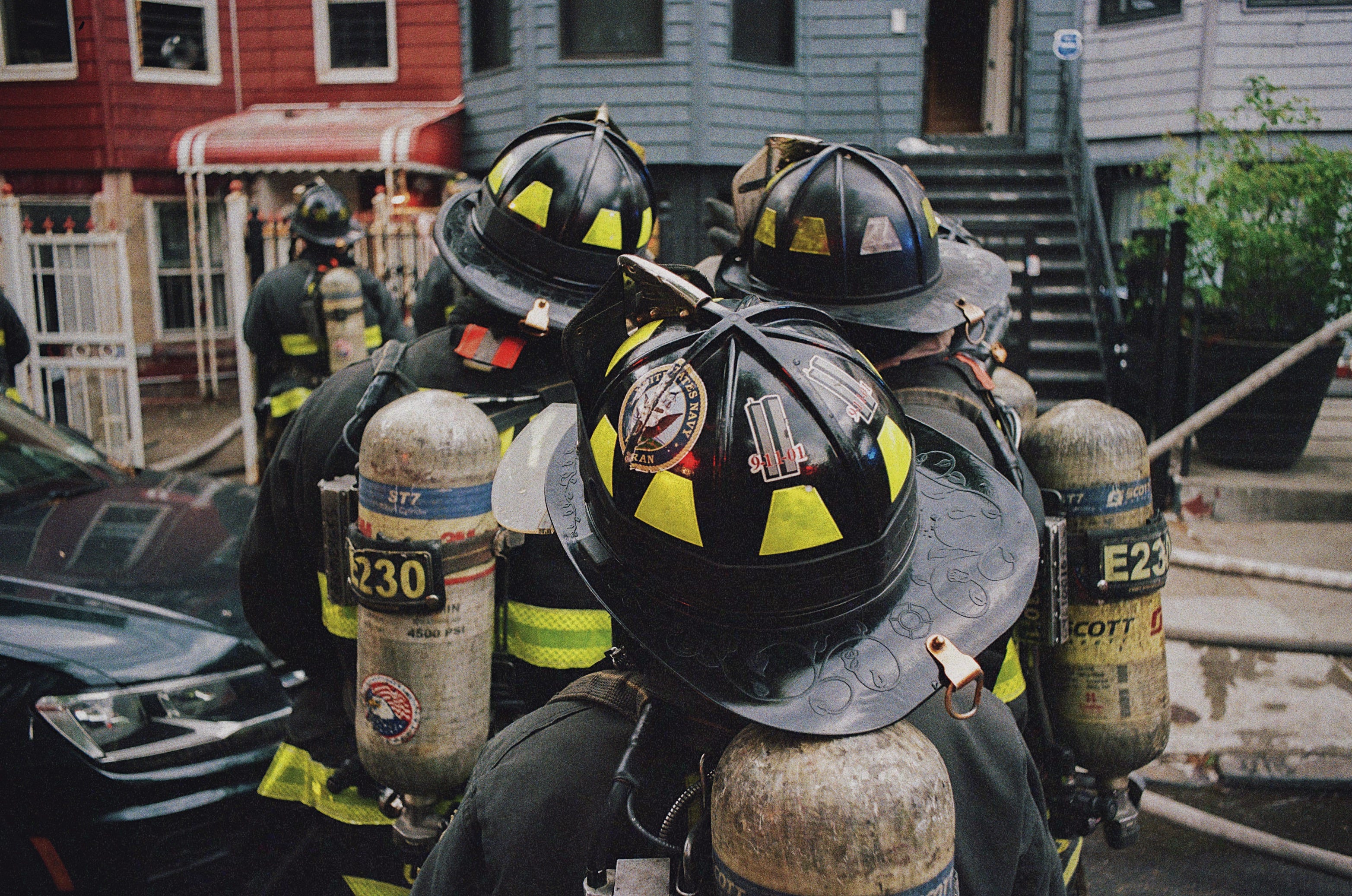
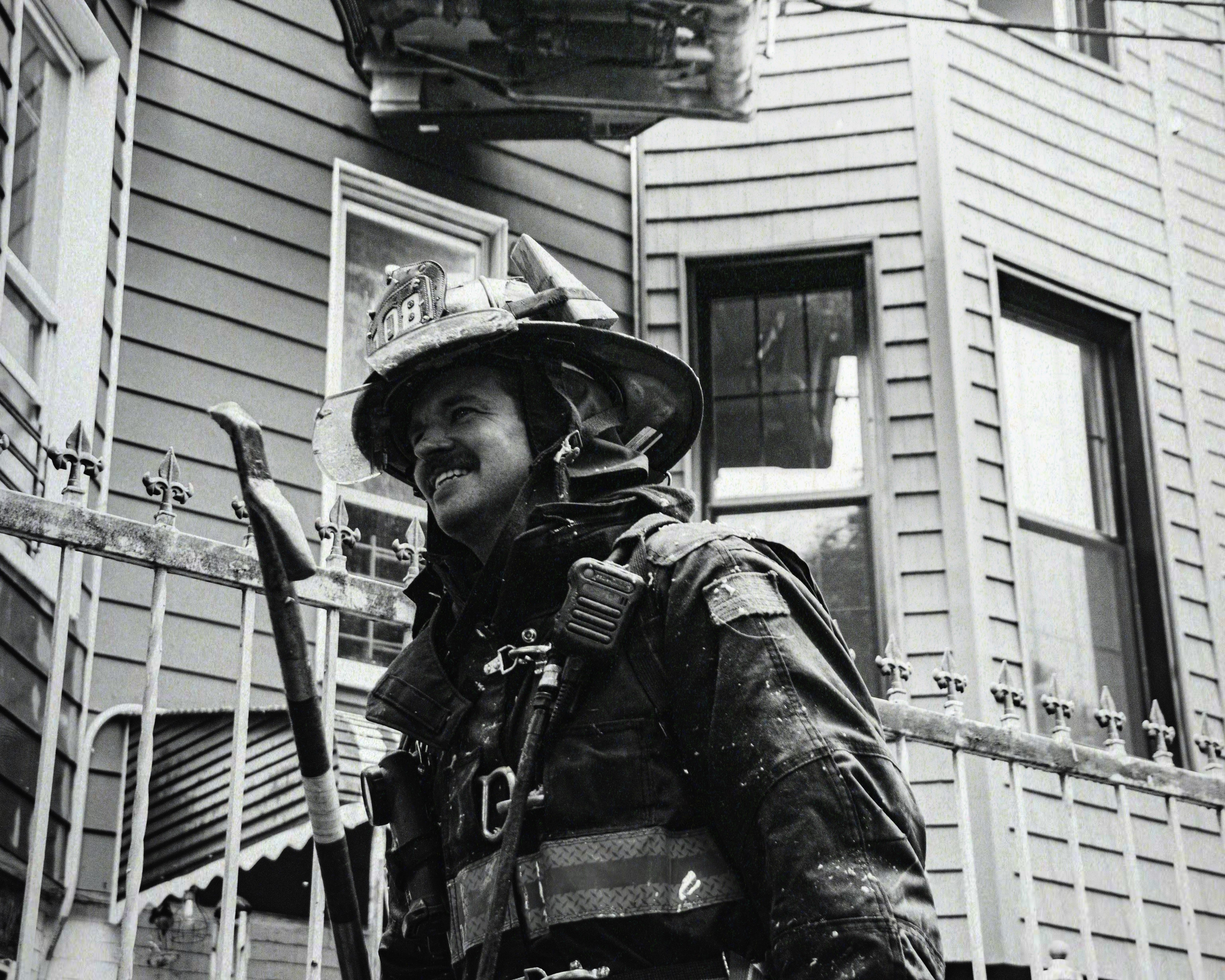
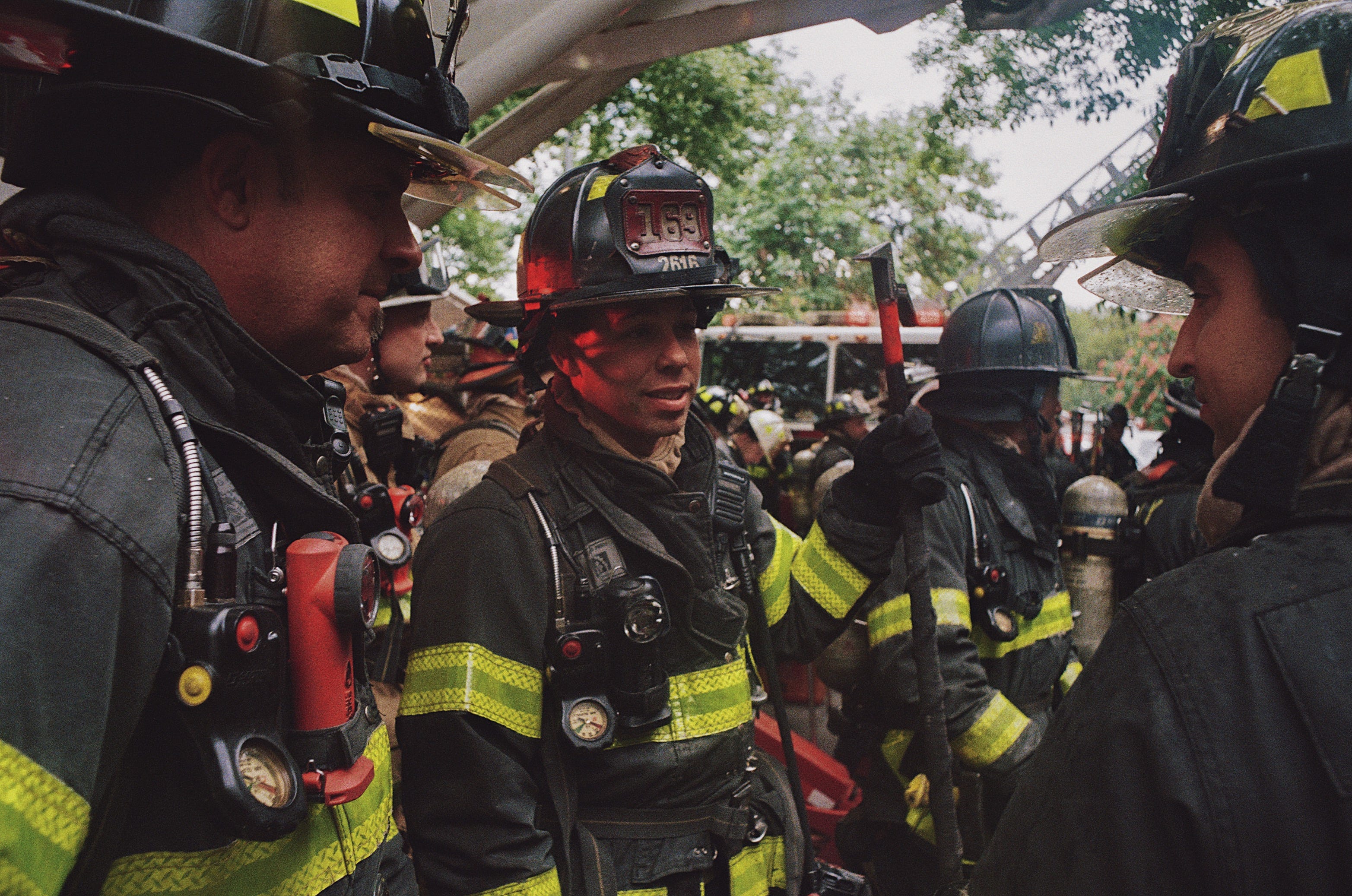
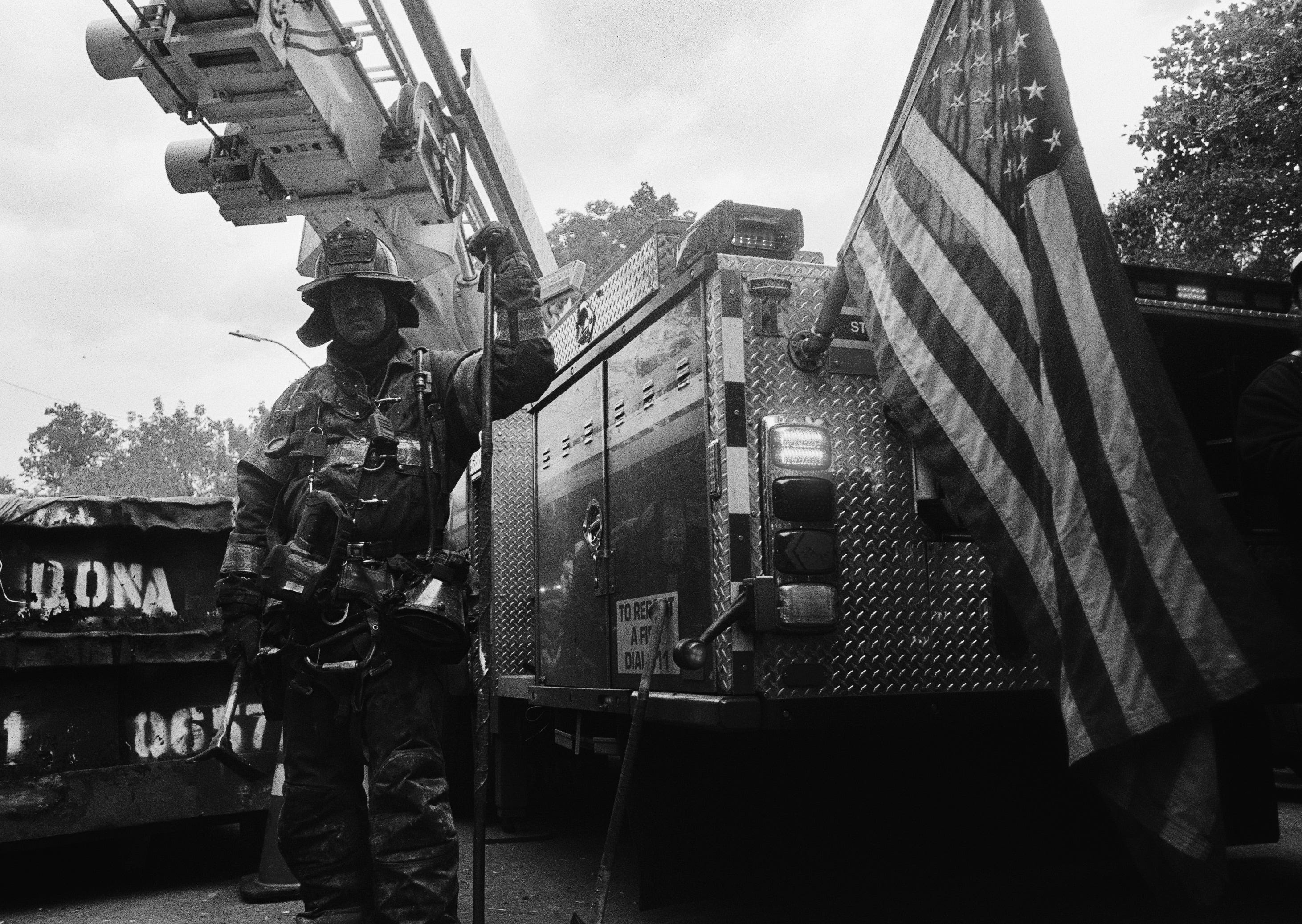
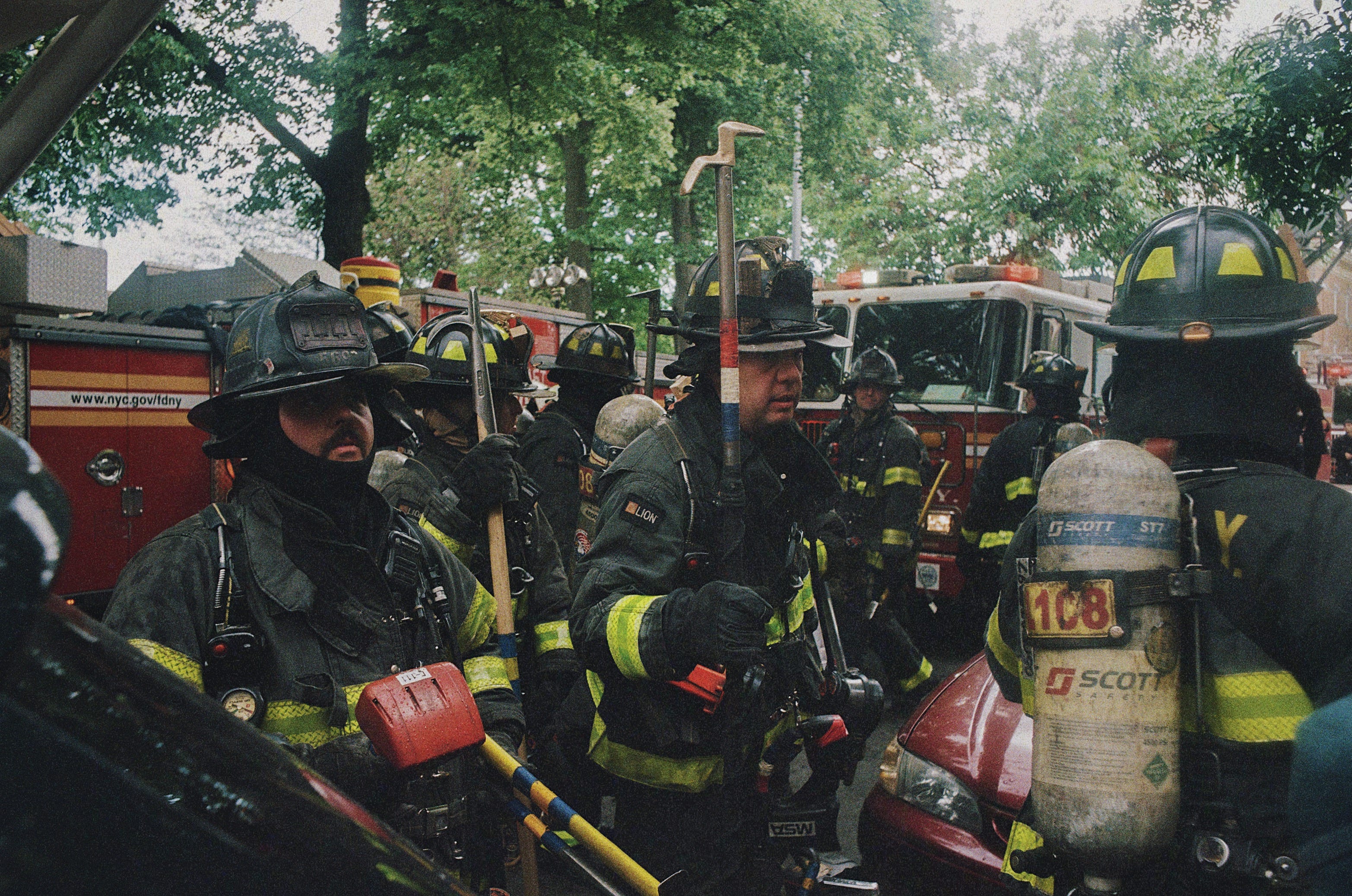
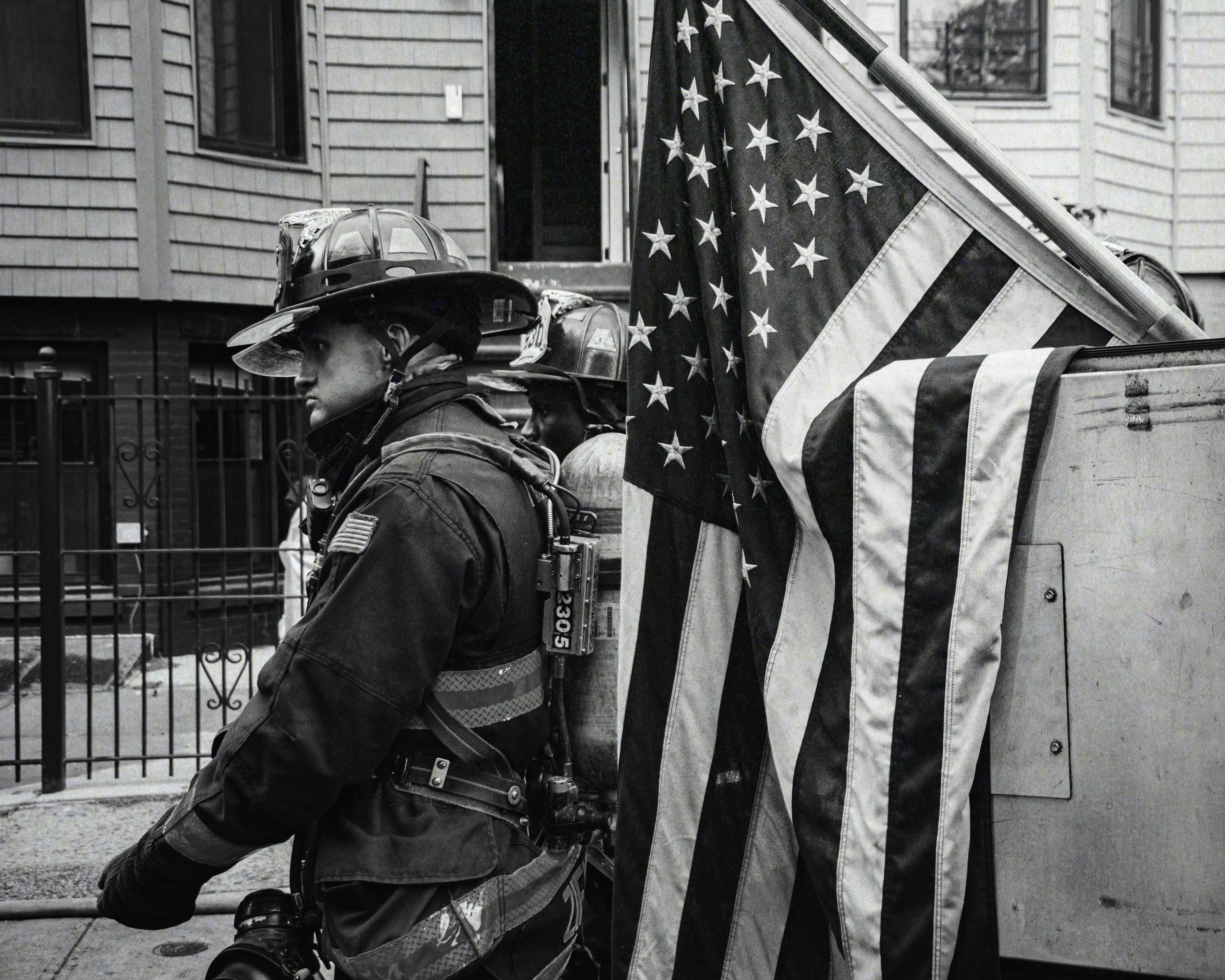
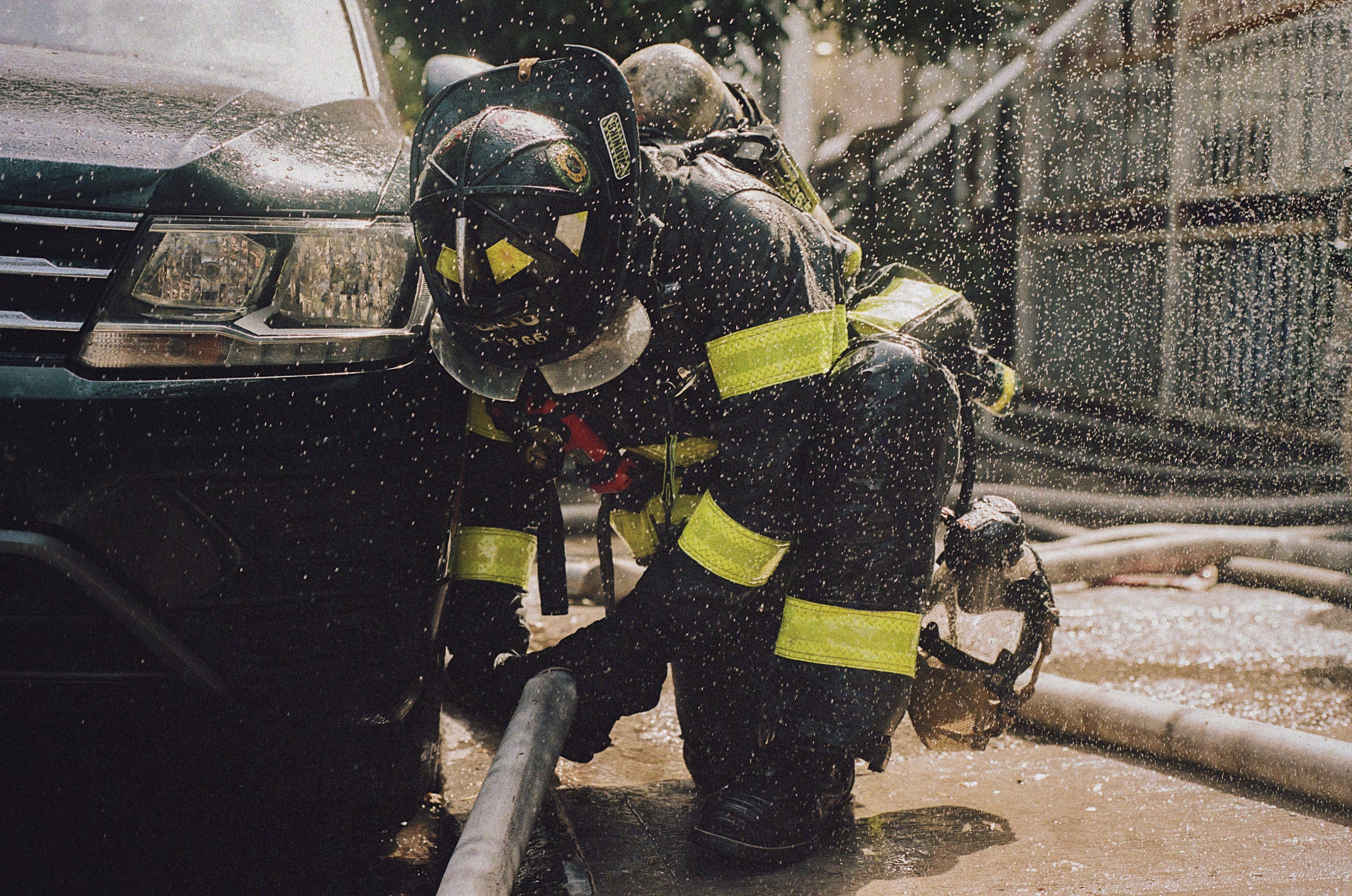
Before the last truck cleared the block, I went around and found my guys. We shook hands and laughed at each other in the way you laugh with people you’ve now run into twice under identical circumstances in the span of two months. “We have to stop meeting like this”, I told them. “Maybe take me out on a date every once in a while before we get to the excitement.” They laughed at that. We said our goodbyes and I turned around to walk back across the park for the fifth time that day.
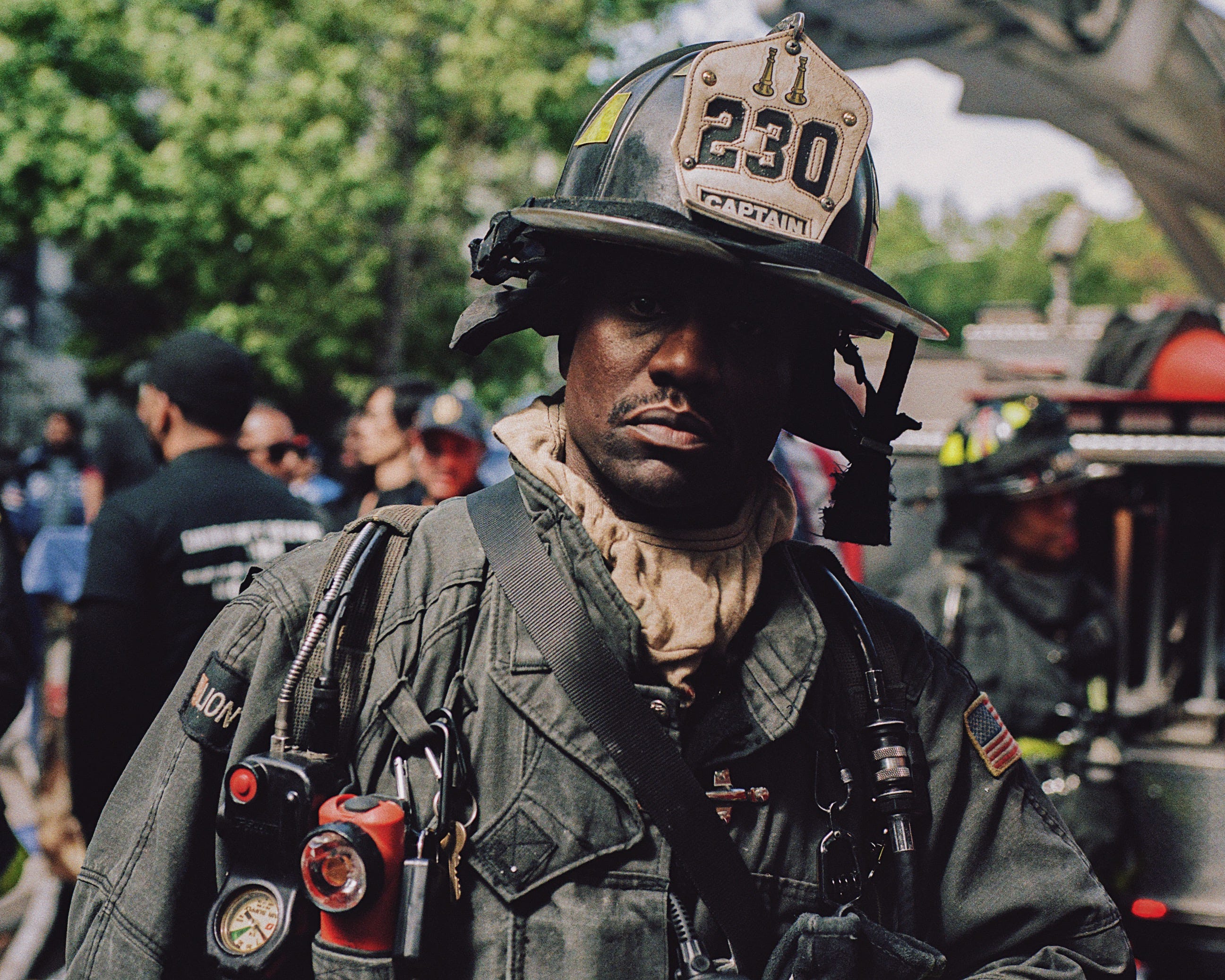
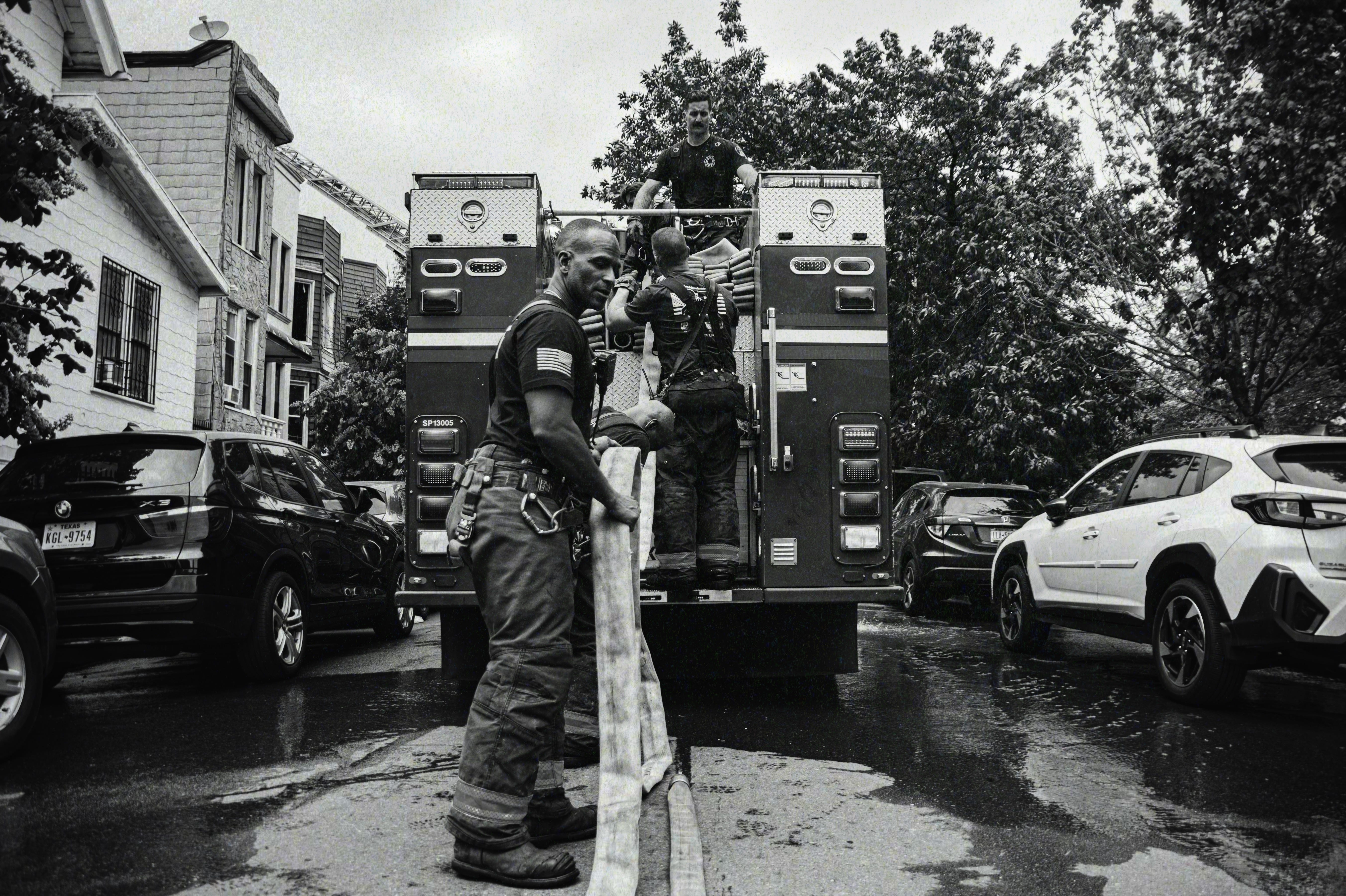
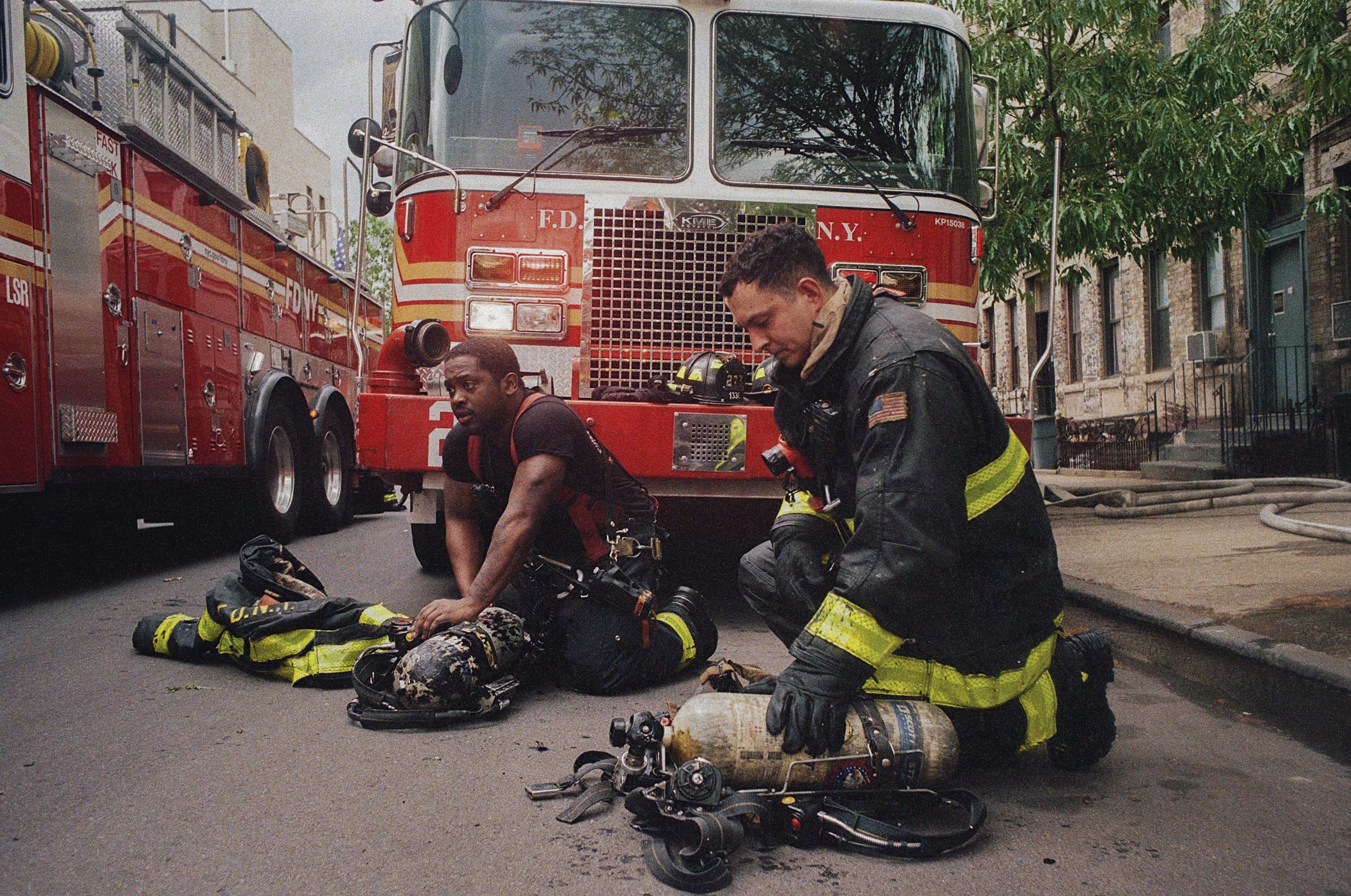
The path under the trees dark now and quiet, the strobing lights gone and the smoke thinning in the evening air above the rooftops. I moved through it with everything the day had left me, my hair damp and reeking of ash and woodsmoke, the sharp smell of it deep in the fabric of my clothes and caught somewhere in the back of the throat. My shirt partially wet along the shoulders and forearms from the fine mist of hose water that had been in the air around the trucks for the last hour. My lower back was bound up in a tight, deep, insistent ache that had been building since somewhere around the Jacqueline Kennedy Reservoir and had now, after five crossings of this park and a full sprint in both directions with three cameras, announced itself as a fixed and non-negotiable condition of the remainder of the evening.
I came through the apartment door and lowered myself onto the couch next to Sophie. She didn’t ask how it went. She could smell it on me and she could see it in the way I sat. She’s been with me long enough to understand the quality of silence that follows a scene like this one. I sat there for a while in the thick, smoke-scented stillness of a day that had started with a depressive episode and a cluttered desk at eight in the morning and had ended with three apartment buildings gutted on a block two streets from home. I thought about how little of that arc I could have predicted when I kissed her at the door that morning and walked into the Brooklyn afternoon with three loaded cameras and no plan.
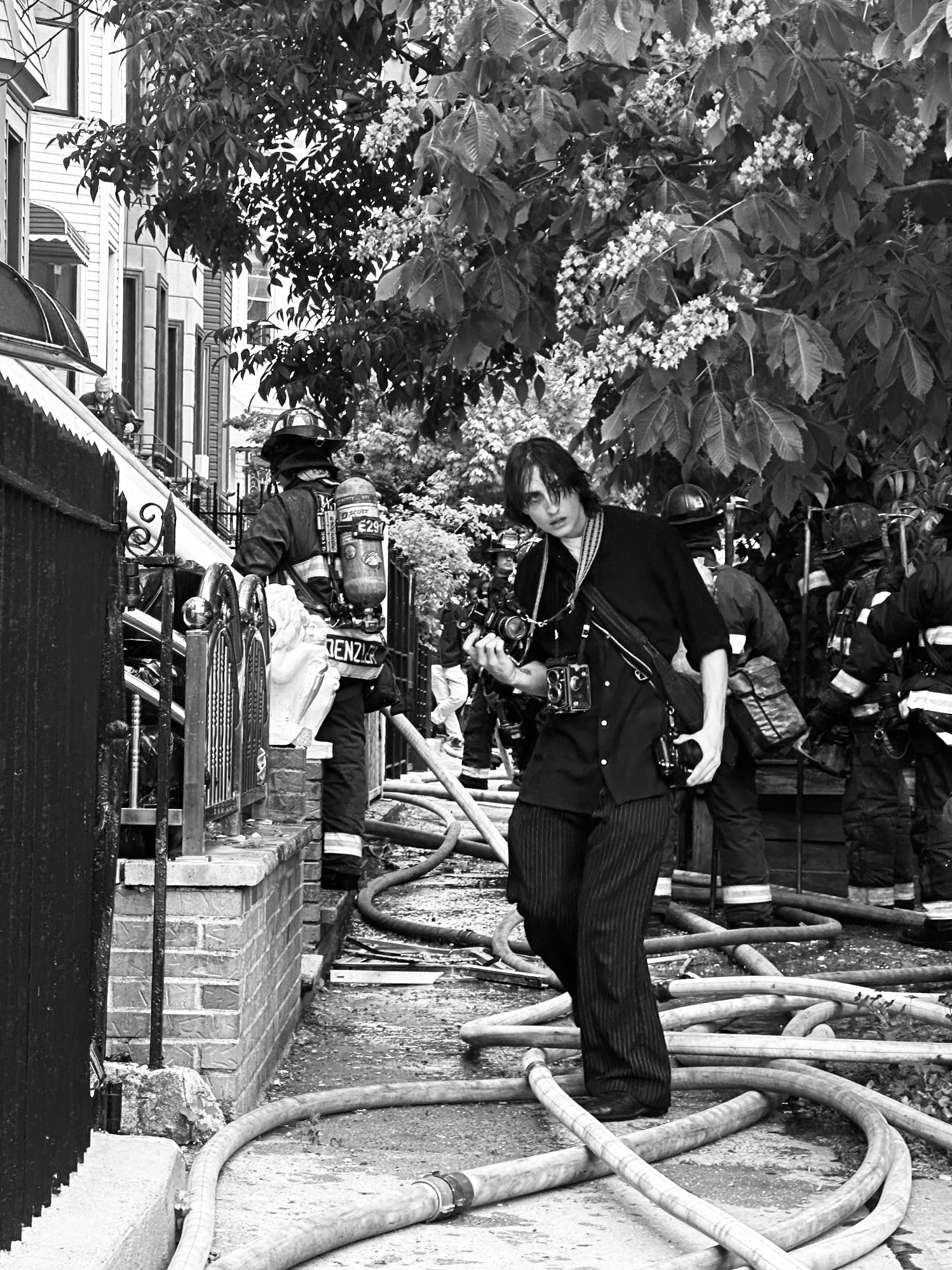
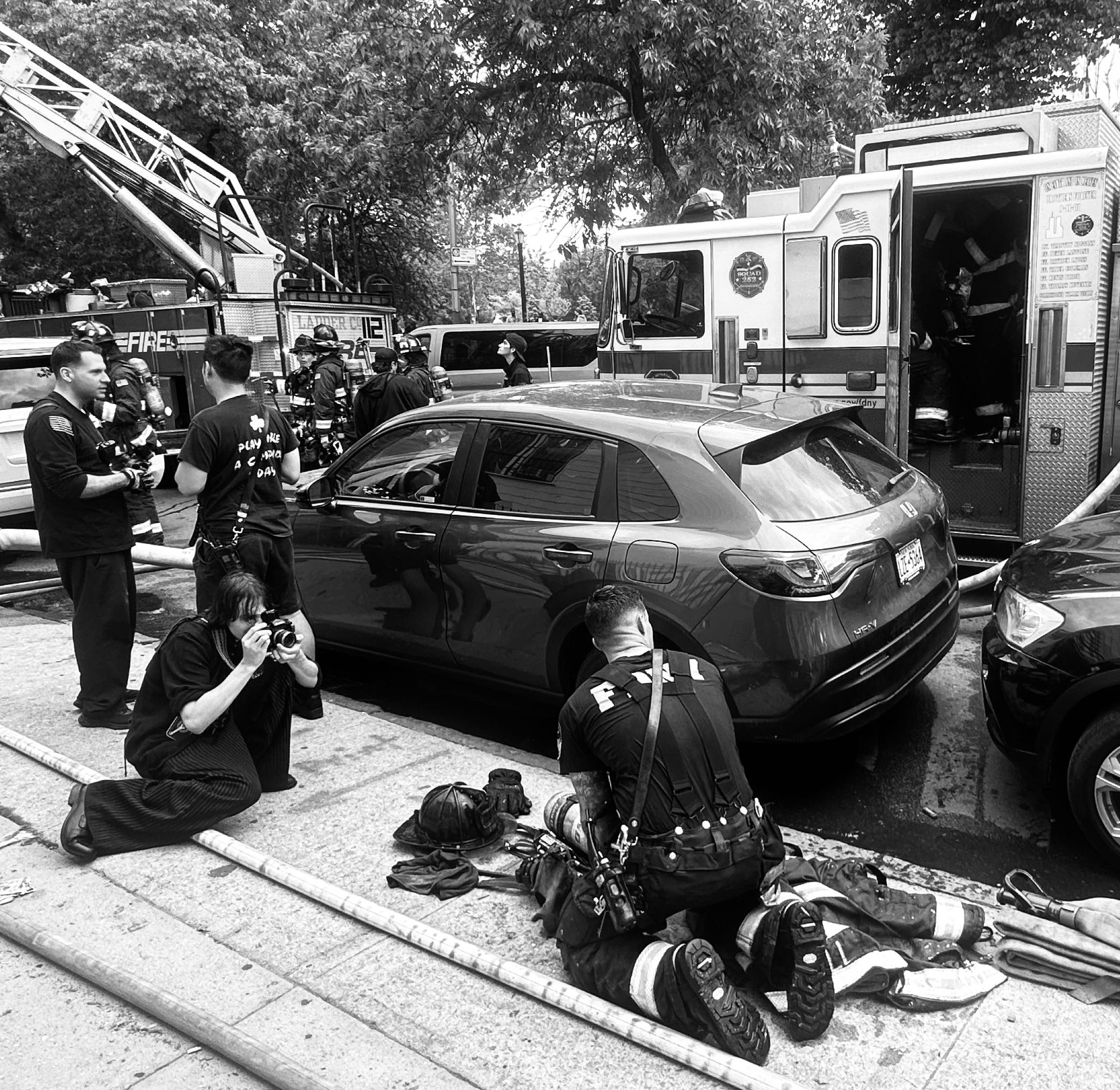
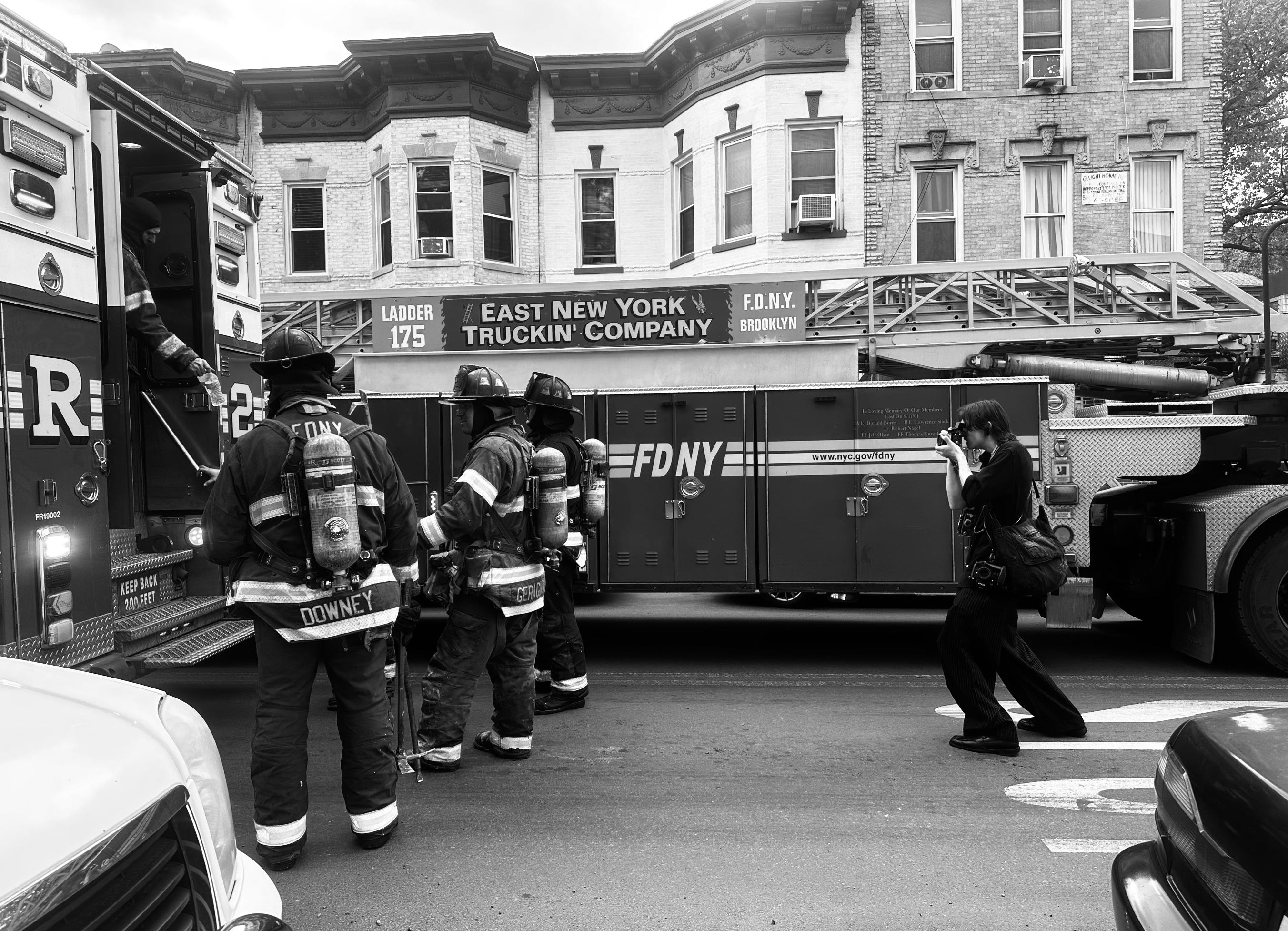
There was no version of events in which I was getting back on the subway to develop film tonight. My lower back had registered its position on that matter and there was nothing left to negotiate. I pulled myself up from the couch and went into the office. I sat down in front of the computer and started culling through the digital files from the scene, the late evening after a long day spread into night as the rest of the apartment went dark and still around me while the images moved across the screen one at a time in the pale, flat light of the monitor.
First thing the next morning I was back at Nice Film Club with the rolls, and within a couple of hours they were back in my hands. The street work from the morning and the afternoon in Harlem, the reservoir and the park, the diamond district corner, the Times Square floor, Bryant Park, all of it resolved at last from latent silver into something I could see and hold. I edited them, sent the fire coverage over to Captain Cook, and then I closed the computer and spent the rest of the weekend doing absolutely nothing, which after a day like that is not laziness but simple arithmetic.
The desk is still here this Monday morning. The papers are still scribbled with their reminders, the emails are answered, the schedule still unwritten. But the weight of it’s shifted in the intervening days, rearranged itself into something that feels less like drowning and more like a list, which is more manageable.
The city had done what it always does when I let it do its work. It moved through me, filled in all the places the depression had hollowed out, left me tired in the good way and full of something I couldn’t quite name but recognized.
Man I love this fucking city.
Thank you for reading this edition of Field Notes.
Field Notes is an ongoing diary of my days spent photographing New York City. Each entry documents where I went, what cameras and film I used, the weather, the people I encountered, and the small moments that caught my attention along the way. It’s part record keeping, part reflection. A way of preserving not just the photographs themselves, but the circumstances, thoughts, and emotions surrounding them.
If you’re enjoying these entries, I’d love for you to explore the rest of The Creative Connection. Alongside this series, you’ll find deep dives on creative strategy, personal process, photographic history, and the tools that shape our craft. And if you feel called to subscribe, you’ll unlock the full archive and every future lesson across all segments of the publication.
For those curious about the work I make beyond the page, you can explore my portfolio and ongoing projects below. I also share visual companions and extended breakdowns on YouTube for anyone who prefers to learn through images, movement, and process in real time.
Thank you again for being here. It’s an honor to share this craft with you.
Links:

As a fireman and a photographer, I have to say that these scene photos are some of the most enjoyable I've come across in ages. Thank you for using your skills to honor both crafts that I work so hard at.
Beautifully written and photographed.
I loved your detail and descriptive style of writing. Felt like being there.